Search Blog Posts

Showing posts with label Internet. Show all posts

Saturday, March 7, 2015

While Clinton Hid Emails, $6 Billion Went Missing in Her State Dept.

Posted on March 6, 2015 by Aaron Dykes
(Truthstream Media)
Editor’s Note: Do you think she’ll finally change that Twitter avatar?
The political world is swarming over revelations that Hillary Clinton hid her emails during her time as Secretary of State.

She apparently went so far in shielding her official correspondence from public scrutiny that her team set up the private domain @clintonemail.com, used cover names for family members and reportedly ran a server for the mail client out of her home. Hillary publicly tweeted to dispel concerns about secrecy, dubiously claiming ‘I want the public to see my email.’

But serious concerns have been raised about her trail of secrecy, and the potential for classified information to have been exposed to foreign entities, spies, hackers and the like:

“The former Secretary’s tweet does not answer questions about why this was not done when she left office, the integrity of the emails while she controlled them, the scheme to conceal them, or the failure to provide them in logical course,” said committee spokesman Jamal Ware. (source)

Perhaps the most serious accusation facing Clinton is that she may have breached one of the fundamental tenets of classified information. J William Leonard, former director of the body that keeps watch over executive branch secrets, the Information Security Oversight Office, told the Guardian that if Clinton had dealt with confidential government matters through her personal email, that would have been problematic. “There is no such thing as personal copies of classified information. All classified information belongs to the US government and it should never leave the control of the government.” (source)

After all, it was the infamous hacker ‘Guccifer’ who revealed the @clintonemail.com scheme, not GOP enemies or ‘accountable’ officials in government.

Otherwise, would the world have ever known?

But Wait, There’s More… Much More Being Covered Up

But the emails – if they are ever disclosed to the public – are not the half of it.
They are the proverbial tip of the iceberg of secrecy.

Recall that not even a year ago, it was quietly disclosed that the Hillary Clinton State Dept. “misplaced” more than $6 billion dollars that remain unaccounted for. The Washington Times reported about the losses under Sec. Clinton:

The State Department misplaced and lost some $6 billion due to the improper filing of contracts during the past six years, mainly during the tenure of former Secretary of State Hilary Clinton, according to a newly released Inspector General report.

The $6 billion in unaccounted funds poses a “significant financial risk and demonstrates a lack of internal control over the Department’s contract actions,” according to the report.

The obvious implication here is to cover up corruption and sweetheart deals, such as contracts to spouses and friends, with missing documents in numerous government contracts for the war in Iraq and much more:

The situation “creates conditions conducive to fraud, as corrupt individuals may attempt to conceal evidence of illicit behavior by omitting key documents from the contract file,” the report concluded.

It would seem very little was account for – by definition – since the Clinton State Dept. had a vacancy for the critical Inspector General position, responsible for oversight and department spending, during the ENTIRE 5 year tenure of Hillary Clinton there.

It was the longest vacancy in the entire history of the department. In February 2012, a year before Clinton left office in February 2013, the Project on Government Oversight (POGO) reported:

The longest vacancy has been at the State Department, which has gone 1,484 days—over four years—without a permanent IG, at a time when the Department has taken on the responsibility and challenge of managing scandal-prone private security contractors in war zones. As of today, there are seven IG positions that have been vacant for more than a year.

So much for the already absurd ‘most transparent administration ever’ claim of the Obama Administration.

That means no one even pretended to keep Sec. Clinton and her department accountable during her reign.

After Hillary stepped down, embroiled in “what difference does make” Benghazi bullsh*t, and John Kerry took over, one Steve A. Linick was appointed as Inspector General of the State Dept. As IG, Linick discovered $6 billion in unaccounted funds “due to improper filing of contracts during the past six years.”

What else will be found – with an as-yet untold covert role by the State Dept. in the meddling of Libya, Egypt, Syria and other players in the Arab Spring uprising, the covert financing of jihadi rebels as well as ISIS, and in the mounting tensions with Russia, China and other key players around the world?

How much more has been kept secret – beyond just emails – that the public will never know about?

But alas, I guess secrecy and the Clintons have long gone together like peas and carrots, peanut butter and jelly or power and abuse.

Friday, February 27, 2015

FCC Net "Neutrality" Passes by a Narrow Margin

So much for sworn oaths, beyond some obtuse frothy babble expect nary a Republican statesman to stand up for the peoples' liberty.
 
Net Neutrality: Beginning of the End of the Internet?

Written by  C. Mitchell Shaw

The FCC voted yesterday to begin regulating the Internet as a public utility under a plan known as Net Neutrality. Let that sink in. The federal government will regulate the Internet in the same way the agency already regulates the telephone and cable television industries — and it calls that "neutral." Having been denied the ability to regulate the Internet in the past because of a lack of authority, the FCC has now simply reclassified the Internet under Title II, and — voilà! — they have the authority to regulate it.

One problem with this action is that the Internet does not belong in the same category as telephones and televisions. It is "other": It has its own category. 

The Internet is the most innovative, pervasive, free, and open form of communication man has ever known. Access to it is more available now than ever before, and an increasing number of people are using it as the primary method for their communications. When used properly, the Internet allows private, anonymous communication in a way that is unrivaled. But beyond that, it is also a marketplace, a research network, an alternative news source, and much, much more. And the Internet is all these things because it grew up largely unhindered by government regulation (read: interference).

With the three-to-two vote of unelected bureaucrats unaccountable to the people, that is changing. It is as sure as can be that Net Neutrality will change the Internet. As the Internet is bogged down in regulation by an agency that has no constitutional authority even to exist, let alone to regulate the Internet, the innovation that birthed and nursed the Net to youthful maturity will be replaced by concerns about compliance with regulations. Instead of answering to the concerns of consumers — as is done in a free market — ISPs (Internet Service Providers — through which a company such as Netflix provides services to Internet users) will begin focusing their attention on lobbying the FCC. The result will be an Internet that has lost its youthful energy and is mired in rules that aren't even known yet.

The reason the rules aren't yet known is that FCC Chairman Wheeler decided to keep them secret. He has hinted at the powers the new rules grant to the FCC, though, and they are frightening. In an op-ed piece for Wired on February 4, Wheeler wrote, "My proposal includes a general conduct rule that can be used to stop new and novel threats to the Internet. This means the action we take will be strong enough and flexible enough not only to deal with the realities of today, but also to establish ground rules for the as yet unimagined."

What constitutes "new and novel threats to the Internet" is left to be defined later.

Perhaps as disturbing as the secrecy of the plan is the underhanded method by which it was promoted, using — ironically — the Internet itself. In the "comments" section of many online articles, activists and bots (programs that post while appearing to be real people) posted emotional and factually erroneous appeals for regulation to "save the Internet." One example is this comment that appeared verbatim in the comments section of several stories under several different usernames:

Cable companies need to be regulated. They're working together to prevent having to provide better service or lower prices. The internet in the US is extremely slow and over priced.

My cable/internet costs me $150/month (from Time Warner). Contrast with my other expenses:
- Gym ($11/month from Planet Fitness)
- Mobile Phone ($21/month from TMobile)
- Car insurance ($25/month from Insurance Panda)
- Groceries ($90/month for me)

Yes, that's correct, my gym, cellphone, car insurance, and food COMBINED cost less than my TWC bill.

This will be a win for consumers by increasing competition and expanding infrastructure. Prices drop and speed increases. Profits drop. Aww.

In many comment platforms, visitors to the site can click on a username to see other comments posted by a commenter. Several of the usernames that posted the comment above have no other comments logged. It appears those usernames were created specifically for the purpose of posting that comment.

The purported reasons for the FCC stepping up its regulation of the Internet is that ISPs were "giving preferential treatment" to some services and "discriminating" against others and "creating paid fast lanes on the Internet." It sounds evil. It screams for relief that only Big Government can provide. 

Granted, some ISPs were slowing traffic to sites that provide streaming services for watching movies or downloading large files, while at the same time allowing faster connections to other sites. Also granted, most ISPs were providing faster services for consumers who pay more. But is that wrong? Does it require relief in the form of regulation?

These types of things are normal in a free market. Bandwidth is expensive to maintain, and ISPs must make decisions that are in their best interests as businesses. If some consumers are using a very large amount of the available bandwidth to download large files and stream movies and music, it means that either everything on that connection will slow down for everyone using it, or the ISP will have to increase the bandwidth, and pay for it. The choices are limited. The ISPs can "choke" the speeds to connections to those services that use the most bandwidth; they can charge extra to consumers who desire faster connections; they can raise rates across the board; or they can do a combination of the three.

Following the logic of the arguments in favor of Net Neutrality, a restaurant should charge the same price for an eight-ounce steak as for a 16-ounce steak. 

Just because Customer B has a bigger appetite than Customer A doesn't mean B should pay more, goes the Net Neutrality reasoning. In a free market (one that answers to the realities of cost and profits), the restaurant would have no choice but to offer only a 12-ounce steak and charge the same price as it had for the 16-ounce steak. And that is where these new regulations begin to harm consumers. We will see fewer choices and higher prices as the ISPs focus on lobbying their regulators and passing the costs along to their customers.

Many people live in areas where the demand for high speed Internet is low and have had to suffer with slow connection speeds. They have sat in Starbucks and public libraries and used their Internet connection when they needed a faster connection. Many currently pay about $100 per month for high speed Internet and home security from Comcast because they live in areas where demand is higher. These are their choices. There is no one-size-fits-all approach, and as Big Government tries to force one, those who advocated for this are going to figure that out.

Thankfully, it is far from over. The courts can rule against Net Neutrality. Some in Congress are already talking about a bill to set it aside. A future FCC commission could reverse it.

It is a dire situation to be at the mercy of big government where something this important is concerned. It is time, as The New American's Joe Wolverton has observed, to force "the federal beast back inside its constitutional cage."

via thenewamerican

Thursday, February 26, 2015

A Warning to Libertarians: Please Do Not End Up Like Ross Ulbricht

Monday, February 23, 2015


By Robert Wenzel

The trial of Ross Ulbricht, admitted founder of Silk Road, is over. He has been convicted on all the charges brought by the government. It is a terrible tragedy.

An anonymous commenter to the post, where the Ulbricht family expressed shock at how unfair the trial was, explained best what happens when the government has you in their crosshairs;

Having been through a federal criminal trial myself, this description sounds like standard operating procedure. While I feel badly for the mother, she does express an astonishing naivete of the system and process. A federal trial is not designed to find out the truth, or to have a discussion about the law. It is designed to get a perfunctory rubber stamp from the jury on an outcome that has already been decided.

And the appeal process is designed to rubber stamp what was determined in the district court. I hope for her sake she does not put much hope in the appeal. It's highly unlikely to be reversed.
Ubricht faces somewhere between 20 years to a life sentence. To be sure, from a libertarian perspective, there does not appear to be much that Ulbricht is guilty of. He simply provided a market for individuals willing to exchange, certainly not a violation of the libertarian non-aggression principle. (The government was allowed by the judge to bring up supposed murder-for-hire plots by Ulbricht, but never charged Ulbricht with the plots. Sounds sketchy to me.) BUT, despite the libertarian perspective, he is going to spend a a very, very long time in prison.

This is part of the reason, I find it remarkable that some libertarians are cheering on further efforts in the murky dark internet. Coin Report notes (my bold):

[I]n March of 2014, GRAMS was created.

GRAMS is the Google of the darknet. It is a cross-marketplace search engine hosted on TOR that aggregates listings from major DNMs and lists them in an easy to read, Google-like fashion. Filters sort listings by country, market, price range, and quantity. GRAMS search algorithms are constantly being updated to include more DNMs and listings. This has allowed the casual observer to discover the darknet without the hassle of creating multiple accounts. GRAMS has become so successful that it recently started selling sponsored listings, similar to Google AdSense.

Since the original Silk Road was shut down, the DNM landscape has changed dramatically. It has become more de-centralized. Yet, thanks to sites like GRAMS and the Subreddit r/darknetmarkets, it is still accessible to many people.

The Ross Ulbricht trial marks a turning point for the darknet. Originally created to combat a problem, DNMs have now become a rallying point for the adherents of Libertarian ideology. Ulbricht himself described the Silk Road as an “economic experiment.” Many see him as a martyr and have supported him through it all, from patronizing the Silk Road via contraband purchases to donating over $339,000 via Bitcoin toward his legal defense fund. His downfall was an inspiration to push further, to continue the economic experiment, for the betterment of humanity (hopefully).
A few points need to be made here. First, Silk Road 2.0 has been shut down. It was infiltrated by the government from the start. There are claims that  there are new bitcoin mixing technologies that make bitcoins completely anonymous in use. But how can we know that it is not the government that has set up these mixing exchanges, or infiltrated them after they have been set up? And keep in mind, the buying and selling of drugs on the dark net still requires physical delivery. How do we know the government isn't capturing the physical addresses where the drugs are delivered? How can we know that the government isn't running a major sting to catch sellers?

As long as a commodity needs physical delivery, there is no protection from the government, even if it is done via the dark net--and that supposes the government isn't watching on the dark net in the first place, before physical delivery.

There are just so many things that can go wrong operating in the dark net, with very heavy downside, it makes no sense for a libertarian, qua libertarian, to get involved, especially by running such an operation.

Just becasue libertarians are in favor of free exchange, where does it say they have to run  underground markets?

As Murray Rothbard put it, when discussing libertarian/agorist theory and the underground promoted by Samuel Konkin (my bold):

If the black market should develop, then the successful entrepreneurs are not going to be agoric theoreticians...but successful entrepreneurs period. What do they need with Konkin and his group?  I suggest, nothing at all.  There is a hint in the NLM that libertarians would a priori make better entrepreneurs than anyone else because they are more trustworthy and more rational, but this piece of nonsense was exploded by hard experience a long time ago.   Neither do the budding black marketeers need Mr. Konkin and his colleagues to cheer them on and free them of guilt.  Again, experience has shown that they do fine on their own, and that urging them on to black market activities is like exhorting ducks to swim...

As much as I love the market, I refuse to believe that when I engage in a regular market transaction (e.g., buying a sandwich) or a black market activity (e.g., driving at 60 miles per hour) I advance one iota nearer the libertarian revolution.  The black market is not going to be the path to liberty, and libertarian theoreticians and activists have no function in that market...

Historically, classical liberal political parties have accomplished far more for human liberty than any black markets. 
In other words, if you want to advance liberty, it makes little sense to be operating a black market web site just as it makes little sense to be selling drugs from a street corner to advance liberty. And from a practical perspective, if the government snares you while running a black market site, you are going to pay dearly.

Advancing liberty is not about selling hooch or weed, though there is no reason to condemn those who enter into these noble professions. If you want to advance liberty, you do so by writing, speaking and reading about liberty. This requires that very little be done beyond libertarian study and actual libertarian activities, even at the early stages of developing such a career. Roy Childs, a powerful libertarian speaker, who made an impact with short essays and book reviews. was a janitor before he was recognized and found work as libertarian.

As much as I disagree with a lot of Stefan Molyneux's commentary, you have to give the man credit for launching his first podcasts by recording them while he was in his car driving to work at his then-day job!

I have often thought that the ideal job for an aspiring young libertarian theoretician or essayist is as a grave yard shift security guard . Get a job at the front desk of a building on the overnight shift, where few are going to bother you--and you can read and read and read. Absorb all you can about libertariansim, and, when you are ready, start writing, creating videos or whatever.

Leave the drug dealing to drug dealers, There's this thing called the division of labor and there is no path where drug dealers and libertarians have to pass, anymore than libertarians have to cross paths with fire eaters and sword swallowers, though I doubt many fire eaters and sword swallowers are paying much in terms of taxes, something that libertarians can appreciate, as much as they can appreciate the efforts of drug dealers, without getting into the business.  .

Indeed, just because street hookers must operate on the black market doesn't mean we should be encouraging libertarian women to become hookers, even if they would only accept bitcoins.

 Robert Wenzel is Editor & Publisher at EconomicPolicyJournal.com and at Target Liberty. He is also author of The Fed Flunks: My Speech at the New York Federal Reserve Bank. Follow him on twitter:@wenzeleconomics

via targetliberty

Monday, February 16, 2015

Hundreds of South Carolina Inmates Sent to Solitary Confinement Over Facebook

February 12, 2015 | By Dave Maass
 
In the South Carolina prison system, accessing Facebook is an offense on par with murder, rape, rioting, escape and hostage-taking.

Back in 2012, the South Carolina Department of Corrections (SCDC) made “Creating and/or Assisting With A Social Networking Site” a Level 1 offense [PDF], a category reserved for the most violent violations of prison conduct policies. It’s one of the most common Level 1 offense charges brought against inmates, many of whom, like most social network users, want to remain in contact with friends and family in the outside world and keep up on current events. Some inmates ask their families to access their online accounts for them, while many access the Internet themselves through a contraband cell phone (possession of which is yet another Level 1 offense).

Through a request under South Carolina’s Freedom of Information Act, EFF found that, over the last three years, prison officials have brought more than 400 disciplinary cases for “social networking”—almost always for using Facebook. The offenses come with heavy penalties, such as years in solitary confinement and deprivation of virtually all privileges, including visitation and telephone access. In 16 cases, inmates were sentenced to more than a decade in what’s called disciplinary detention, with at least one inmate receiving more than 37 years in isolation.

The sentences are so long because SCDC issues a separate Level 1 violation for each day that an inmate accesses a social network. An inmate who posts five status updates over five days, would receive five separate Level 1 violations, while an inmate who posted 100 updates in one day would receive only one.

In other words, if a South Carolina inmate caused a riot, took three hostages, murdered them, stole their clothes, and then escaped, he could still wind up with fewer Level 1 offenses than an inmate who updated Facebook every day for two weeks.

So extreme is the application of this policy that SCDC is forced to regularly suspend solitary confinement sentences because of a lack of space in disciplinary segregation. In many cases, the punishments associated with using social media are so unnecessarily long that inmates will never actually serve them since they exceed their underlying prison sentences.

Prison systems have a legitimate interest in keeping contraband devices out of their facilities and preventing inmates from engaging in illegal activities through the Internet. But South Carolina’s policy goes too far, and not only because of the shockingly disproportionate punishments. The policy is also incredibly broad; it can be applied to any reason an inmate may ask someone outside to access the Internet for them, such as having a family member manage their online financial affairs, working with activists to organize an online legal defense campaign, sending letters to online news sites, or just staying in touch with family and friends to create the type of community support crucial to reintegrating into society.

There is also a censorship component.

Facebook has processed hundreds of requests from SCDC officers who want inmates’ profiles taken down. Facebook’s stated policy is to suspend these pages under the auspices of Terms of Service (ToS) violations—specifically, purported violations of terms banning users from using aliases or sharing passwords with third parties—effectively allowing SCDC to censor inmates’ online speech. Yet, as described below, Facebook goes beyond its stated policy and agrees to SCDC requests to censor inmate pages even when no ToS violation has been alleged. In addition, Facebook seems to have taken no action against SCDC investigators who regularly violate these same terms in uncovering inmate profiles.

What’s more, this process is veiled in secrecy, with both Facebook and SCDC failing to create a public record paper trail documenting the takedown of inmate pages.

It’s time for South Carolinians to demand a review of this policy and for Facebook to reevaluate its role in helping prison systems censor and excessively punish inmates.

Social Media in South Carolina Lockups

Prisons and jails across the country have been looking for new ways to keep inmates off the Internet, not only by investing in controversial new cell-tracking technologies such as Stingrays and DRTboxes, but also using social networks as avenue to find and punish inmates.

South Carolina adopted a Level 1 social media offense [PDF] to punish “Creating and/or Assisting With A Social Networking Site,” defined as: “The facilitation, conspiracy, aiding, abetting in the creation or updating of an Internet web site or social networking site.”

SCDC defines “social networking” very broadly, covering everything from YouTube and Twitter to blogs and email, although all of the cases EFF reviewed [PDF] involved Facebook. Investigations are conducted by corrections officers and inmates are convicted during disciplinary hearings that often last mere minutes.

Since the policy was implemented, SCDC has brought 432 disciplinary cases against 397 inmates, with more than 40 inmates receiving more than two years in solitary confinement [PDF].

Here are some of the most severe social media punishments we’ve seen:
finish reading article

Tuesday, February 10, 2015

Revealed: Obama's 332-page Orwellian Plan to Control the Internet

Liking the truth or not, that's up to you; but having it available is only by keeping government out!
2015-02-10 21:02

By Chriss W. Street | breitbart.com
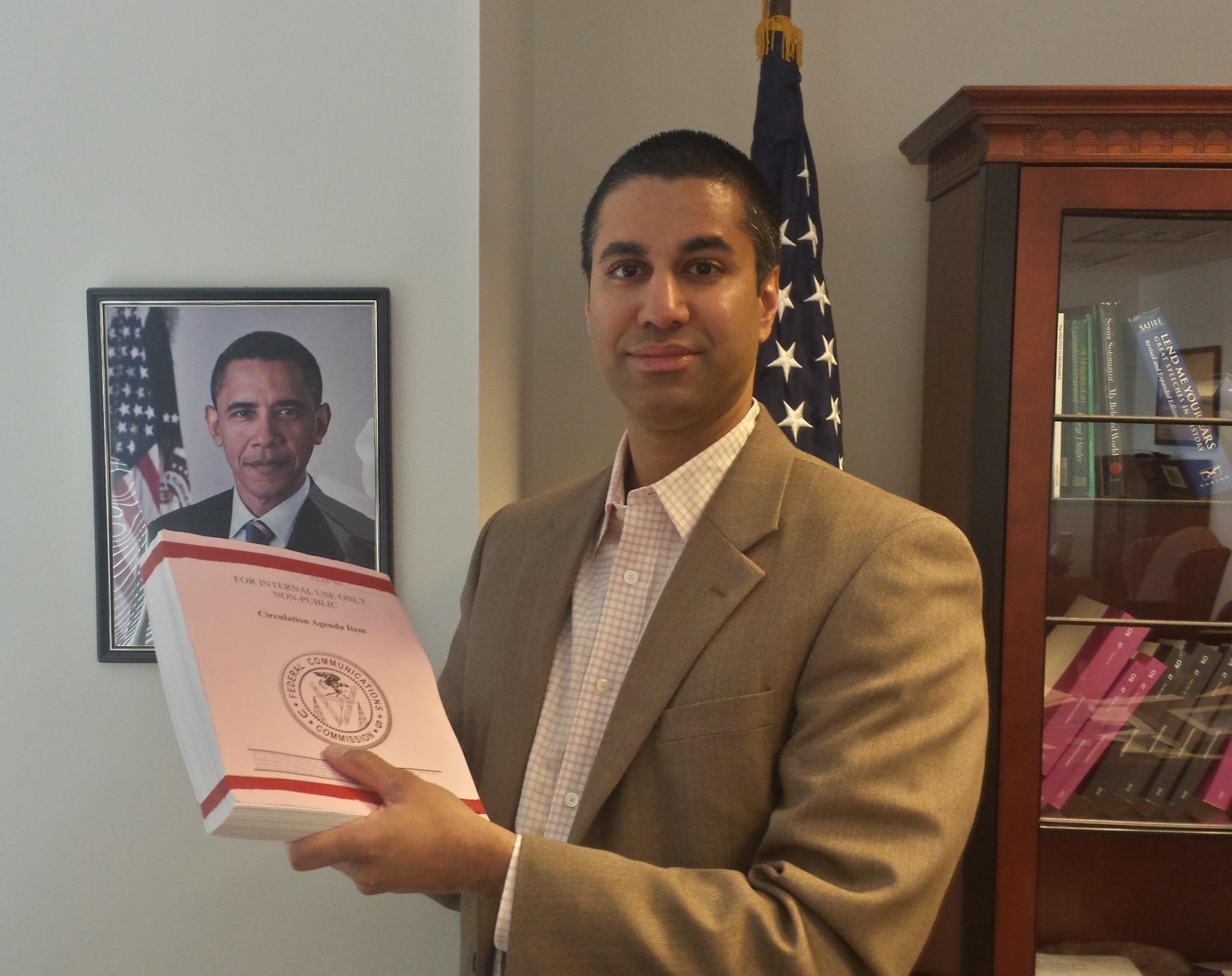
Ajit Pai, one of two Republican Commissioners on the Federal Communications Commission (FCC), inferred in a tweet that President Barack Obama’s secret, 332-page “Net Neutrality” document is a scheme for federal micro-managing of the Internet to extract billions in new taxes from consumers and again enforce progressives’ idea of honest, equitable, and balanced content fairness.

View image on Twitter
Ajit Pai        ✔ @AjitPaiFCC
Here is President Obama's 332-page plan to regulate the Internet. I wish the public could see what's inside.

FCC Chairman Tom Wheeler recently acknowledged that the three Democrats on the commission had decided to avoid Congressional input regarding the Internet by adopting President Franklin Roosevelt’s 1934 Communications Act to regulate the Internet with the same federal control as the old AT&T customer monopoly. To make sure that libertarian advocates would remain in the dark, Wheeler “embargoed” release of any of the specifics in the new administrative “policy” that will act as law.

The FCC legislation that was passed eighty-one years ago by the most leftist Congress in American history to ban companies from participating in “unjust or unreasonable discrimination” when providing phone services to customers.

But in 1949, the Democrat-dominated Commission implemented the “Fairness Doctrine” that required holders of media broadcast licenses to present “issues of public importance” in a manner that is “honest, equitable, and balanced” in the “Commission’s view. It would take 39 years before a conservative Congress could overturn a policy that hijacked the mainstream media to kowtow to liberals or face loss of their licenses.

If the Internet economy was a country, it would rank fifth, behind only the U.S., China, Japan, and India. Economic activity on the Internet totals $4.2 trillion, and almost half of the earth’s 7 billion people are already connected to the Web.

Ajit Pai’s description of “President Obama’s 332-page plan to regulate the Internet” sounds Orwellian. He tweeted a picture of himself holding the 332-page plan just below a picture of a smiling Barack Obama with a comment, “I wish the public could see what’s inside.” The implication depicted Obama as George Orwell’s “Big Brother.”


Pai also released a statement: “President Obama’s plan marks a monumental shift toward government control of the Internet. It gives the FCC the power to micromanage virtually every aspect of how the Internet works,” he said. “The plan explicitly opens the door to billions of dollars in new taxes on broadband… These new taxes will mean higher prices for consumers and more hidden fees that they have to pay.”

Pai had previously observed that he was concerned about the plan would hinder broadband investment, slow network speed and expansion, limit outgrowth to rural areas of the country, and reduce Internet service provider (ISP) competition.
“The plan saddles small, independent businesses and entrepreneurs with heavy-handed regulations that will push them out of the market,” Pai said. “As a result, Americans will have fewer broadband choices. This is no accident. Title II was designed to regulate a monopoly. If we impose that model on a vibrant broadband marketplace, a highly regulated monopoly is what we’ll get.”

Pai’s confrontational comments came after FCC Chairman Tom Wheeler penned an op-ed in Wired Magazine detailing his spin on the core aspects of the Democrat’s desire to lump ISPs under the amended Title II of the 1996 Telecommunications Act — which was used to break-up the AT&T telephone monopoly into four regional Bell companies at the dawn of the digital age.

“Using this authority, I am submitting to my colleagues the strongest open internet protections ever proposed by the FCC,” Wheeler wrote on Wednesday. “These enforceable, bright-line rules will ban paid prioritization, and the blocking and throttling of lawful content and services.”
[...]
Read the rest: breitbart.com

Tuesday, October 28, 2014

Repugnance: What You Need to Know and Do to Restore Your Liberty

According to James Madison, “repugnance,” in the form of disobedience that is, is essential for stopping the federal government. So if your response to federal overreach is voting bums out, complaining about it on Facebook, going to protests and suing them in court, they’ll always win until you step up your game and add some “repugnance” to your tactics.

WATCH IT:

Want to stop unconstitutional or just plain bad federal acts? James Madison said your repugnance is needed to get it done.
 
But he didn’t mean just show contempt. In 1788, repugnant meant something far different than how it’s used today.
 
The #1 dictionary of the time defined it as “disobedient; not obsequious” (compliant)
 
Let that sink in.
 
If you want to stop the federal government, you have to disobey them
 
In other words, your response to federal overreach needs to be more than voting bums out, complaining about it on Facebook, going to protests and lawsuits.
 
So if that’s all you’re doing, realize that it’s never going to work unless you also start following the advice of the guy known as the “Father of the Constitution.” He obviously knew much more about enforcing the Constitution than anyone today.
 
Liberty takes risk – and it takes hard work. The founding generation risked it all when they separated from the British empire. While we don’t need to match that rare act of courage, we definitely need to step up our game and show some real repugnance, disobedience, that is.

via 10thACenter

Saturday, October 18, 2014

Has the web we love been turned against us?

Fighting surveillance with technology

Inside The Dark Web - Documentary

Published on Sep 5, 2014


Twenty-five years after the World Wide Web was created, the issue of surveillance has become the greatest controversy of its existence. With many concerned that governments and corporations can monitor people's every move, this programme meets hackers and scientists who are using technology to fight back, as well as the law enforcement officers who believe it's leading to opportunities for risk-free crimes.

With contributors including World Wide Web inventor Tim Berners-Lee and WikiLeaks co-founder Julian Assange.

Thursday, October 9, 2014

As FBI Spying Program Goes on Trial, Twitter Sues U.S. Government over Surveillance Data Disclosure

Thursday, October 09, 2014

Federal courthouses were busy this week with cases challenging the federal government’s ongoing attempts to pry into Americans’ communications and activities.

In San Francisco, the Ninth Circuit Court of Appeals on Wednesday heard arguments from the Electronic Frontier Foundation seeking to restrict the Federal Bureau of Investigation’s (FBI) use of National Security Letters (NSLs) to obtain communications and financial records from U.S. businesses, according to National Journal.

The use of NSLs has expanded considerably in the post-9/11 era, with the FBI issuing hundreds of thousands of them since the USA Patriot Act (pdf) went into effect shortly after the attacks. The demands for records often come without court approval but with gag orders preventing companies from telling the public or their customers about their compliance with NSLs or even the existence of the letters.

In Wednesday’s oral arguments, Judge N. Randy Smith questioned Department of Justice (DOJ) attorney Douglas Letter about the petition process to fight the gag order, which takes years. “Why is it that the petitioner is going to be gagged for as long as the government desires and the only way the order ever comes up is if the petitioner does something about it and then the petitioner is prohibited from attacking it for a year?” 

Smith asked. “If I really want to make this as narrow as possible, we ought to have something in here about the government’s responsibility to end the order.” Letter, according to Courthouse News Service, said the burden on the government would be too severe.

Regardless of the Ninth Circuit’s decision, the matter is expected to wind up before the U.S. Supreme Court.

The issue of federal gag orders is at the heart of another lawsuit against the government, this one involving Twitter.

The social media giant sued the government Tuesday, claiming the DOJ has violated its First Amendment rights by stifling its ability to tell users about government surveillance.

Twitter has been prevented from revealing to account holders about information they were forced to turn over to Justice and FBI investigators. The law now says that providers can only release information in broad ranges, such as 0 to 999 requests, even if no requests for information were made.

“It’s our belief that we are entitled under the First Amendment to respond to our users’ concerns and to the statements of U.S. government officials by providing information about the scope of U.S. government surveillance – including what types of legal process have not been received. We should be free to do this in a meaningful way, rather than in broad, inexact ranges,” Ben Lee, a Twitter vice president, wrote in a blog post.

Twitter is hoping for a declaratory judgment, according to Courthouse News Service, that would say the secrecy and broad reporting requirements are unconstitutional.

The American Civil Liberties Union (ACLU) “favorited” Twitter’s suit. “Technology companies have an obligation to protect their customers’ sensitive information against overbroad government surveillance, and to be candid with their customers about how their information is being used and shared,” Jameel Jaffer, ACLU deputy legal director, told The New York Times. “We hope that other technology companies will now follow Twitter’s lead.”

-Noel Brinkerhoff, Steve Straehley

To Learn More:
Twitter Sues USA for the Right to Publish Surveillance Data (by Arvin Temkar, Courthouse News Service)
Twitter Sues U.S. Government over Data Disclosure Rules (by Mike Isaac, New York Times)
The FBI’s Secret Surveillance Program Is About to Go on Trial (by Dustin Volz, National Journal)
Taking the Fight for #Transparency to Court (by Ben Lee, Twitter)
‘National Security Letters’ Face Sharp Scrutiny in 9th Circuit (by Maria Dinzeo, Courthouse News Service)
Tech Firms’ Release of NSA Data Request Totals is Limited by Gag Orders (by Noel Brinkerhoff and Danny Biederman, AllGov)
Major Tech Firms, Fearing Loss of Profits, Call for Reform of Government Surveillance; Obama Hedges (by Noel Brinkerhoff and Danny Biederman, AllGov)
Tech Companies Wrestle with U.S. Government over Disclosure of Data Requests (by Noel Brinkerhoff and Danny Biederman, AllGov)

Sunday, September 21, 2014

Internet Sales Tax Coming

By Kelleigh Nelson
February 20, 2013
NewsWithViews.com

"All the world should be taxed" —Caesar Augustus

The only difference between a tax man and a taxidermist is that the taxidermist leaves the skin. —Mark Twain

The power to tax is the power to destroy. —John Marshall - Chief Justice of the Supreme Court 

Big Government Republican - Who Owns Him -
On Thursday, February 14, 2013, Senator Lamar Alexander, Republican from Tennessee, joined fellow lawmakers in reintroducing a bill that would allow all states to require online retailers to collect sales tax just like their "Main Street" rivals.

Saturday, September 13, 2014

Bush Administration Threatened to Fine Yahoo $250,000 a Day if it didn’t Cooperate with Spy Program

Bush Administration Threatened to Fine Yahoo $250,000 a Day if it didn't Cooperate with Spy Program

Yahoo's participation last decade in the George W. Bush administration's domestic spying program came only after the Internet giant was threatened with heavy penalties and fought unsuccessfully in court to resist the government's orders to turn over private data about its users.

Newly released court records show Yahoo agreed to comply with demands from the National Security Agency (NSA) to provide copies of customers' emails and other online communications. Its actions, however, were prompted by the threat of being fined $250,000 a day if the company did not play ball with the NSA's PRISM program that sought to mine information from Internet providers.

"The released documents underscore how we had to fight every step of the way to challenge the U.S. Government's surveillance efforts," Yahoo General Counsel Ron Bell wrote in a blog post published after the unsealing.

Attorneys for Yahoo argued before the Foreign Intelligence Surveillance Court (FISC) that the agency's demands were broad and unreasonable and a probable-cause warrant should be required, making the data requests unconstitutional, The Washington Post reported. Yahoo also argued that the demands were "entirely in the hands of the Executive Branch without prior judicial involvement" thereby ceding to the government "overly broad power that invites abuse," according to Wired.

But the secret court rejected those arguments, which led the way not only for Yahoo but other technology businesses such as Google, Facebook, Apple and AOL to feed data on their users to PRISM. Yahoo appealed the ruling, but lost there as well.

The court documents were released following a ruling last year by the FISC and the Foreign Intelligence Surveillance Court of Review that authorized the government to declassify the Yahoo case from 2008.

An earlier version of the decision surfaced in 2009, "but was so heavily redacted that observers were unable to discern which company was involved, what the stakes were and how the court had wrestled with many of the issues involved," the Post's Craig Timberg wrote.

"We already knew that this was a very, very important decision by the FISA Court of Review, but we could only guess at why," Stephen Vladeck, a law professor at American University, told the newspaper.

The PRISM program was made public through documents released by NSA whistleblower Edward Snowden. Tech companies, including Yahoo, initially took a lot of heat for turning over data to the government, but the background of Yahoo's fight was later made public through more Snowden documents.


-Noel Brinkerhoff, Steve Straehley

To Learn More:
Government's Threat of Daily Fine for Yahoo Shows Aggressive Push for Data (by Vindu Goel and Charlie Savage, New York Times)

Sunday, September 7, 2014

Debunking the Debunkers


Debunking Debunkers

Sat, 30 Aug 2014 08:00:00 PDT


By Foster Gamble

I love debunkers — the REAL ones. I am a rational skeptic and I know a dedicated and skillful debunker can save us all time and help keep us from being duped yet again in dangerous and impactful ways. The problem is finding and identifying the real ones in a murky sea of fake naysayers and hating trolls with a hidden and biased agenda that does not prioritize truth.

We are living in an unprecedented era where one person or a small team can use independent and alternative media to communicate key perspectives to millions of people worldwide — in a short amount of time. Given what we are dealing with in the way of planetary demise, this is a really good thing!

The flip side, however, is that someone with very little real expertise can undermine valuable inquiry and healthy skepticism. I met one man who said he was going to watch THRIVE, but then changed his mind when he saw that it "had been debunked." I asked if the debunking had made sense to him. "Oh I didn't actually read it. I just saw it had been debunked." My immediate reaction was a punch in the gut. 

How often are people throwing away or discrediting years of valuable fact-checked research on the grounds of a baseless attack?

Most importantly, why is that and how do we get good at sorting out the truth?

Lessons from the Trenches


If you are challenging the dominant paradigm as peddled in the corporate media and your influence is expanding, debunkers will enter your life. It goes with the territory. One of our seasoned advisors, a successful whistleblower who has survived one wringer after another, told us before THRIVE came out, "You're going to get it from all sides, and if you're not taking flak, you're probably not over the target yet."

I want to offer some of what we have learned about debunkers, detractors, haters and trolls in relation to THRIVE.

  • Who are they?
  • Why do they do what they do?
  • How can we recognize and deal with them effectively?
  • And why bother?

An accurate assessment of what's going on is critical if we want to create effective solutions. If we don't have a true understanding of the problem, we won't put our attention on the innovations that can best meet the challenges we face. So debunking the debunkers has a huge payoff. It helps us to sleuth out factual truth and create a safe environment from which to engage in meaningful public dialogue and transform our world into one that actually works for everyone.

Hogwash and Hooey, Baloney and Bull


I looked it up, and "bunk" is short for "bunkum." It's an old word from 19th century America that means "nonsense." Other dictionary synonyms are "baloney, rot, hogwash, applesauce, bull, and hooey." So when a group like snopes.com spends serious time and rigor separating the fabricated hogwash and hooey from facts and realities on the Internet, it's a valuable service. Wikipedia used to be helpful, but is now so co-opted on virtually every controversial issue, that its merit has been severely undermined for important topics that challenge major money or control interests.

The Fed and ETs


I remember the first time I heard (from my son!) that the Federal Reserve was a private corporation and that no government agency could overrule their actions. I found it hard to believe and went on the Internet to look it up. At the time, there were very few sites addressing this issue, and many of them just discredited anyone questioning the reality or wisdom of the Fed's printing money out of nothing. I came away not knowing what to think. Fortunately, my son kept giving me more and more evidence. The same thing happened when I first heard about the military covering up their involvement with UFOs. The notion seemed far-fetched to me when I first heard about it, and by the time I made it through the first debunking sites, I would have been pretty skeptical that there was any real issue to discover there were it not for the dedication of a few individuals to wake me up.

Fast forward to 2014, where we now have over 36 million sites addressing the issue of the Federal Reserve, many of which are intelligent analyses and critiques of a corrupt system of counterfeit finance that has left the country and an alarming percentage of its citizens in debt slavery. It's an acknowledged fact that Brazil, Russia, India, China and South Africa (known as the BRICS countries) have now formed their own bank to bypass the stranglehold of the Federal Reserve and the World Bank, and people from all walks of life acknowledge the corruption of the system and the need to get out from under it.

As for UFOs and the military, while debunking sites abound, there are enough credible documents and confessions from high-level government, military and FAA insiders to inspire any sincere researcher to look further, and to recognize that the subject warrants serious inquiry and public dialogue.

What happened? What did it take to overcome a disinformation campaign and legitimize once-denied information and insight? My guess is that it took persistence, and a lot of people with a strong enough desire to get to the truth that simple mudslinging and cheap dismissals weren't enough to squelch their questioning…despite the discomfort.

Challenging the System


By the time we made THRIVE, Kimberly and I had both experienced the discomfort of asking socially-taboo questions and looking into controversial topics enough to recognize the power of disinformation campaigns. We suspected we would be the target of some likely disinformation and reputation-bashing when we released THRIVE. And of course, that turned out to be true.

THRIVE covers at least 14 topics that stretch the status quo. For most people, there is at least one theme that's challenging to consider. But in the nearly three years since its release, there is not a single fact in THRIVE that has been disproven. And yet the debunking of our film was rampant in its early days.

Now, virtually everything and everyone who is effectively challenging the banking elite's agenda for global control will have sites or trolls actively debunking them and their message.

Who Are the Debunkers?


First, let me say again that there are skillful truth-seeking "debunking" sites whose priority seems to be accuracy and they seem to get it right almost all the time. And then there are hired hands who work for the government, for corporations, the intelligence agencies, the military and political parties. I have been assured of this by people formerly on the inside and here is a video clip that documents and verifies some of this.

These cyber mercenaries are called "trolls" perhaps because their behavior resembles the mythical mini-beasts who live under bridges and hassle innocent passers-by.


What Are Some of Their Strategies?


When working for these types of groups, their job is to find anything that might undermine the credibility and propaganda of their institutions and then attack the content — with either:

  1. Disinformation.
  2. Distraction.
  3. Outright lies.
  4. Trying to smear the credibility of the truth-teller. If none of that is effective, the next tactic is to make it unpleasant and unsafe for anyone to make positive comments, effectively.
  5. Scaring enthusiasts away from the site or thread altogether.

How Can We Identify Them?