Search Blog Posts

Showing posts with label Propaganda. Show all posts

Tuesday, April 21, 2015

Government Schools—the god that failed on purpose

By Al Benson Jr.
Posted on

In the past I have commented on how most people view public schools, how many have commented on their gross failure to educate and I have stated that the public schools have really not failed—at what they were instituted to do—the dumbing down of our kids. At this they have been a smashing success.

What they have failed to do, and this is on purpose, is to educate the children committed to their charge. They continue to turn out graduates who don’t even know what century the War of Northern Aggression was fought in or who Hitler was, or who was president before our current Commissar took the office.

I am not saying that every public school teacher is a “bad” person or even that everyone working for a public school system is a bad person—I have a niece that is a public school teacher and she is well acquainted with many of the tragic problems in that system. There are lots of good folks that, in one way or another, work in the public school system and it’s not them that are evil—it’s the system itself and the agenda of the Educational Establishment in this country.

The main problem with the public, or government, school system is that its founders and true adherents have a messiah complex. The wish to replace the Triune God with their educational system—not to educate children, but to control and manipulate them—to make them into compliant little robots to be used by the New World Order as they deem fit. The mindset of those running the current governmental education establishment goes all the way back to the Tower of Babel—they are going to build a tower that reaches to Heaven and make a name for themselves and create a people that will do their will, not God’s.

Unfortunately “their will” is something most Christians and patriotic people wish to remain blissfully unaware of. “Don’t tell us that “right-wing stuff” we don’t want to be aware of all that. If we are we might have to assume some responsibility personally for our kids’ education, and that’s the absolute last thing we want.” 

Personal responsibility—ugh!!! Forget that—let the schools do it—and the public schools are only too happy to do it—at the expense of your kids’ souls!

Just recently, I came across an article on http://www.thearrowsoftruth.com titled The Rockefeller School System: Compulsory Indoctrination Camps for Social Control that was published back in November of 2012. The article stated: “The first federalized U.S. educaton boar was the 1870 founded NEA (National Education Administration) which quickly announced that countrywide school science courses must be restructured to teach ‘evolution’ as fact, not theory. Having gained a fair amount of pull in the NEA, in 1903, John D. Rockefeller created the GEB (General Education Board) in an effort toward ‘this goal of social control.’ Later, in 1923 he would also created the International Education Board providing over $20 million to promote education abroad. The Rockefeller, Carnegie and Ford groups have often funded (and thus steered) American education more so even than the government.” One thing you need to realize here from this statement is that these people are the “real government” that calls the shots and the people you thought you elected to office are often little more than political puppets being directed by the Rockefellers, Carnegies, Fords, the Council on Foreign Relations, the Trilateral Commission and the Bilderbergers. That’s where the real power in this country lies—not in those you voted for—they are just the “house slaves” carrying out Massa’s orders, for which they get “house privileges” and assorted perks.

The article continues: “Reading through the papers of the Rockefeller Foundation’s General Education Board an endowment rivaled in school policy influence in the first half of the twentieth century only by Andrew Carnegie’s various philanthropies, seven curious elements force themselves on the curious reader: 1. There appears a clear intention to mold people through schooling. 2. There is a clear intention to eliminate tradition and scholarship. 3. The net effect of various projects is to create a strong class system verging on caste. 4. There is a clear intention to reduce mass critical intelligence while supporting infinite specialization. 5. There is clear intention to weaken parental influence. 6 There is clear intention to overthrow accepted custom. 7. There is a striking congruency between the cumulative purposes of GEB and the utopian precepts of the oddball religious sect, once known as Perfectionism, a secular religion aimed at making the perfection of human nature, not salvation or happiness, the purpose of existence. 

The agenda of philanthropy, which had so much to do with the schools we got, turns out to contain an intensely political component.” And this is a quote from the John Taylor Gatto book The Underground History of American Education.

And the article gives a short list of organizations funded by the Rockefellers. Some of them are: Atlantic Union, Council on Foreign Relations, Federation of World Governments, The Trilateral Commission World Affairs Council, United World Federalists. Notice any trends in this list? All of these groups in one way or another promote World government.

In his informative book The Rockefeller File which I believe can be found on the Internet, author Gary Allen noted comments by a former Baptist pastor, Frederick Taylor Gates, who had pastured a church in Minneapolis, Minnesota. Gates left that pastorate, was appointed secretary of the American Baptist Education Society, and, in that post, he championed a Baptist university in Chicago, which became the University of Chicago—one of the most leftist universities in the country. In 1889, Gates met John D. Rockefeller and became one of his advisors. Gary Allen has observed that: “Daddy Oilbucks (Rockefeller) put his assistant, Fred Gates, in charge of his General Education Board. Gates tipped the Rockefeller philosophy on education in the Board’s Occasional Paper No. 1: In our dreams we have limitless resources and the people yield themselves with perfect docility to our molding hands. 

The present educational conventions fade from our minds, and unhampered by tradition, we work our own good will upon a grateful and responsive rural folk.” Gives you the warm fuzzies doesn’t it?

Some commentators have claimed this quote was taken out of context and really doesn’t mean what it sounds like, but if “Rev.” Gates ended up as an advisor to Rockefeller then you have to know that this One World mindset about educational control is where he was coming from. Had it not been, then Rockefeller would have had no use for him. And you have to wonder, looking at the University of Chicago now, where the Baptists lost control. I recall reading a little book, years ago entitled How Red is the University of Chicago?

Allen also noted that “The Rockefeller and Carnegie foundations, which often had interlocking directorates and many times acted in unison, began in the early Thirties to back John Dewey and his Marxist educationists with enormous amounts of money.” This is the same John Dewey that had so much to do with shaping public education in this country, the man that was a signer of Humanist Manifesto 1. Check that one out on the Internet too, while you still can.

The thing to remember here is that those who ran these foundations and had a One World Government mindset are the very ones that financially helped to design the curriculum that most of us were taught in government schools, and they are still doing it. Your kids today are getting fed the same One World Swill we were fed in government schools. It was, and still is, anti-Christian, as it was intended to be from the beginning. You can have all the Christian teachers you want in public schools, but if they are forced to teach this stuff, whether knowingly or not, where is their Christian testimony? The sincere teachers and the kids have been sold down the river and are forced to partake of the One World outlook that goes all the way back to the Tower of Babel. I realize the folks, even Christians, that prefer to have their kids “educated” in this setting won’t be influenced by what I have written here, but at least they will not be able to say no one ever told them. Lots of folks over the past hundred or so years have told them and the fact that they are not listening in the main is one reason this country will be judged.

And, coincidentally, in this vein, Sam Blumenfeld and Alex Newman have just written a book called Crimes of the Educators: How Utopians Are Using Government Schools To Destroy America’s Children. This was published by WND Books in April of this year.

Thursday, April 2, 2015

‘Reuters lied’: MH17 witness says reporter falsified testimony


Published time: March 30, 2015 08:30 


A Lugansk Region resident, whom Reuters cites as saying he saw evidence of a surface-to-air missile launched from rebel-held territory on the day MH17 was downed, told RT the news agency gave a false report of his interview.

As a part of a March report on the Malaysian Airlines flight MH17 tragedy Reuters talked to Pyotr Fedotov, a 58-year-old resident of the village Chervonniy Zhovten in the Lugansk Region of eastern Ukraine.

“When interviewed by Reuters, Fedotov, the witness who described the 'wiggling' rocket, at first said on camera that it was fired from territory held by the Ukrainian army. Later, off camera, he said it was launched from a nearby rebel area. Asked why he had originally said the opposite, he said it was because he was afraid of the rebels," the news agency said. 

RT contacted Fedotov and he said that Reuters correspondent Anton Zverev was "less than accurate" with his testimony.

“When we talked about the Boeing on camera, I explained everything as it was. The things that I allegedly said off-camera were just made up by the journalist. It's all lies. Off-camera, we never discussed the Boeing,” Fedotov told RT.

He added that the Reuters journalist contacted him after taking the interview, but never showed him a draft of the article. Instead he was asking whether Fedotov had got into trouble for speaking to him.

 
“The journalist called me and asked if I was in trouble. I was really surprised. Why would I be in trouble if I told the truth? And then my friends told me in the article I was saying different things when the cameras were on and off. That's when I understood why he was asking if I was in trouble,” the witness explained.

“So it's mere fantasy from the journalist or maybe he was doing it for his own benefit,” he added.

RT’s request to Reuters for comments on the controversy and raw footage of Fedotov’s interview was not replied to as of publication of this article.
READ MORE: Lavrov condemns Reuters report on MH17 crash, calls for 'unbiased, professional' investigation

Reuters’ reporting was not based solely on Fedotov’s testimony. The agency cited three other eyewitnesses from the village, but only Fedotov was cited as pointing to either side of the conflict as firing the missile. The report emphasized that the eyewitness accounts didn’t conclusively prove that the rocket they saw was the one that downed Flight MH17.

Earlier in March, Russian Foreign Minister Sergey Lavrov condemned the Reuters report of witnesses’ statements, saying it "looked like a stovepiping." The top diplomat also then said that questions posed by Russia’s officials remained unanswered, saying there have been no promised images from American satellites or recordings of Ukrainian air traffic controllers’ communications with the plane.

The Malaysian Boeing 777 airliner was downed over eastern Ukraine on July 17 last year, killing 298 people on board. The incident became an instant controversy, with Ukraine and its Western backers accused rebel forces and Russia of being behind the downing.
READ MORE: Ukraine media falsely claim Dutch prosecutors accused Russia of MH17 downing

An investigation into the incident is being conducted by the Netherlands, but the preliminary report released last year didn’t point even to a kind of weapon used in the downing of the aircraft, only that an outside force destroyed it mid-air.

Russia called not to jump to conclusions and made military radar data public which indicated the presence of Ukrainian surface-to-air batteries and warplanes in the area on the day of the Boeing shooting.

Earlier Ukrainian media falsely claimed that Dutch investigators concluded that MH17 had been shot down by the rebels with a Buk missile, citing a report in the Dutch media that outlined the popular theory, but didn’t claim it to be proven. Dutch prosecutors told RT at the time that the investigation had not been concluded. 
Source


Wednesday, April 1, 2015

Why is the US military making fake social media accounts?

Swaying public opinion 


More videos like this
 

An insidious practice

The US military has been given software which can create fake online social media personas.

These accounts are used to “create false consensus in online conversations, crowd out unwelcome opinions and other commentaries or reports that do not correspond with its own objective”.

They may not be controlling the internet directly, but such covert manipulation of online conversations is just as destructive, and worlds more deceitful.


Sunday, March 29, 2015

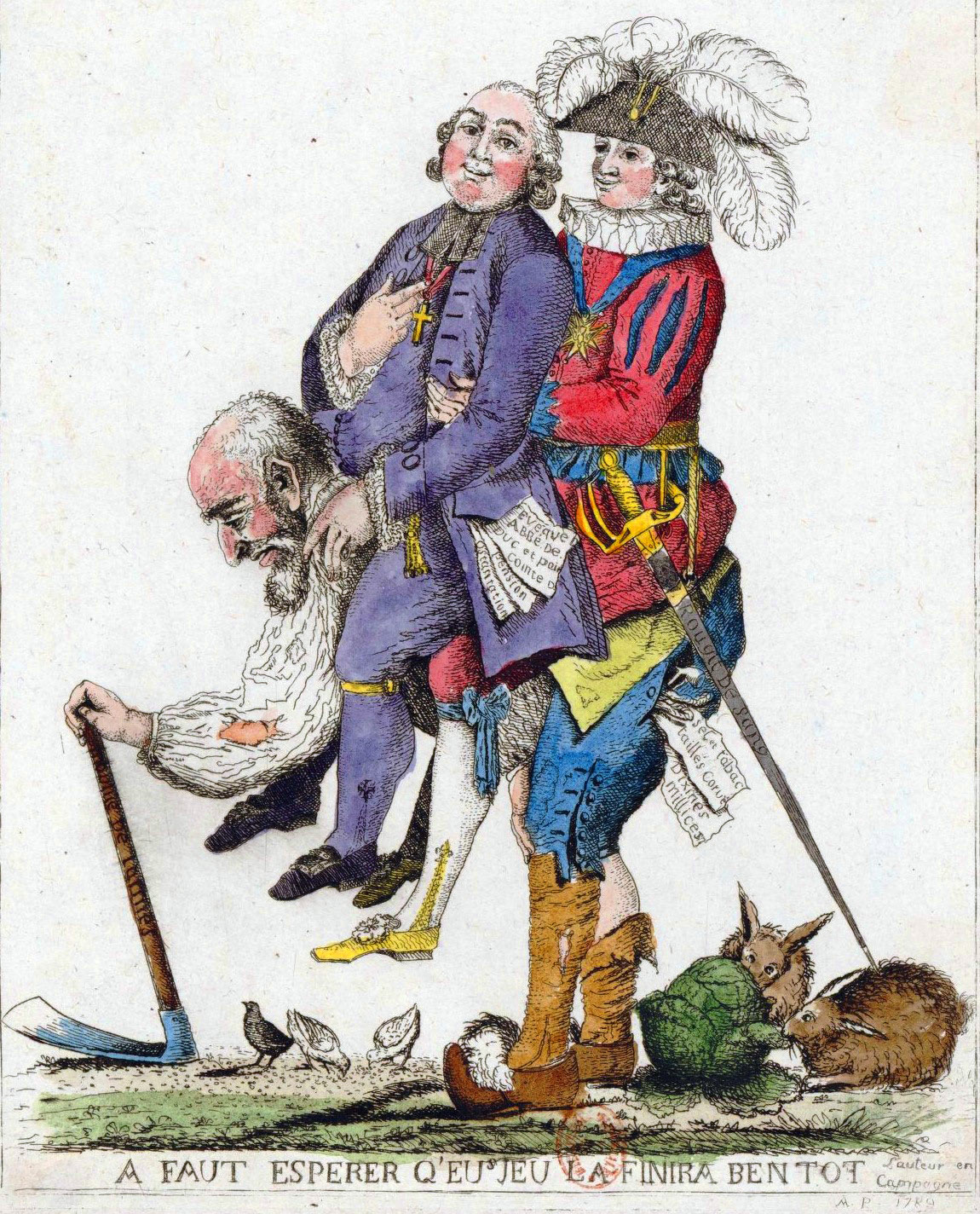
Will America's Revolution be another French Terror? - *7min. vid*

Let's hope not. For one thing France is today, and in a shorter time, more socialist than we are. Our Constitution for individuals' liberties is superior, yet "we the people" send people to represent us who denigrate it, and tolerate its decay and abuse. Second, while violence may be thought of as an alternative, today we have the UN which could summon world troops to our soil expeditiously to crush us. Ron Paul has pointed us in the right direction, but will we snore on, and look to the problem of Government for the solution?

Would you deny that America is well on its way to creating her very own "committee of public safety"?


              Oh ye of the Third Estate, take heed!

What About the French Revolution?

Friday, November 18, 2011 – by Staff Report
from The Daily Bell

We are increasingly believers in "directed history" – history that's coordinated by a power elite intent on creating one-world government. We've written a good deal about the directed history we're seeing as regards Occupy Wall Street. We think that the movement has been set up to be divisive and ultimately to reinforce the power of the state. Out of chaos ... order.


That's probably the reason the movement has no agenda. The people at the top who are manipulating the movement know what they want to achieve and are doing so in order to trigger increased social discord. The ultimate aim, perhaps, is to enhance world government. We've explained the parallelism here: VIDEO: Parallels Between Early 20th Century and Present Are Scary.

But there are even more parallels. The Tea Party movement in America was organic to begin with. It was a bit like the American Revolution. But having observed the American Revolution, the power elite of the day (from what we can tell) fomented the French Revolution.

That's how long the modern conspiracy to set up world government has been going on, in our view – about 300 years, maybe since the founding of the Illuminati. The American Revolution, manipulated as it may have been, ultimately was in a sense anti-government and focused on individual freedom.
English: The Third Estate carrying the
Clergy and the Nobility on its back
Français : Le Tiers-État portant le
Clergé et la Noblesse sur son dos.

The French Revolution was set up deliberately to be "pro-government" – or pro-force at any rate. It was designed to defuse classical liberalism and freedom by proposing that government in the hands of an expert technocracy could "perfect" society and humankind.

Post revolution, between 1789 and September 1791, the French National Assembly reformed the ancient regime. They accomplished this with six basic statements, according to the website Modern European Intellectual History. Here are three of six. We've substituted the word "bankster" for "clergy" and "monarch" ...

•the abolition of special privileges of BANKSTERS through the legalization of equality (August 4, 1789)

•they subordinated BANKSTERS to the State. In November 1789, the National Assembly confiscated all BANKSTER property. And in early 1790, they passed the civil constitution, which reduced the power of the BANKSTERS who were now selected and paid by the State

•in September 1791, the National Assembly drew up a constitution, something it had been trying to do since June 1789. The constitution of 1791 specified such liberal ideas as limited BANKSTERS and full equality before the law

"Populist" movements like the French Revolution rarely end well because they are expressions mostly of anger and envy. They are not rational. They eat their own. That's what happened then as the movement began with the idea of overthrowing the regime and ended up by trying to "perfect" society using the power of the state.

Here is a Wikipedia summary:

http://en.wikipedia.org/wiki/French_revolution

The French Revolution (1789–1799), sometimes distinguished as the 'Great French Revolution' (La Grande Révolution), was a period of radical social and political upheaval in France and Europe. The absolute monarchy that had ruled France for centuries collapsed in three years. French society underwent an epic transformation as feudal, aristocratic and religious privileges evaporated under a sustained assault from radical left-wing political groups, masses on the streets, and peasants in the countryside. Old ideas about tradition and hierarchy - of monarchy, aristocracy and religious authority - were abruptly overthrown by new Enlightenment principles of equality,citizenship and inalienable rights.

The French Revolution began in 1789 with the convocation of the Estates-General in May. The first year of the Revolution saw members of the Third Estate proclaiming the Tennis Court Oath in June, the assault on the Bastille in July, the passage of the Declaration of the Rights of Man and of the Citizen in August, and an epic march on Versailles that forced the royal court back to Paris in October. The next few years were dominated by tensions between various liberal assemblies and a right-wing monarchy intent on thwarting major reforms.

A republic was proclaimed in September 1792 and King Louis XVI was executed the next year. External threats also played a dominant role in the development of the Revolution. The French Revolutionary Wars started in 1792 and ultimately featured spectacular French victories that facilitated the conquest of the Italian Peninsula, the Low Countries and most territories west of the Rhine – achievements that had defied previous French governments for centuries.

Internally, popular sentiments radicalized the Revolution significantly, culminating in the rise of Maximilien Robespierre and the Jacobins and virtual dictatorship by the Committee of Public Safety during the Reign of Terror from 1793 until 1794 during which between 16,000 and 40,000 people were killed. After the fall of the Jacobins and the execution of Robespierre, the Directory assumed control of the French state in 1795 and held power until 1799, when it was replaced by the Consulate under Napoleon Bonaparte.

After the Napoleonic Wars and ensuing rise and fall of Napoleon's First French Empire, a restoration of absolutist monarchy was followed by two further successful smaller revolutions (1830 and 1848). This meant the 19th century and process of modern France taking shape saw France again successively governed by a similar cycle of constitutional monarchy (1830-48), fragile republic (Second Republic) (1848-1852), and empire (Second Empire) (1852-1870). The modern era has unfolded in the shadow of the French Revolution. The growth of republics and liberal democracies, the spread of secularism, the development of modern ideologies and the invention of total war all mark their birth during the Revolution.

Below is a short video narrative of the French Revolution. It is simple and direct and written apparently by a high school student. We recommend it for the blunt arc of its narrative, even if it contains some factual flaws. Young people, not being so sophisticated their elders, sometimes see more clearly ...

(Video from byustudent2012's YouTube user channel.)

source: TheDailyBell

Friday, March 27, 2015

Brazil: at Cusp of Monetary Apocalypse

Brazil: Victim of Vulgar Keynesianism

  • brazil and empty pockets

March 27, 2015

All Keynesian roads lead to stagflation. That was the case in Europe and in the United States in the 1970s when both stagnation and inflation hit the economies at the same time. Currently, this is the case in Brazil.

Since coming into power in 2003, the Brazilian labor government has religiously implemented the economic policy doctrine of growth by spending. Now, the country has fallen into stagnation with a recession looming while inflation is on the rise. All economic indicators flash red lights: from economic growth to inflation and the exchange rate, from productivity to investment and industrial production.

Booms and Bubbles, Brazilian Style

Once again, Keynesian policies have led to stagflation. Reality has finally set in. The illusion of easy wealth is shattered. The Keynesian wonder weapon has become impotent. The economic policy teams at the Ministry of Finance and the Central Bank have no notion what to do now. After all, they know of no other economic policy doctrine than to stimulate the economy by spending ever more. Yet with the government’s coffers empty and inflation high and rising, the policy tools of deficit spending and monetary expansion have run out of fuel. Favorable external conditions such as the China boom and high demand for commodities had benefited the Brazilian economy during the presidency of Luiz Inácio “Lula” da Silva. These external factors together with massive internal stimuli accelerated economic growth. With the end of the commodities boom and the slowing of economic growth in China, the external environment factors no longer helped when at the same time internal consumption hit the wall, as consumers had to scale back along with the government as the debt burden approaches its limit.

In early 2015, it became obvious that the country has lived in an illusionary world under the Labor Party over the past twelve years. Now it seems like a joke that President Lula once announced that Brazil’s economy was about to overtake that of the United Kingdom and from then on move upward on the ladder of the large economies. Yet when it was announced in 2007 that Brazil was to host the Soccer World Championship in 2014 and when in 2009 the Olympic Committee selected Rio de Janeiro for the Olympic Games in 2016, it seemed that the much-wanted international recognition of the president’s achievements had arrived. The jubilation at home was fully matched by the exuberance abroad about how Lula would lead Brazil into the twenty-first century.

Just as much as many Brazilians did not want to recognize, foreign observers, too, shut their eyes to the fact that the Brazilian Labor Party has been practicing one of the crudest forms of Keynesianism. The Brazilian kind of Keynesianism is deeply mixed with the Marxism of Michal Kalecki. In Europe and the United States remnants of sound economics survived at the onset of the “new economics,” and later on partially recovered classical and neoclassical principles. In Brazil there has been an almost complete victory of “Kaleckian Keynesianism” with most other types of macroeconomics cast aside.

Can the Government Turn Stones into Bread?

Even today, the Polish economist Kalecki is still held in high esteem at some of the most prominent Brazilian universities. The version of “Keynesianism” that he developed in the 1930s has become the leading paradigm for economic policymaking albeit this type of macroeconomics lacks any micro-foundation and is largely void of realistic content. The Kaleckian version of Keynesianism takes the macroeconomic symbols for real and by moving them around according to the basic rules of algebra, the model finally is brought to the conclusion that “workers spend what they earn,” while “capitalists earn what they spend” (as this theory was once summarized by Kaldor).

Kalecki and his Marxist followers consequently decided that when the state assumes the capitalist function, government could spend the country to wealth while workers would get their fair share as consumers. Even more so than Keynes, Kalecki’s gospel preached that its believers could turn stones into bread. Government spending for whatever purpose combined with mass consumption promised a most pleasurable way to prosperity. This promise has been the economic policy principle of the Brazilian Labor Party government over the past twelve years.

During much of the two presidential periods of da Silva from the beginning of 2003 to the end of 2010, the Kaleckian-Keynesian recipe seemed to work. The Brazilian government under the former trade union leader spent, the consumers consumed, and the economy grew. All the while, price inflation remained subdued and the unemployment rate fell. No wonder that President Lula enjoyed immense popularity during his two terms and that Lula’s Labor Party would remain in power when his handpicked successor won the elections for presidency in 2010 and in 2014.

Dilma Rousseff, however, a politician by trade and former urban guerilla fighter, had a hard time winning the elections. When running for her second mandate, dark clouds began to overshadow the still blatant optimism of the ruling party. In 2011, the economic growth rate began to fall. The government first brushed it away as a temporary dip, yet when the rate continued to decline even more in 2012, the government began to panic. With the election coming up in 2014, the government did what the Kaleckian-Keynesian recipe prescribes and accelerated even more its expansive policies. This may have won the election for her, but the price to pay came in high later on.

Disillusion Sets In

Now, in early 2015, disillusion has fully set in. People feel cheated by the false optimism of the government. The corruption scandal of the Brazilian oil company Petrobras together with the rapidly deteriorating economic conditions drove over a million of Brazilians to the streets on March 15 in protest against the government.

What many of the protesters fail to see, however, is that Brazil needs more than just a change of government. The country needs a change of mind. In order to get on to the path of prosperity, Brazil has to discard its prevalent economic ideology. Brazil has to get rid of its tradition of profligate government spending and easy money, Marxist-inspired state involvement in the economy, and the protectionism that had come with the adoption of Cepalism (the economic policy concept of the Economic Commission of Latin America). Not special circumstances lie at the heart of the current malaise, but wrong ideas about economic policy.

Brazil needs a huge dosage of economic liberalization to find its way out of the current crisis. Less state intervention and much more freedom of doing business must be the first steps. For this to happen a change of mind is needed. Brazilians must open up to an alternative beyond state capitalism. Brazil must embrace laissez-faire in order to prosper.

This task is tremendous and not much different from earlier elections, almost all parties currently represented in the Brazilian Congress belong to the left and the extreme left. There is neither a truly conservative nor an authentic pro-market political party. This situation is more than peculiar because, as surveys consistently show, most of the Brazilians locate their political orientation at the center-right and in favor of free markets.

Marxism Still Dominates the Universities

The reason for this discrepancy lies in the fact that the left dominates higher education, particularly in the social sciences, economics, and law. It is from this group that most political activists come. When the military dictatorship ended in 1984, the university system fell under almost complete control by leftists of all kinds. This way, academic life is ideologically very different from the rest of the Brazilian society where common sense still has prevailed.

Fortunately, intellectual evolution is no longer largely dependent on academia. While the Kaleckian brand of Keynesianism and Marxism still dominates the universities, a strong libertarian movement is on the rise spearheaded by the Brazilian Mises Institute. Young people in particular flock to this site like the proverbial wanderer in the desert in the search for water. In the past, changes of mentality took decades and even centuries in order to unfold.

Nowadays, with the internet, ideas have a market place of their own with free access for all. It should be easy for the Brazilians to learn that it is not enough to be fed up with the present government, but it is high time to transform the country’s state capitalism into a free market system in order to prosper.

Note: The views expressed on Mises.org are not necessarily those of the Mises Institute.

Wednesday, March 25, 2015

Here's How the Media/FBI/Police Apply the SPLC Training Doctrine to Provoke Homefront Terrorism *video*

BUT, says the FBI: "We have no specific threats nor are there any groups we are focusing on." Hellooooo?? Can you spell media Disinformation? It'll bring to mind: Rahm Emanuel: "You never want a serious crisis to go to waste"

Here's video (2 mins.) proof of this police provocateur strategy applied in Canada!


Related to this CNN hype piece is Government Corruption: For Profit "non-profit" Hijacks Justice Department and Homeland Security *vid*
We suspect the disappointing grassroots turnout for Romney will be attributed to a "fear of terrorist" act.  First hype the unlikelihood, then correlate the 'non act' as Cause. How convenient.

Tuesday, March 10, 2015

Neocons Guided Petraeus on Afghan War

March 9, 2015

From the Archive: Before Gen. David Petraeus was caught giving secrets to his biographer-mistress, he was giving special favors and access to influential neocons, one reason why Official Washington was so happy that he received only a hand-slap for his crime, ties that Robert Parry examined in 2012.

By Robert Parry (Originally published on Dec. 19, 2012)

Even after the Iraq War disaster and Barack Obama’s election in 2008, neoconservatives retained their influence over U.S. war policies in Afghanistan through their close ties to George W. Bush’s national security holdovers, such as Gen. David Petraeus who partnered with neocon war hawks in escalating the Afghan War.

How tight Petraeus’s relationship was with two neocons in particular, Frederick and Kimberly Kagan, was explored in a Washington Post article by war correspondent Rajiv Chandrasekaran who described how Petraeus installed the husband-and-wife team in U.S. offices in Kabul, granted them top-secret clearances and let them berate military officers about war strategy.
Gen. David Petraeus posing before the U.S. 
Capitol with Kimberly Kagan, founder and 
president of the Institute for the Study of 
War. (Photo credit: ISW’s 2011 Annual Report)

Though the Kagans received no pay from the U.S. government, they drew salaries from their respective think tanks which are supported by large corporations, including military contractors with interests in extending the Afghan War. Frederick Kagan works for the American Enterprise Institute, and Kimberly Kagan founded the Institute for the Study of War [ISW] in 2007 and is its current president.

According to ISW’s 2011annual report, its original supporters were mostly right-wing foundations, such as the Smith-Richardson Foundation and the Lynde and Harry Bradley Foundation, but it was later backed by national security contractors, including major ones like General Dynamics, Northrop Grumman and CACI, as well as lesser-known firms such as DynCorp International, which provides training for Afghan police, and Palantir, a technology company founded with the backing of the CIA’s venture-capital arm, In-Q-Tel. Palantir supplies software to U.S. military intelligence in Afghanistan.

In her official bio at the ISW’s Web site, Kimberly Kagan touts her work “in Kabul for fifteen months in 2010 and 2011 as a ‘directed telescope’ to General David H. Petraeus and subsequently General John Allen, working on special projects for these commanders of the International Security Assistance Force.”

In the ISW’s 2011 annual report, Petraeus praises Kagan as “a barracuda at some times,” hails her leadership and poses with her for several photographs, including one in his dress uniform with the U.S. Capitol in the background.

The Post article noted that “For Kim Kagan, spending so many months away from research and advocacy work in Washington could have annoyed many donors to the Institute for the Study of War. But her major backers appear to have been pleased that she cultivated such close ties with Petraeus, who went from Kabul to head the CIA before resigning this fall over his affair with [biographer Paula] Broadwell. …

“On Aug. 8, 2011, a month after he relinquished command in Afghanistan to take over at the CIA, Petraeus spoke at the institute’s first ‘President’s Circle’ dinner, where he accepted an award from Kim Kagan. … ‘What the Kagans do is they grade my work on a daily basis,’ Petraeus said, prompting chortles from the audience. ‘There’s some suspicion that there’s a hand up my back, and it makes my lips talk, and it’s operated by one of the Doctors Kagan.’ …

“At the August 2011 dinner honoring Petraeus, Kagan thanked executives from two defense contractors who sit on her institute’s corporate council, DynCorp International and CACI International. The event was sponsored by General Dynamics. All three firms have business interests in the Afghan war.

“Kagan told the audience that their funding allowed her to assist Petraeus. ‘The ability to have a 15-month deployment essentially in the service of those who needed some help — and the ability to go at a moment’s notice — that’s something you all have sponsored,’ she said.”

Earlier Warning Signs

Though the Post article provides new details about Petraeus’s coziness to Washington’s neocons, there have been warning signs about this relationship for several years. In 2010, I wrote articles describing how Petraeus and other holdovers from George W. Bush’s administration, such as Defense Secretary Robert Gates, had trapped the inexperienced Obama into expanding the Afghan War.

On Sept. 27, 2010, I noted that “after his solid victory in November 2008, Obama rebuffed recommendations from some national security experts that he clean house by installing a team more in line with his campaign pledge of ‘change you can believe in.’ He accepted instead the counsel of Establishment Democrats who warned against any disruption to the war-fighting hierarchy and who were especially supportive of keeping Gates. …

“Before Obama’s decision to dispatch [an additional] 30,000 troops [in an Afghan War ‘surge’ in 2009], the Bush holdovers … sought to hem in the President’s choices by working with allies in the Washington news media and in think tanks. …

“For instance, early in 2009, Petraeus personally arranged for Max Boot [a neocon on the Council on Foreign Relations], Frederick Kagan and Kimberly Kagan to get extraordinary access during a trip to Afghanistan. … Their access paid dividends for Petraeus when they penned a glowing report in the Weekly Standard about the prospects for success in Afghanistan – if only President Obama sent more troops and committed the United States to stay in the war for the long haul. …

“‘Fears of impending disaster are hard to sustain, … if you actually spend some time in Afghanistan, as we did recently at the invitation of General David Petraeus, chief of U.S. Central Command,’ they wrote upon their return.

“‘Using helicopters, fixed-wing aircraft, and bone-jarring armored vehicles, we spent eight days traveling from the snow-capped peaks of Kunar province near the border with Pakistan in the east to the wind-blown deserts of Farah province in the west near the border with Iran. Along the way we talked with countless coalition soldiers, ranging from privates to a four-star general,’ the trio said.”

(Frederick Kagan is the brother of Robert Kagan, a co-founder of the neoconservative Project for the New American Century, which began the drive in 1998 for invading Iraq. Robert Kagan, now with the Brookings Institution and a columnist for the Washington Post, is married to Assistant Secretary of State for European Affairs Victoria Nuland, who oversaw last year’s coup in Ukraine. For more on the outsized influence of the Kagans, see Consortiumnews.com’s “Obama’s True Foreign Policy ‘Weakness.'”)

Trapping the President

How Obama was manipulated by Bush’s holdovers – with the help of the neocons – was chronicled, too, in Bob Woodward’s 2010 book, Obama’s Wars, which revealed that Bush’s old team made sure Obama was given no option other than to escalate troop levels in Afghanistan. The Bush holdovers also lobbied for the troop increase behind Obama’s back.

Woodward’s book notes that “in September 2009, Petraeus called a Washington Post columnist to say that the war would be unsuccessful if the president held back on troops. Later that month, [Joint Chiefs of Staff Chairman, Adm. Mike] Mullen repeated much the same sentiment in Senate testimony, and in October, [Gen. Stanley] McChrystal asserted in a speech in London that a scaled-back effort against Afghan terrorists would not work.”

This back-door campaign infuriated Obama’s aides, including White House chief of staff Rahm Emanuel, Woodward reported. “Filling his rant with expletives, Emanuel said, ‘Between the chairman [Mullen] and Petraeus, everyone’s come out and publicly endorsed the notion of more troops. The president hasn’t even had a chance!’” Woodward reported.

According to Woodward’s book, Gates, Petraeus and Mullen refused to even prepare an early-exit option that Obama had requested. Instead, they offered up only plans for their desired escalation of about 40,000 troops.

Woodward wrote: “For two exhausting months, [Obama] had been asking military advisers to give him a range of options for the war in Afghanistan. Instead, he felt that they were steering him toward one outcome and thwarting his search for an exit plan. He would later tell his White House aides that military leaders were ‘really cooking this thing in the direction they wanted.’”
Woodward identified Gates, Petraeus and Mullen as “unrelenting advocates for 40,000 more troops and an expanded mission that seemed to have no clear end.”

The Bush holdovers even resisted passing along a “hybrid” plan that came from outside their group, from Vice President Joe Biden who had worked with JCS vice chairman, Gen. James Cartwright. The plan envisioned a 20,000 troop increase and a more limited mission of hunting Taliban insurgents and training Afghan government forces.

Woodward reported, “When Mullen learned of the hybrid option, he didn’t want to take it to Obama. ‘We’re not providing that,’ he told Cartwright, a Marine known around the White House as Obama’s favorite general. 

Cartwright objected. ‘I’m just not in the business of withholding options,’ he told Mullen. ‘I have an oath, and when asked for advice I’m going to provide it.’”

Rigged War Game

Later, Obama told Gates and Mullen to present the hybrid option as one possibility, but instead the Bush holdovers sabotaged the idea by organizing a classified war game, code-named Poignant Vision, that some military insiders felt was rigged to discredit the hybrid option, Woodward reported.

According to Woodward’s book, Petraeus cited the results of the war game to Obama at the Nov. 11, 2009, meeting as proof the hybrid option would fail, prompting a plaintive question from a disappointed President, “so, 20,000 is not really a viable option?” Without telling Obama about the limits of the war game, Mullen, Petraeus, Gates and then-field commander McChrystal asserted that the hybrid option would lead to mission failure.

“Okay,” Obama said, “if you tell me that we can’t do that, and you war-gamed it, I’ll accept that,” according to Woodward’s book.

Faced with this resistance from the Bush holdovers – and unaware that their war game may have been fixed – Obama finally devised his own option that gave Gates, Petraeus and Mullen most of what they wanted – 30,000 additional troops on top of the 21,000 that Obama had dispatched shortly after taking office.

Obama did try to bind the Pentagon to a more limited commitment to Afghanistan, including setting a date of July 2011 for the beginning of a U.S. drawdown. Though Obama required all the key participants to sign off on his compromise, it soon became clear that the Bush holdovers had no intention to comply, Woodward reported.

Backstabbing

The incoming Obama administration was warned of this possibility of backstabbing by Gates, Petraeus and other Bush appointees when it was lining up personnel for national security jobs.

As I wrote in November 2008, “if Obama does keep Gates on, the new President will be employing someone who embodies many of the worst elements of U.S. national security policy over the past three decades, including responsibility for what Obama himself has fingered as a chief concern, ‘politicized intelligence.’ … It was Gates – as a senior CIA official in the 1980s – who broke the back of the CIA analytical division’s commitment to objective intelligence.”

More than any CIA official, Gates was responsible for the agency’s failure to detect the collapse of the Soviet Union, in large part because Gates had ridden roughshod over the CIA analysts on behalf of the Reagan administration’s desire to justify a massive military buildup by stressing Soviet ascendance and ignoring evidence of its disintegration.

As chief of the CIA’s analytical division and then deputy CIA director, Gates promoted pliable CIA careerists to top positions, while analysts with an independent streak were sidelined or pushed out of the agency.

“In the mid-1980s, the three senior [Soviet division] office managers who actually anticipated the decline of the Soviet Union and Moscow’s interest in closer relations with the United States were demoted,” wrote longtime CIA analyst Melvin A. Goodman in his book, Failure of Intelligence: The Decline and Fall of the CIA.

Instead of heeding these warnings, Obama’s team listened to Establishment Democrats like former Rep. Lee Hamilton and former Sen. David Boren, who were big fans of Gates. [For more on Gates’s role, see Robert Parry’s America’s Stolen Narrative.]

Petraeus was much the same story. A favorite of Official Washington and especially the influential neocons, he was credited with supposedly winning the war in Iraq by implementing the “surge” in 2007, which was advocated strongly by Frederick Kagan and other key neocons.

However, in reality, all Petraeus did was extend that misguided war for another few years – at the cost of nearly 1,000 more U.S. dead and countless more dead Iraqis – thus giving President Bush and Vice President Dick Cheney time to get out of Washington before the ultimate failure of the mission became obvious. The last U.S. troops were forced to leave Iraq at the end of 2011.

Begging Boot

Petraeus had such close ties to the neocons that he relied on them to pull him out of difficult political spots. In one embarrassing example in 2010, e-mails surfaced showing the four-star general groveling before Max Boot, seeking the neocon pundit’s help heading off a controversy over Petraeus’s prepared testimony to Congress which contained a mild criticism of Israel.

The e-mails from Petraeus to Boot revealed Petraeus renouncing his own congressional testimony in March 2010 because it included the observation that “the enduring hostilities between Israel and some of its neighbors present distinct challenges to our ability to advance our interests” in the Middle East.
Petraeus’s testimony continued, “Israeli-Palestinian tensions often flare into violence and large-scale armed confrontations. The conflict foments anti-American sentiment, due to a perception of U.S. favoritism for Israel. … 
Meanwhile, al-Qaeda and other militant groups exploit that anger to mobilize support.”

Though the testimony was obviously true, many neocons regard any suggestion that Israeli intransigence on Palestinian peace talks contributed to the dangers faced by American soldiers in Iraq and Afghanistan – or by the U.S. public from acts of terrorism at home – as a “blood libel” against Israel.

So, when Petraeus’s testimony began getting traction on the Internet, the general turned to Boot at the high-powered Council on Foreign Relations, and began backtracking on the testimony. “As you know, I didn’t say that,” Petraeus said, according to one e-mail to Boot timed off at 2:27 p.m., March 18. “It’s in a written submission for the record.”

In other words, Petraeus was saying the comments were only in his formal testimony submitted to the Senate Armed Services Committee and were not repeated by him in his brief oral opening statement. However, written testimony is treated as part of the official record at congressional hearings with no meaningful distinction from oral testimony.

In another e-mail, as Petraeus solicited Boot’s help in tamping down any controversy over the Israeli remarks, the general ended the message with a military “Roger” and a sideways happy face, made from a colon, a dash and a closed parenthesis, “:-)”.

The e-mails were made public by James Morris, who runs a Web site called “Neocon Zionist Threat to America.” He said he apparently got them by accident when he sent a March 19 e-mail congratulating Petraeus for his testimony and Petraeus responded by forwarding one of Boot’s blog posts that knocked down the story of the general’s implicit criticism of Israel.

Petraeus forwarded Boot’s blog item, entitled “A Lie: David Petraeus, Anti-Israel,” which had been posted at the Commentary magazine site at 3:11 p.m. on March 18. However, Petraeus apparently forgot to delete some of the other exchanges between him and Boot at the bottom of the e-mail.

Investigative reporter Robert Parry broke many of the Iran-Contra stories for The Associated Press and Newsweek in the 1980s. You can buy his latest book, America’s Stolen Narrative, either in print here or as an e-book (from Amazon and barnesandnoble.com). You also can order Robert Parry’s trilogy on the Bush Family and its connections to various right-wing operatives for only $34. The trilogy includes America’s Stolen Narrative. For details on this offer, click here.
source consortiumnews

Sunday, March 8, 2015

A Look at the Folly of a Constitutional Convention

This woman has a solid grip on understanding the dangers in foisting a Constitution convention (Con-Con) on us. She is good.
 

Published on Mar 7, 2015
An informative lecture by Publius Huldah, a lawyer and strict constructionist of the Constitution.


Saturday, March 7, 2015

Southern Poverty Law Center (SPLC) Sources on Charleston Voice blog

Southern Poverty Law Center (SPLC) sources on CV blog:


1/2/15


12/15/14


11/10/14


9/20/14


7/7/14


6/14/14


6/4/14


5/9/14


3/15/14


10/21/13


8/4/13


7/11/13


7/9/13


7/9/13


7/9/13


6/29/13


6/7/13


5/15/13


4/30/13


12/30/12


10/8/12


10/2/12


9/29/12


9/24/12


8/27/12


8/26/12


8/16/12


8/2/12


6/23/12


6/2/12


4/7/12


10/5/11


10/5/11