Search Blog Posts

Showing posts with label Liberties Stolen. Show all posts

Friday, April 3, 2015

Resistance to Tyranny is Obedience to God

Should We Obey Authority … No Matter What?

A number of Christian leaders say that Christians must obey the government … no matter what.   For example, Robert Deffinbaugh – pastor at Community Bible Chapel in Richardson, Texas – says:
Whether the government be totalitarian or democratic, the Christian’s obligation to submit to it is the same.
Many ministers tell us we should act like slaves, blindly submitting to the government:
Some even allege that the U.S. government is coordinating with Christian ministers nationwide so that – if the government imposes martial – the ministers will urge their flocks to obey the government. See this and this.

This is not an unrealistic or abstract concept. After all, most churches in Nazi-era Germany supported the Nazis.    The German clergy used the same rationale to support Hitler that many American churches are using today to demand obedience to authority … Romans 13:
The German Christians were strongly nationalistic, and adopted … respect for state authority. This passage in Romans 13 was often cited as proof of a correlation between the Church and State:
Let every person be subject to the governing authorities. For there is no authority except from God, and those that exist have been instituted by God. Therefore he who resists the authorities resists the what God has appointed, and those who resist will incur judgment.
German church leaders even criticized Christians for disobeying their “governing authorities” … by protecting Jewish refugees by hiding them in their homes.

 
  1.  
And Hitler shows how tyrannical rulers view those who obey a demand for obedience … he ridiculed German Christians behind their backs for being so submissive in obeying the Nazis:
The Protestants haven’t the faintest conception of a church. You can do anything you like with them– they will submit. These pastors are used to cares and worries… they learnt them from their squires…. They are insignificant little people, submissive as dogs, and they sweat with embarrassment when you talk to them.

The Bible Urges Us to CHALLENGE – Not Obey – Bad Government

In reality, Christian (and Jewish) leaders throughout history have explained that we must disobey tyrannical governments.

The Book of Maccabees – an ancient Jewish book purporting to document the events which Chanukah celebrates - apparently says:
Resistance to tyranny is obedience to God.
(Thomas Jefferson agreed.)

Gordan Runyan – pastor of Immanuel Baptist Church – points out numerous instances in the Bible of men and women who disobeyed their government rulers, and were rewarded by God and praised as holy.

Indeed, the Bible mentions “justice” more than almost any other topic. The Bible demands that we do justice and to stand up to ANYONE — including the rich or powerful — who do injustice or oppress the people.

Baptist minister Chuck Baldwin writes:
Did John the Baptist violate God’s principle of submission to authority when he publicly scolded King Herod for his infidelity? Did Simon Peter and the other Apostles violate God’s principle of submission to authority when they refused to stop preaching on the streets of Jerusalem? Did Paul violate God’s principle of submission to authority when he refused to obey those authorities who demanded that he abandon his missionary work? In fact, Paul spent almost as much time in jail as he did out of jail.

Remember that every apostle of Christ (except John) was killed by hostile civil authorities opposed to their endeavors. Christians throughout church history were imprisoned, tortured, or killed by civil authorities of all stripes for refusing to submit to their various laws and prohibitions. Did all of these Christian martyrs violate God’s principle of submission to authority?

So, even the great prophets, apostles, and writers of the Bible (including the writer of Romans Chapter 13) understood that human authority – even civil authority – is limited.

Plus, Paul makes it clear that our submission to civil authority must be predicated on more than fear of governmental retaliation. Notice, he said, “Wherefore ye must needs be subject, not only for wrath, but also for conscience sake.” Meaning, our obedience to civil authority is more than just “because they said so.” It is also a matter of conscience. This means we must think and reason for ourselves regarding the justness and rightness of our government’s laws. Obedience is not automatic or robotic. It is a result of both rational deliberation and moral approbation.
***
Therefore, there are times when civil authority may need to be resisted. Either governmental abuse of power or the violation of conscience (or both) could precipitate civil disobedience.”
(Baldwin also notes that Romans 13 teaches that any government that is a “terror to good works” is acting beyond its authority and must be resisted. Therefore, Romans 13 compels us to resist and remove from power all elements of government which are corrupt.)
Reverend Howard Bess writes:
As modern New Testament scholars have reconstructed the context in which Jesus lived and taught, they have realized that Jesus was not simply a religious figure. He was a severe critic of those who controlled the temple, those who controlled the empire, and those who controlled the economic systems that starved and robbed the poor and left the orphan and the widow to fend for themselves. To Jesus, these issues were all tied together.
***
He advocated overthrow of a corrupt system. He believed the days of the oppressors were numbered. But he believed the overthrow could be accomplished by love, mercy and kindness.
Family Guardian Ministry notes:
The entire basis of the Reformation was that of disobedience to the “governing authorities” of Rome– the Pope and the Emperor, who both demanded submission to the Roman Catholic church as the religious and political establishment of God’s Kingdom on earth. When it was demanded of Martin Luther at the Diet of Worms to recant of his opposition to papal authority, his only response was as follows:
Unless I am refuted and convicted by testimonies of the Scriptures or by clear arguments… I am conquered by the Holy Scriptures quoted by me, and my conscience is bound in the word of God: I can not and will not recant any thing, since it is unsafe and dangerous to do any thing against the conscience. Here I stand. God help me! Amen.  [See Philip Schaff, History of the Christian Church]
Luther’s courageous stand against tyranny literally set off the spark which would eventually ignite the Protestant Reformation. As stated by Church historian, Philip Schaff:
Luther’s testimony before the Diet is an event of world-historical importance and far-reaching effect. It opened an intellectual conflict which is still going on in the civilized world. He stood there as the fearless champion of the supremacy of the word of God over the traditions of men, and of the liberty of conscience over the tyranny of authority….
When tradition becomes a wall against freedom, when authority degenerates into tyranny, the very blessing is turned into a curse, and history is threatened with stagnation and death. At such rare junctures, Providence raises those pioneers of progress, who have the intellectual and moral courage to break through the restraints at the risk of their lives, and to open new paths for the onward march of history…. Conscience is the voice of God in man.
***
This principle of the primacy of the Scripture-bound conscience over human tradition, whether it be magisterial or ecclesiastical, resounds throughout the writings of the most prominent Protestant leaders whom God raised up to defend the faith after Luther. Not one of these great men interpreted Romans 13:1-7 in the way it is so often interpreted today, and that should be sufficient reason to at least reconsider what is so commonly taught from the modern pulpit on the subject of civil obedience and disobedience. Without succumbing to the error of traditionalism, we are nevertheless to look upon the views of godly men of times past with respect.

John Calvin, known even by many of his theological opponents as the “prince of exegetes,” advocated the same position with regards to civil disobedience previously set forth by Luther.
*** Finish reading

Sunday, March 29, 2015

Will America's Revolution be another French Terror? - *7min. vid*

Let's hope not. For one thing France is today, and in a shorter time, more socialist than we are. Our Constitution for individuals' liberties is superior, yet "we the people" send people to represent us who denigrate it, and tolerate its decay and abuse. Second, while violence may be thought of as an alternative, today we have the UN which could summon world troops to our soil expeditiously to crush us. Ron Paul has pointed us in the right direction, but will we snore on, and look to the problem of Government for the solution?

Would you deny that America is well on its way to creating her very own "committee of public safety"?


              Oh ye of the Third Estate, take heed!

What About the French Revolution?

Friday, November 18, 2011 – by Staff Report
from The Daily Bell

We are increasingly believers in "directed history" – history that's coordinated by a power elite intent on creating one-world government. We've written a good deal about the directed history we're seeing as regards Occupy Wall Street. We think that the movement has been set up to be divisive and ultimately to reinforce the power of the state. Out of chaos ... order.


That's probably the reason the movement has no agenda. The people at the top who are manipulating the movement know what they want to achieve and are doing so in order to trigger increased social discord. The ultimate aim, perhaps, is to enhance world government. We've explained the parallelism here: VIDEO: Parallels Between Early 20th Century and Present Are Scary.

But there are even more parallels. The Tea Party movement in America was organic to begin with. It was a bit like the American Revolution. But having observed the American Revolution, the power elite of the day (from what we can tell) fomented the French Revolution.

That's how long the modern conspiracy to set up world government has been going on, in our view – about 300 years, maybe since the founding of the Illuminati. The American Revolution, manipulated as it may have been, ultimately was in a sense anti-government and focused on individual freedom.
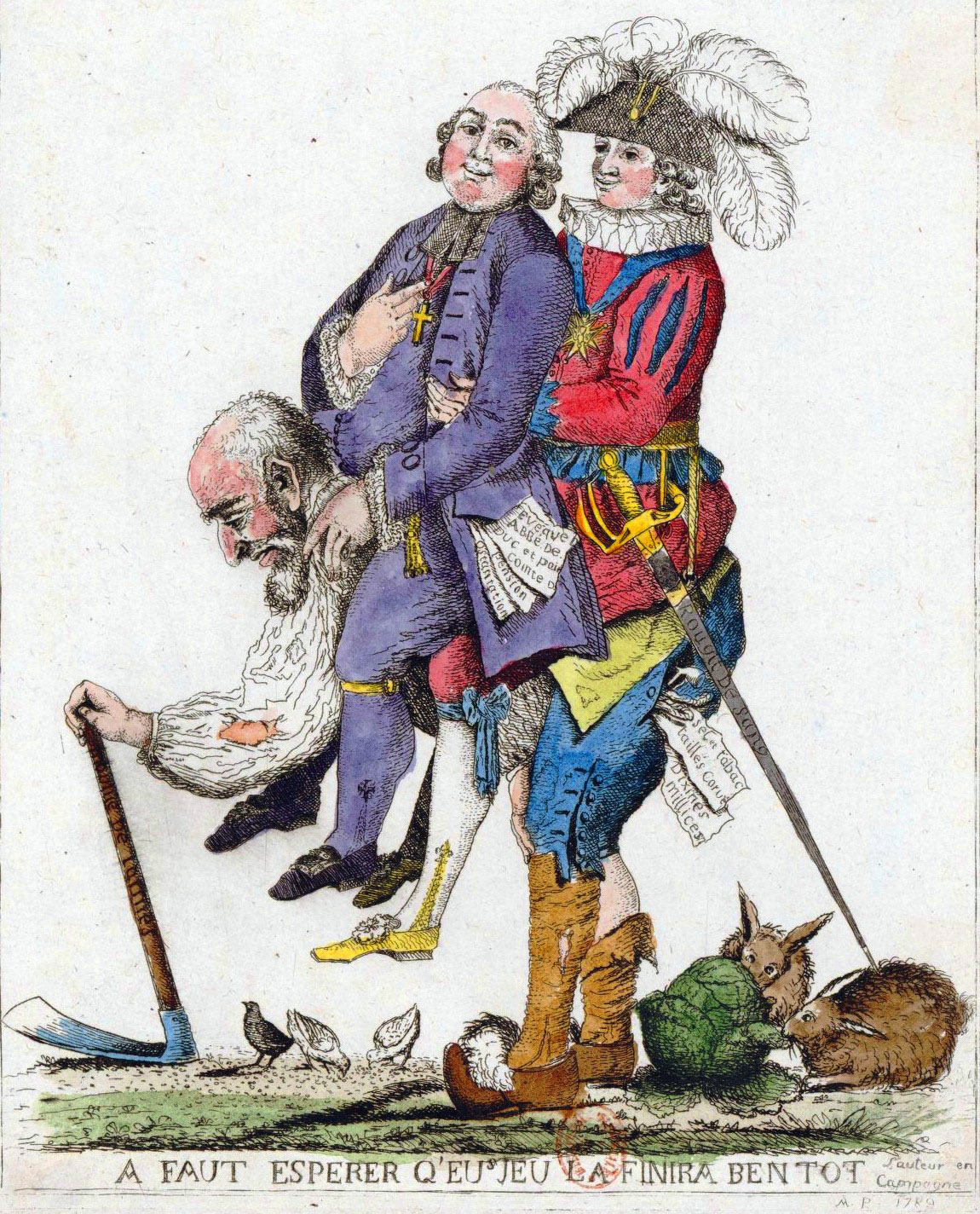
English: The Third Estate carrying the
Clergy and the Nobility on its back
Français : Le Tiers-État portant le
Clergé et la Noblesse sur son dos.

The French Revolution was set up deliberately to be "pro-government" – or pro-force at any rate. It was designed to defuse classical liberalism and freedom by proposing that government in the hands of an expert technocracy could "perfect" society and humankind.

Post revolution, between 1789 and September 1791, the French National Assembly reformed the ancient regime. They accomplished this with six basic statements, according to the website Modern European Intellectual History. Here are three of six. We've substituted the word "bankster" for "clergy" and "monarch" ...

•the abolition of special privileges of BANKSTERS through the legalization of equality (August 4, 1789)

•they subordinated BANKSTERS to the State. In November 1789, the National Assembly confiscated all BANKSTER property. And in early 1790, they passed the civil constitution, which reduced the power of the BANKSTERS who were now selected and paid by the State

•in September 1791, the National Assembly drew up a constitution, something it had been trying to do since June 1789. The constitution of 1791 specified such liberal ideas as limited BANKSTERS and full equality before the law

"Populist" movements like the French Revolution rarely end well because they are expressions mostly of anger and envy. They are not rational. They eat their own. That's what happened then as the movement began with the idea of overthrowing the regime and ended up by trying to "perfect" society using the power of the state.

Here is a Wikipedia summary:

http://en.wikipedia.org/wiki/French_revolution

The French Revolution (1789–1799), sometimes distinguished as the 'Great French Revolution' (La Grande Révolution), was a period of radical social and political upheaval in France and Europe. The absolute monarchy that had ruled France for centuries collapsed in three years. French society underwent an epic transformation as feudal, aristocratic and religious privileges evaporated under a sustained assault from radical left-wing political groups, masses on the streets, and peasants in the countryside. Old ideas about tradition and hierarchy - of monarchy, aristocracy and religious authority - were abruptly overthrown by new Enlightenment principles of equality,citizenship and inalienable rights.

The French Revolution began in 1789 with the convocation of the Estates-General in May. The first year of the Revolution saw members of the Third Estate proclaiming the Tennis Court Oath in June, the assault on the Bastille in July, the passage of the Declaration of the Rights of Man and of the Citizen in August, and an epic march on Versailles that forced the royal court back to Paris in October. The next few years were dominated by tensions between various liberal assemblies and a right-wing monarchy intent on thwarting major reforms.

A republic was proclaimed in September 1792 and King Louis XVI was executed the next year. External threats also played a dominant role in the development of the Revolution. The French Revolutionary Wars started in 1792 and ultimately featured spectacular French victories that facilitated the conquest of the Italian Peninsula, the Low Countries and most territories west of the Rhine – achievements that had defied previous French governments for centuries.

Internally, popular sentiments radicalized the Revolution significantly, culminating in the rise of Maximilien Robespierre and the Jacobins and virtual dictatorship by the Committee of Public Safety during the Reign of Terror from 1793 until 1794 during which between 16,000 and 40,000 people were killed. After the fall of the Jacobins and the execution of Robespierre, the Directory assumed control of the French state in 1795 and held power until 1799, when it was replaced by the Consulate under Napoleon Bonaparte.

After the Napoleonic Wars and ensuing rise and fall of Napoleon's First French Empire, a restoration of absolutist monarchy was followed by two further successful smaller revolutions (1830 and 1848). This meant the 19th century and process of modern France taking shape saw France again successively governed by a similar cycle of constitutional monarchy (1830-48), fragile republic (Second Republic) (1848-1852), and empire (Second Empire) (1852-1870). The modern era has unfolded in the shadow of the French Revolution. The growth of republics and liberal democracies, the spread of secularism, the development of modern ideologies and the invention of total war all mark their birth during the Revolution.

Below is a short video narrative of the French Revolution. It is simple and direct and written apparently by a high school student. We recommend it for the blunt arc of its narrative, even if it contains some factual flaws. Young people, not being so sophisticated their elders, sometimes see more clearly ...

(Video from byustudent2012's YouTube user channel.)

source: TheDailyBell

Saturday, March 28, 2015

Bipartisan House Bill would Repeal Patriot Act and Ban Mass Surveillance of Americans

Anyone taking odds on this congress has neither the guts or moral fiber to go against the oligarchy that owns them...and us?

Friday, March 27, 2015
Reps. Mark Pocan
and Thomas Massie
 
An ambitious bipartisan bill that would seriously roll back the federal government’s ability to conduct surveillance operations has been introduced in the U.S. House of Representatives.
HR 1466 (pdf) (the Surveillance State Repeal Act) would do away with the Patriot Act (pdf) and ban large-scale spying programs, such as the National Security Agency’s telephone metadata collection that has generated so much controversy. It is the most far-reaching anti-surveillance legislation drafted to date.

“This isn’t just tinkering around the edges, it’s a meaningful overhaul that makes sure the meaningless surveillance of emails and cell phones are done away with,” Representative Mark Pocan (D-Wisconsin), one of the bill’s authors, told a briefing for congressional staffers, according to ThinkProgress. The coauthor of HR 1466 is Representative Thomas Massie (R-Kentucky).

The bill’s original co-sponsors are Democrats Alan Grayson of Florida, James McGovern of Massachusetts and Lloyd Doggett of Texas. Other supporters include libertarian organizations opposed to widespread government spying.

Patrick Eddington, national security and civil liberties policy analyst for the libertarian think tank CATO Institute, said: “All mass surveillance does is violate the rights and put a chilling effect on the American people.”

The legislation also would eliminate numerous surveillance permissions granted under the Foreign Intelligence Surveillance Act (pdf) amendments approved by Congress during the George W. Bush administration.

The Hill reported that the proposal is “likely to be a nonstarter for leaders in Congress, who have been worried that even much milder reforms to the nation’s spying laws would tragically handicap the nation’s ability to fight terrorists. A similar bill was introduced in 2013 but failed to gain any movement in the House.”

Congress has until June 1 to reauthorize portions of the Patriot Act that support the government’s surveillance operation. Without re-authorization of the law’s Section 215, the telephone metadata program will expire.
-Noel Brinkerhoff
To Learn More:
HR 1466 (Congress.gov) (pdf)
NSA Phone Data Collection Made No Difference to National Security (by Noel Brinkerhoff and Danny Biederman, AllGov)

Thursday, March 26, 2015

Choices - R. J. Rushdoony

The nation had been led to believe that Baal was in charge of fertility and the rainfall in particular. Elijah would show that "the Lord is God".


The Lastest News & Information
August 4, 2014 

Choices
by R. J. Rushdoony

 There is an old proverb which says, "We would all be rich, if we didn't have to eat." This is simply another way of saying that we all have priorities, and we make our choices in terms of them.

Some men choose to be miserly on food, clothing, and shelter, because they value money so highly. They may like their family, but they love money more, and so they sacrifice everything to accumulate money. Others sacrifice for their children, and everything else takes second place in their lives.

Many other examples could be cited, but we can summarize it thus: we are always making choices, consciously or unconsciously, in terms of what we prize or love the most. Our choices reveal our faith.

Joshua summoned Israel and us to decision, declaring, "[C]hoose you this day whom ye will serve," the Lord or false gods (Josh. 24:15). Later, Elijah summoned the people to decide between God and Baal (1 Kings 18:21). Over and over again, the Bible demands that we choose, and warns us that all our actions represent a choice.

"Our lives continually witness for us or against us
as to what we believe in, what we sacrifice for,
and what we have chosen."

Everything you and I did last year and yesterday, and are doing today, represents a choice, and a decision about priorities. Our lives continually witness for us or against us as to what we believe in, what we sacrifice for, and what we have chosen.

But here a strange and remarkable fact enters in. The godly man recognizes that he has been called and chosen by God. He is therefore under authority. His choices have been made by God and set forth in Scripture. The Ten Commandments spell out God's choice and law. Man has no free option. One way is sin, and the other faith, obedience, and blessing. The godly man rejoices in God's Word and choice, and it is his joy that God "shall choose our inheritance for us" (Ps. 47:4).

Our choices thus reveal whether or not we are chosen by God or self-chosen. The self-chosen say, "My will be done," whereas the chosen of God, as C. S. Lewis saw, will say to God, "Thy will be done."

Your life reveals your choices. What are they?


Tuesday, March 10, 2015

▶ The Problem With Voting for ‘Conservatives’ - YouTube


Published on Mar 9, 2015
JBS CEO Art Thompson's weekly news video update for March 9 - 15, 2015.

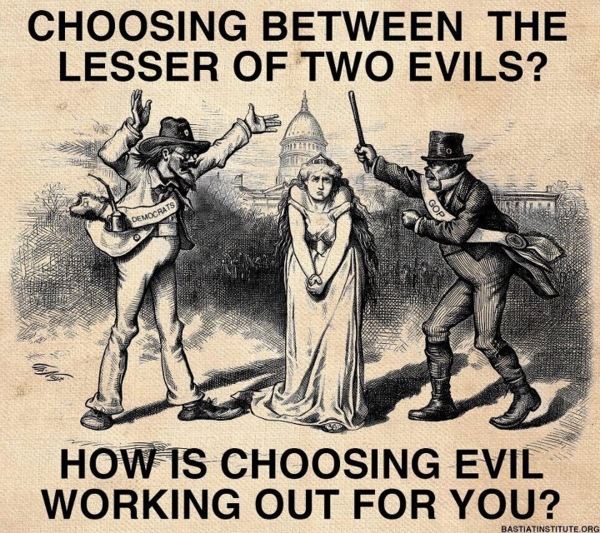
In this week's Analysis Behind the News video, JBS CEO Art Thompson demonstrates the problem with those in Congress who obey the Constitution only 80 percent of the time. He also introduces a new pamphlet focusing on how trade agreements have hurt our military readiness.


 http://www.federalobserver.com/wp-content/uploads/2012/08/Lesser2Evils.jpg

Sunday, March 8, 2015

A Look at the Folly of a Constitutional Convention

This woman has a solid grip on understanding the dangers in foisting a Constitution convention (Con-Con) on us. She is good.
 

Published on Mar 7, 2015
An informative lecture by Publius Huldah, a lawyer and strict constructionist of the Constitution.


Saturday, March 7, 2015

GOP lawmaker reissues legislation to dissolve the ATF

Many will emit loud guffaws and snicker at this congressman for his stepping up to return a stolen liberty to Americans. Laugh if you must, but know that it is congressmen such as Rep. Sensenbrenner that are needed to restore our Constitutional liberties in a lawful and peaceful non-violent manner. Just know what a fool you are as you continue to saunter ignorantly, defeatedly, and uncaringly your stroll on the road to serfdom.
~~~~~~~~~~~~~~~~~~~~~~~~~~~~
Posted on March 6, 2015 by Sam Rolley
In apparent response to the Bureau of Alcohol, Tobacco, Firearms and Explosive (ATF) attempt to regulate popular types of rifle ammunition off the civilian market, Rep. Jim Sensenbrenner (R-Wis.) has reintroduced legislation to disband the agency.

Sensenbrenner, a senior member of the House Judiciary Committee, contends that the ATF’s functions could easily be handled by the nation’s other law enforcement agencies.

“[The ATF’s] ‘Framework’ is an affront to the Second Amendment and yet another reason why Congress should pass the ATF Elimination Act,” the lawmaker said in a statement.

Republican lawmakers and 2nd Amendment supporters throughout the nation have most recently criticized the agency for its proposal to reclassify certain types of 5.56mm/.223 caliber ammunition as armor-piercing. The ban would specifically ban the manufacture and sale of M855/SS109 “green tip” ammunition.

But Sensenbrenner has long called for the ATF’s abolition, citing a series of well-publicized ATF scandals in recent years as proof that the agency does more harm to the nation than good.

In 2010, the ATF’s notorious Fast and Furious program shot to the center of public debate after news broke that Border Patrol Agent Brian Terry was killed with a firearm the agency had allowed to “walk” into the hands of Mexican cartel members.

Then, in December 2013, the Milwaukee Journal-Sentinel issued a report detailing how ATF agents operating stings in six different cities “took advantage of the mentally ill, set up stings near churches and schools and made decisions which some claim actually increased crime in their neighborhoods” in a bid to trump up firearms charges against individuals.

A Government Accountability Office report out last summer noted the scandals and criticized ATF policy changes that caused the agency to overlap the duties of other U.S. law enforcement agencies while decreasing its original mission.

“Beginning in 2010, ATF made criminal organization investigations one of its highest priorities, similar to firearms investigations, and deemphasized alcohol and tobacco investigations that do not involve violent crime,” the GAO report noted. “ATF data show that alcohol and tobacco investigations decreased by 85 percent (from 168 to 25 investigations opened) from fiscal years 2003 through 2013. In 2012, to more effectively identify and address the most violent criminal threats.”

That report led to Sensenbrenner’s original call to dissolve the agency.

“The ATF is a largely duplicative, scandal ridden agency that lacks a clear mission. It is plagued by backlogs, funding gaps, hiring challenges and a lack of leadership. For decades it has been branded by high profile failures,” he said in September. “There is also significant overlap with other agencies. At a time when we are approaching $18 trillion in debt, waste and redundancy within our federal agencies must be addressed. Without a doubt, we can fulfill the role of the ATF more efficiently.”

Sensenbrenner’s ATF Elimination Act would place the ATF’s firearms, explosives and arson responsibilities to the FBI and alcohol and tobacco law enforcement to the Drug Enforcement Agency.

Though the most recent proposal to eliminate the ATF comes from a Republican, the agency has also come under fire from Democrats in the past.
In 1993, Rep. John Conyers (D-Mich.) introduced legislation to “transfer all functions of the Bureau of Alcohol, Tobacco, and Firearms relating to the regulation of firearms from the Department of the Treasury to the Federal Bureau of Investigation.”

Source personalliberty

Wednesday, March 4, 2015

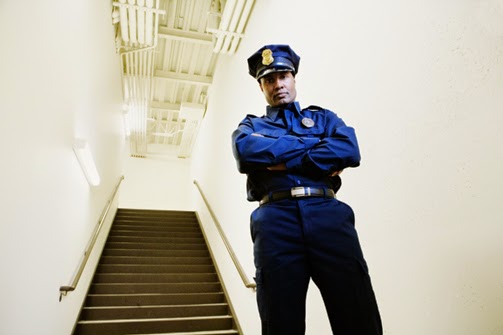
Private Police: Mercenaries for the American Police State

From this quarter we find it frightening that our fedgov is making a move on our local police. We'd been expecting this for many years, and now it's clearly imminent. 

Privatizing those duties authorized by charter to government is unlawful, and not permitted to be sub-contracted out to private or quasi-government entities. Aren't we seeing it applied already to national incarceration with quasi-govt private prisons? Those are giant steps to walling the people within an oligarchy.

Of particular concern is the expectation that returning states' national guardsmen will be 'invited' to 'participate' within local law enforcement agencies. Hey, loyalty and duty follow the paycheck, no? As an enticement to state governments federal taxpayer 'aid' (bribes) will be offered to state governments.

Right now as you read, our fedgov is employing this strategy with our states permitting the fedgov to deploy our guardsmen in unlawful and - deadly - wars overseas.

Clean out the media-fed propaganda from your own skull and come back to America's roots. We know we're a better people than what we've become.
EDITORIAL

By John Whitehead - March 04, 2015

"Corporate America is using police forces as their mercenaries."—Ray Lewis, Retired Philadelphia Police Captain

It's one thing to know and exercise your rights when a police officer pulls you over, but what rights do you have when a private cop—entrusted with all of the powers of a government cop but not held to the same legal standards—pulls you over and subjects you to a stop-and-frisk or, worse, causes you to "disappear" into a Gitmo-esque detention center not unlike the one employed by Chicago police at Homan Square?

For that matter, how do you even begin to know who you're dealing with, given that these private cops often wear police uniforms, carry police-grade weapons, and perform many of the same duties as public cops, including carrying out SWAT team raids, issuing tickets and firing their weapons.

This is the growing dilemma we now face as private police officers outnumber public officers (more than two to one), and the corporate elite transforms the face of policing in America into a privatized affair that operates beyond the reach of the Fourth Amendment.

Mind you, it's not as if we had many rights to speak of, anyhow.
Owing to the general complacency of the courts and legislatures, the Fourth Amendment has already been so watered down, battered and bruised as to provide little practical protection against police abuses. 

Indeed, as I make clear in my book A Government of Wolves: The Emerging American Police State, we're already operating in a police state in which police have carte blanche authority to probe, poke, pinch, taser, search, seize, strip and generally manhandle anyone they see fit in almost any circumstance. Expanding on these police powers, the U.S. Supreme Court recently gave law enforcement officials tacit approval to collect DNA from any person, at any time.

However, whatever scant protection the weakened Fourth Amendment provides us dissipates in the face of privatized police, who are paid by corporations working in partnership with the government. Talk about a diabolical end run around the Constitution.

We've been so busy worrying about militarized police, police who shoot citizens first and ask questions later, police who shoot unarmed people, etc., that we failed to take notice of the corporate army that was being assembled under our very noses. Looks like we've been outfoxed, outmaneuvered and we're about to be out of luck.

Indeed, if militarized police have become the government's standing army, privatized police are its private army—guns for hire, if you will. 

This phenomenon can be seen from California to New York, and in almost every state in between. According to the Bureau of Labor Statistics, the private security industry is undergoing a boom right now, with most of the growth coming about due to private police doing the jobs once held by public police. For instance, Foley, Minnesota, population 2600, replaced its police force with private guards.

Technically, a private police force is one that is owned or controlled by a non-governmental body such as a corporation. Those who advocate for privatized services and limited government hail the shift towards private police as a step in the right direction by getting the government out of the business of policing and allow market principles to dictate an officer's success, i.e., if an officer abuses his authority, he can easily be fired.

Read the fine print, however, and you'll find that these private police aka guns-for-hire a.k.a. private armies a.k.a. company police officers a.k.a. secret police a.k.a. conservators of the police a.k.a. rent-a-cops don't exactly remove the government from the equation. Instead, they merely allow them to work behind the scenes, conveniently insulated from any accusations of wrongdoing or demands for transparency. Indeed, most private police officers are either working for private security firms that are contracted by the government or are government workers moonlighting on their time off.

What began as a job detail for wealthy communities and businesses looking to discourage burglaries has snowballed into a lucrative enterprise for private corporations. Today these private police can be found wherever extra security is "needed": at hospitals, universities, banks, shopping malls, gated communities, you name it.

As historian Heather Ann Thompson notes, "private security firms have come substantially to supplement, if not completely to replace, the publicly-funded public safety presence of troubled inner cities ranging from Oakland, to New Orleans, to small towns in states such Minnesota, to entire neighborhoods—sometimes extremely rich, sometimes desperately poor—in urban centers such as Atlanta and Baltimore."

For example, in New Orleans, a 50-person private police squad funded by a "voluntary" hotel tax is being charged with enforcing traffic, zoning and other non-emergency laws in the French Quarter.

In Seattle, off-duty Seattle Police officers moonlighting as a private security force patrol wealthy neighborhoods "approximately six nights/days a week for five hours each shift. Officers are in uniform, carry police radios and their police firearms and drive unmarked personal vehicles."

In California, private mercenaries—many of them ex-U.S. Special Forces, Army Rangers and other combat veterans—equipped with AR-15 rifles use unmarked helicopters to police cannabis farms and cut down private gardens without a warrant.

Yet while these private police firms enjoy the trappings of government agencies—the weaponry, the arrest and shoot authority, even the ability to ticket and frisk— they're often poorly trained, inadequately screened, poorly regulated and heavily armed. Now if that sounds a lot like public police officers, you wouldn't be far wrong.

First off, the label of "private" is dubious at best. Mind you, this is a far cry from a privatization of police. These are guns for hire, answerable to corporations who are already in bed with the government. They are extensions of the government without even the pretense of public accountability. One security consultant likened the relationship between public and private police to public healthcare: "It's basically, the government provides a certain base level. If you want more than that, you pay for it yourself."

The University of Chicago's police department (UCPD) is a prime example of how private security firms are being entrusted with the legal status of private police forces (which sets them beyond the reach of the rule of law) and the powers of public ones. With a jurisdiction that covers a six-square-mile area and is home to 65,000 individuals, the majority of whom are not students, UCPD is one of the largest private security forces in America.

The private police agency, modeled after the tactics of NYPD chief William Bratton, criminalizes nonviolent activities such as loitering, vandalism, smoking marijuana, and ?dancing "reck?l?essly" and punishes minor infractions severely in order to "discourage" violent crime. To this end, the UCPD can search, ticket, arrest, and detain anyone they choose without being required to disclose to the public its reasons for doing so. Not surprisingly, the UCPD has been accused of using racial profiling to target individuals for stop-and-frisks.

Second, these private contractors are operating beyond the reach of the law. For example, although private police in Ohio are "authorized by the state to carry handguns, use deadly force and detain, search and arrest people," they are permitted to keep their arrest and incident reports under wraps. Moreover, the public is not permitted to "check the officers' background or conduct records, including their use-of-force and discipline histories." As attorney Fred Gittes remarked, "There is no accountability. They have the greatest power that society can invest in people — the power to use deadly force and make arrests. Yet, the public and public entities have no practical access to information about their behavior, eluding the ability to hold anyone accountable."

So what happens when the government hires out its dirty deeds to contractors who aren't quite so discriminating about abiding by constitutional safeguards, especially as they relate to searches and heavy-handed tactics? If you think police abuses are worrisome, security expert Bruce Schneier warns that "abuses of power, brutality, and illegal behavior are much more common among private security guards than real police."

As Schneier points out, "Many of the laws that protect us from police abuse do not apply to the private sector. Constitutional safeguards that regulate police conduct, interrogation and evidence collection do not apply to private individuals. Information that is illegal for the government to collect about you can be collected by commercial data brokers, then purchased by the police. We've all seen policemen 'reading people their rights' on television cop shows. If you're detained by a private security guard, you don't have nearly as many rights."

Third, more often than not, the same individuals are serving in both capacities, first on the government payroll, then moonlighting for the corporations. Not surprisingly, given the demand for private police, you'll find that police in most cities work privately while they are off-duty. Some private officers started off as public officers, then made the switch once they saw how lucrative the field could be.

This gives rise to another interesting phenomenon, a schism, if you will, between what is permissible in the private sector versus and what is allowed in the public sector, and how it affects those who travel between both worlds. We saw this played out in St. Louis, Missouri, when an off-duty police officer, working a secondary shift for a private security firm, shot and killed a teenager.

Fourth, what few realize is that these private police agencies are actually given their police powers by state courts and legislatures, which do not require them to act in accordance with the Constitution's strictures or be accountable to "we the people." As legal analyst Timothy Geigner observes, "They're hiding from public scrutiny behind the veil of incorporation, which may rank right up there among the most cynical things a government organization has ever done. It's a move one might find in the corporate republic of some dystopian novel. I say that because it's truly not as though the police departments in question are attempting to claim some kind of exemption within public records law. They're just putting up a stone wall."

It's not as if we have much in the way of local, publicly accountable police forces now; they all answer to the militarized agencies that provide their equipment and training. These private cops simply swell the government's ranks and serve as the private arm of the law.

In fact, the Department of Justice has been one of the most vocal advocates for the benefits that private security—which has twice the budget and manpower as their government counterparts—can provide in partnership with public police. These so-called "benefits" are outlined in the DOJ's guidebook entitled "Operation Partnership: Practices and Trends in Law Enforcement and Private Security Collaborations," which focuses on how both sectors can share cutting-edge technology, information, and personnel resources. Sounds cozy, doesn't it?

As history shows, we're not forging a new path with these private police agencies, either. In fact, we're simply following a model established long ago, not only by Hitler and Mussolini, who relied on private guards to do their bidding, but also by the likes of Andrew Carnegie and John D. Rockefeller, who relied on their own private police force, the Pinkertons, who had broad authority to "harass or hurt anyone their employers deemed a threat—be they a worker trying to get a fair wage or a poor person begging near the doorstep of a mansion."

Nevertheless as historian Heather Ann Thompson points out, "despite countless historical accounts of why private policing of public spaces is a bad idea in a democracy, ordinary Americans have raised little ruckus today when, once again, only those Americans with money are assured access to security and protection." 

Thompson continues:
Worse, astonishing faith has been expressed in the much-touted proposition that private police forces, in fact, act in the best interests of the public. Where is the concern, if not the outrage, that there is virtually no regulation when it comes to private policing in America's inner cities? Not only can individuals with little if any training police public spaces, but in various locales they are even authorized to make arrests and wield firearms. What is more, unlike public police, private security officers are not required by law to read a suspect his or her Miranda Rights and, more incredibly, they are allowed to use force, in some circumstances even deadly force, if they deem it necessary to do so.

What we're finding ourselves faced with is a government of mercenaries, bought and paid for with our tax dollars, all the while claiming to be beyond the reach of the Constitution's dictates.

When all is said and done, privatization in the American police state amounts to little more than the corporate elite providing cover for government wrong-doing.

Either way, the American citizen loses.

This article contributed courtesy of The Rutherford Institute. Click this link to read commentary with full links. 

Friday, February 27, 2015

The Feds Are Terrified

Napolitano: The NSA vs. the Fourth Amendment

What if the Government Fears Freedom?

What if the current massive spying on Americans began with an innocent secret executive order signed by President Reagan in 1986? What if Reagan contemplated that he was only authorizing American spies to spy on foreign spies unlawfully present in the U.S.?

What if Reagan knew and respected the history of the Fourth Amendment? What if the essence of that history is the colonial revulsion at the British use of general warrants? What if general warrants were issued by a secret court in London and authorized British agents in America to search wherever they wished and to seize whatever they found? What if the revulsion at this British government practice was so overwhelming that it led to the Revolutionary War against the king?

What if the whole purpose of the Fourth Amendment was to outlaw general warrants? What if the Fourth Amendment specifically guarantees the right to privacy to all in America in their persons, houses, papers and effects?

What if, in order to emphasize its condemnation of general warrants, the Fourth Amendment requires the government to obtain a warrant from a judge before invading the persons, houses, papers or effects of anyone and lays down the preconditions for the issuance of such warrants? What if those preconditions are individualized suspicion and articulated evidence of crime — called probable cause — about the specific person whose privacy the government seeks to invade?

What if these principles of constitutional fidelity, privacy and probable cause and the unlawfulness of general warrants have been regarded universally and publicly as quintessentially American values, values that set this nation apart from all others?

What if the administration of President George W. Bush was so embarrassed that 9/11 happened on its watch that it fought a useless public war in Iraq — which had nothing to do with 9/11 — and a pernicious private war against American values by unleashing American spies on innocent Americans as to whom there was no individualized probable cause so that it could create the impression it was doing something to keep America safe from another 9/11-like attack?

What if the Bush folks took Reagan’s idea of spying on foreign spies and twisted it so that they could spy on not just foreign spies, but also on foreign persons? What if they took that and leapt to spying on Americans who communicated with foreign persons?

What if they then concluded that it was easier to spy on all Americans rather than just those who communicated with foreign persons? What if they claimed in secret that all this was authorized by Reagan’s executive order and two federal statutes, their unique interpretations of which they refused to discuss in public? What if the Reagan order and the statutes authorized no such thing?

What if The New York Times caught the Bush administration in its massive violation of the Fourth Amendment, whereby it was spying on all Americans all the time without any warrants? What if the Times sat on that knowledge during, throughout and beyond the presidential election campaign of 2004? What if, when the Times revealed all this, the Bush administration agreed to stop spying? What if it didn’t stop?

What if President Obama came up with a scheme to make the spying appear legal? What if that scheme involved using secret judges in secret courts to issue general warrants? What if the Obama administration swore those judges to secrecy? What if it swore to secrecy all in the government who are involved in undermining basic American values? What if it forgot that everyone in government also swears an oath to uphold the Constitution? What if Edward Snowden violated his oath to secrecy in order to uphold his oath to the Constitution, which includes the Fourth Amendment, and spilled the beans on the government?

What if all this spying by the feds has spawned spying by the locals? What if more than 50 local police departments now have received false cell towers from the FBI, but have sworn not to tell anyone about them? What if these towers trick cellphone signals into exposing the content of cellphone conversations to the police? What if the police have done this without the knowledge of the elected representatives who are their bosses? What if they do this without any warrants? What if the Supreme Court last year outlawed police invading cellphones without warrants?

What if both Bush and Obama have argued that their first job is to keep America safe, and they will twist, torture the plain meaning of and even break laws in order to accomplish that job? What if the presidential oath is to enforce all laws faithfully, including ones the president may hate?

What if Bush and Obama have been wrong about the priority of their constitutional duties as president? What if the president’s first job is to preserve the Constitution? What if that includes the Fourth Amendment? What if the president keeps us safe but unfree?

What if invading our freedoms keeps us less safe? What if the president has failed to keep our freedoms safe? What if the government doesn’t like freedoms? What if the government is afraid we will exercise them?

Reprinted with the author’s permission.
Andrew P. Napolitano [send him mail], a former judge of the Superior Court of New Jersey, is the senior judicial analyst at Fox News Channel. Judge Napolitano has written nine books on the U.S. Constitution. The most recent is Suicide Pact: The Radical Expansion of Presidential Powers and the Lethal Threat to American Liberty. To find out more about Judge Napolitano and to read features by other Creators Syndicate writers and cartoonists, visit creators.com.

source lewrockwell