You don't suppose GS had inside information do you? Course not. Rothschild had a stake in ICBC as well. Did the banksters skedaddle with another booty load? What were those 70+ trips to Red China taken by Hank Paulson while with GS all about anyway (before becoming our Treasury Secretary)?
Goldman Sachs has sold its remaining shareholding in Industrial and Commercial Bank of China (ICBC) in a $1.1 billion block trade. This is the last of six sell-downs over the past seven years... READ BELOW
Showing posts with label SGE. Show all posts
Showing posts with label SGE. Show all posts
Thursday, December 4, 2014
ICBC: A New Global Currency & Gold Setup Is Being Conceived
A good lead-in for Rothschild's swelling Chinese domain is this one from us posted first on March 5th: Rothschild may have already become the Custodian for China's Gold
Friends, deep down in your heart you know those ankle shackles you're wearing are not going to fall off on their own.
The Chinese Perspective On The International Gold Market
Published: 15-07-2014 17:00
At the LBMA Bullion Market Forum in Singapore on June 25, 2014, two very important speakers attended; Xu Luode, chairman of the Shanghai Gold Exchange, and Zhou Ming, General Manager of the Precious Metals Department at ICBC. Me and Torgny Persson have written about the speeches from Xu and Zhou in previous posts, in this post we will take a closer look at what Zhou said, based on what Chinese media have written about it (whereas Western media are reluctant to cover this). His statements are not entirely new as he already had revealed some objectives of ICBC's precious metals department in an interview conducted on January 7, 2014; ICBC's main goal is to become a significant player in the international gold market. Yet, he made a few remarkable statements in Singapore. First, a few segments from the article/interview published in January:
In 2013, ICBC physical gold sales increased by more than 80% YoY, the growth rate of the entire line of business also grew more than 30% over the previous year.
For Zhou, the growth of the precious metals business is not accidental. Aside from ICBC's management in forward-thinking and advantages from being a bank, it's also because in China's internationalization process banking institutions are required to play this role.
When the precious metals department was established, ICBC chairman Jiang Jianqing said: "We have the ambition that ICBC becomes a world-class commercial bank in precious metals investment management."
Zhou: "...one day China enters the international stage, we will need more people to participate in understanding the characteristics of capital flows, so we don't have to be so passive. I drive our traders to work on scale and quantitative problems of our platform for the possibility of taking part in international transactions."
For the future, Zhou Ming's goals are clear and simple: to continue to build the precious metals battleship, heading towards international markets. "In 2013 China became the world 's largest gold producer and consumer, there is no reason for it not to have any voice in international price fluctuations."
The following is a translation of an article in Chinese media about Zhou's speech at the LBMA Forum in Singapore June 25, 2014. Translated by Soh Tiong Hum from Terraseeds.com.
The Chinese Perspective On The International Gold Market
2014/7/4 Source: Money Weekly
Invited by London Bullion Market Association (LBMA), Zhou Ming, General Manager of Precious Metals Department at Industrial and Commercial Bank of China (ICBC), represented the bank at the LBMA Bullion Market Forum 2014 held in Singapore. Zhou made a keynote speech where he:
- Expanded on China's perspective of the international gold market.
- Explained the structure of China's gold market to forum participants.
- Introduced ICBC Precious Metals Department's development and
- Described ICBC's status and function in the development of the Chinese gold market.
- Elaborated on the future direction.
Also invited to the LBMA forum were heads of Chicago Mercantile Exchange, World Gold Council, JP Morgan, HSBC, Barclays, Deutsche Bank and many other institutions.
Global precious metals market has experienced centuries of evolution and development. After World War II, the world economy was re-arranged to form a dollar-dominated international monetary system of credit. The international status of gold was replaced by the dollar and the international price of gold was pegged to the dollar. This phenomenon was referred to as 'dollar-pricing'.
Following several economic crises, US dollar's influence on the international monetary system is now on the wane. The 2007 subprime crisis in the US delivered an unprecedented blow to US Dollar hegemony. Gold, which has the best properties of money of all precious metals, in contrast became a banner of resistance to the economic crisis. Its price of $ 290 per ounce in the beginning of 2000, shot above $ 1900 per ounce in 2011.
Six years after the global financial crisis, despite a series of financial stimulus - quantitative easing that increased the size of the Federal Reserve's balance sheet to $ 4 trillion in a few years, both the current and previous head of the Federal Reserve remain defensive of QE policy. Although the Fed announced that it will start reducing the scale of QE on December 19, 2013, after which the international gold price fell below $ 1200 per ounce at one point, international analysts see China's demand and huge import as a decisive element for the reversal in the gold price.
In 2013 a Bloomberg report said that 26 million ounces (800 metric tonnes) of gold was moved from London to Swiss refiners and then to China via Hong Kong.
When Jeremy East, Managing Director at Standard Chartered Bank, asked at the LBMA Forum In Singapore if the statement "Western gold moves East" was true, Zhou made the following statements:
- The world price of gold in recent decades was dollar-priced and fluctuated with the US dollar.
- Fed implemented QE caused the issuance of dollars that exceeds demand.
- International gold prices will return to rational levels after shooting high.
- With the status of the US dollar as the international reserve currency is shaky, a new global currency setup is being conceived.
- Uncertain changes will happen to gold's traditional dollar-pricing so the US dollar's influence on gold pricing needs to be re-evaluated.
- With the rise of Asian economies, China and India will continue to be the world's pillars of physical gold demand.
- Gold has not only moved from West to East but will continue to move to the East.
The factors supporting the gold price are not limited to these. Stephen Roach, senior lecturer at Yale University, formerly chairman of Morgan Stanley Asia and chief economist at Morgan Stanley agreed with Zhou in a conversation last year: "Although the US stock market continues to boom in hand with falling bond yields, US economic recovery remains fragile with a lack of recovery in US companies which causes labor unemployment levels to remain high, GDP growth to slow down and inflation to remain lower than pre-crisis levels. The international gold price is not in an environment that sustains falling prices.
Now in the second half of 2014, the gold market is an important part of the world's modern financial system and that means for China to internationalize its financial markets. When the development of China's gold market supervision and regulation policies are complete, China's commercial banks' overseas businesses will flourish and opportunities from the Shanghai FTZ can be used; the Shanghai Gold Exchange will officially launch an international board within 2014.
The international board will initially look at foreign institutional investors in the region to establish a free trade yuan-denominated spot gold trading platform and a corresponding settlement system so as to provide offshore RMB investment and circulation in a new channel. RMB cross-border trading accounts will also have a payment service.
Breakthroughs in many national policies and system developments will play an important part in the internationalization of China's financial market and its place in international gold-pricing.
End of article
Oddly enough there hasn't been any mainstream news outlet that has published anything about the speeches from Xu and Zhou, while these are very important for the international gold market. Additionally the LBMA just published the slides from the speakers at the forum in Singapore, except the ones from Xu and Zhou! Torgny Persson, who visited the forum, assured me both did use slides in their presentations. I find it strange these slides are not published. The LBMA notes on its website that in a couple of weeks it will publish the transcripts of the speeches from the Singapore forum. I'm very curious if the transcripts of Xu and Zhou will be appended.
Koos Jansen
via
Labels:
China yuan renminbi
,
Currencies
,
Gold
,
Goldman Sachs
,
ICBC
,
LBMA
,
Rothschild
,
SGE
,
US Dollar Crisis


Wednesday, August 13, 2014
Shanghai Silver In Backwardation
Today the front month silver contract on the Shanghai Futures Exchange (SHFE) closed at an 8 % premium over London spot. Therewithal the futures curve of silver is in backwardation; silver is scarce in Shanghai.
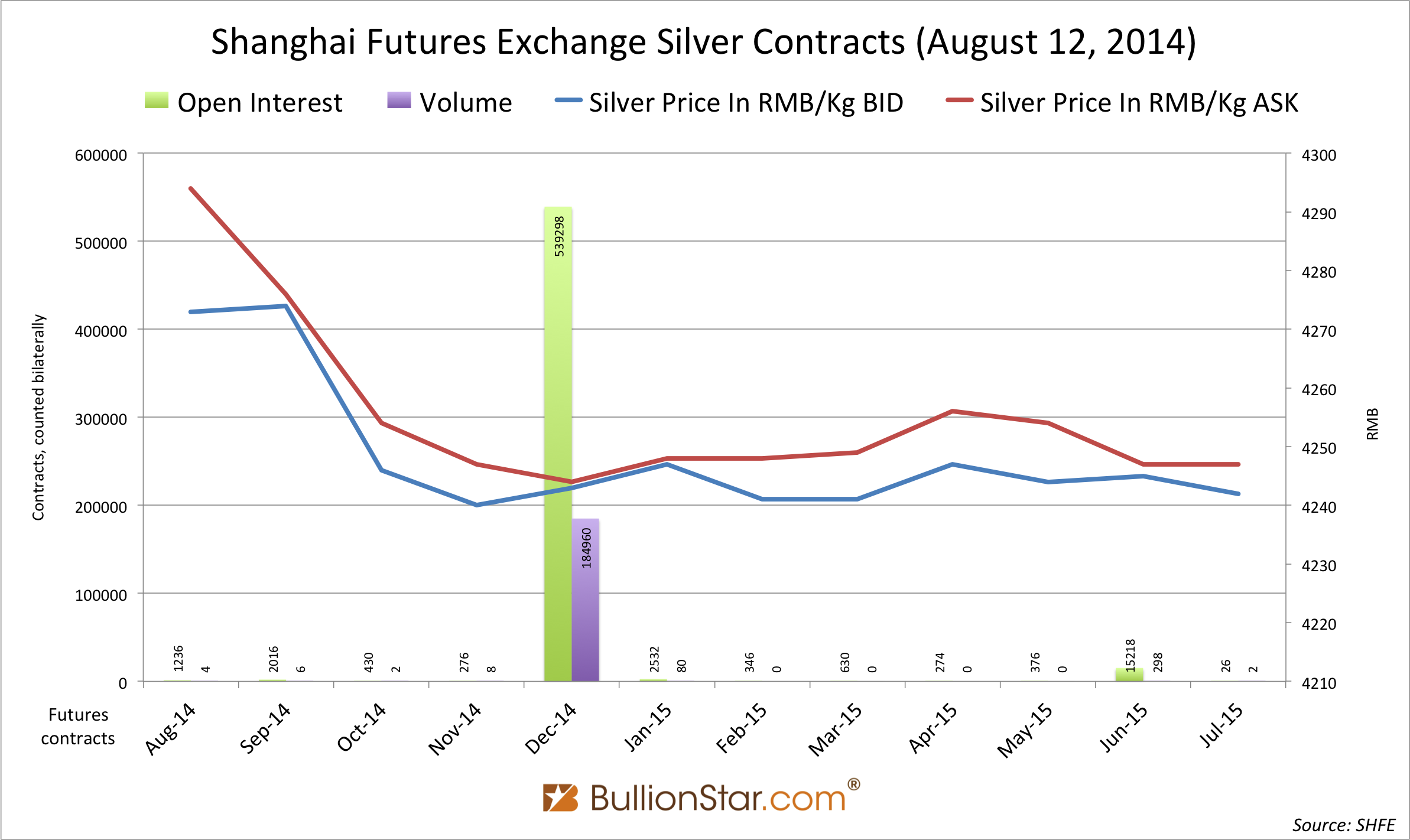
Backwardation means the future price is lower than the present spot price. Normally the futures curve of precious metals is in contango, meaning the future price is higher than the spot price.
If we look at the Ag1412 contract (silver 2014 December), the ask price closed at 4244 RMB/Kg, while the bid price of Ag1408 (silver 2014 August) was 4273 RMB/Kg. Consequentially one could, for example, sell 900 Kg of silver in August for 3,845,700 RMB (900 Kg times 4273 RMB) and buy back the same amount of silver delivered in December for 3,819,600 RMB (900 Kg times 4244 RMB). This trade would make a profit of 26,100 RMB in 4 months on 900 Kg.
The open interest (OI) for Ag1408 is 1246 contracts. On the Shanghai Futures Exchange the OI is calculated bilaterally, so currently there are 623 long and 623 short contracts open. The contract size is 15 Kg/lot. The Last Trading Day of Ag1408 is friday August 15. If the 623 shorts/longs aren't closed before friday, these contracts will be settled and the longs take delivery of 9.345 metric tonnes (623 contracts times 15 Kg). When silver is delivered this doesn't necessarily mean the metal is taken out of the warehouse. What happens is that a warrant, a claim of ownership on silver in the warehouse, is transferred from short to long. If the long redeems the warrant and takes the silver out of the warehouse or chooses to hold the warrant and from that moment pay storage costs is up to him. Additionally, anyone can deposit silver in the warehouse and create a warrant.
The owner of a warrant can redeem his silver any time he prefers. The SHFE today reported silver inventory (on warrant) was 137.677 tonnes,
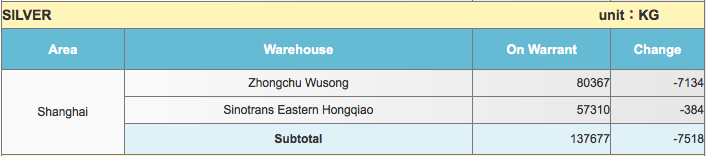
down 7.518 tonnes from yesterday.
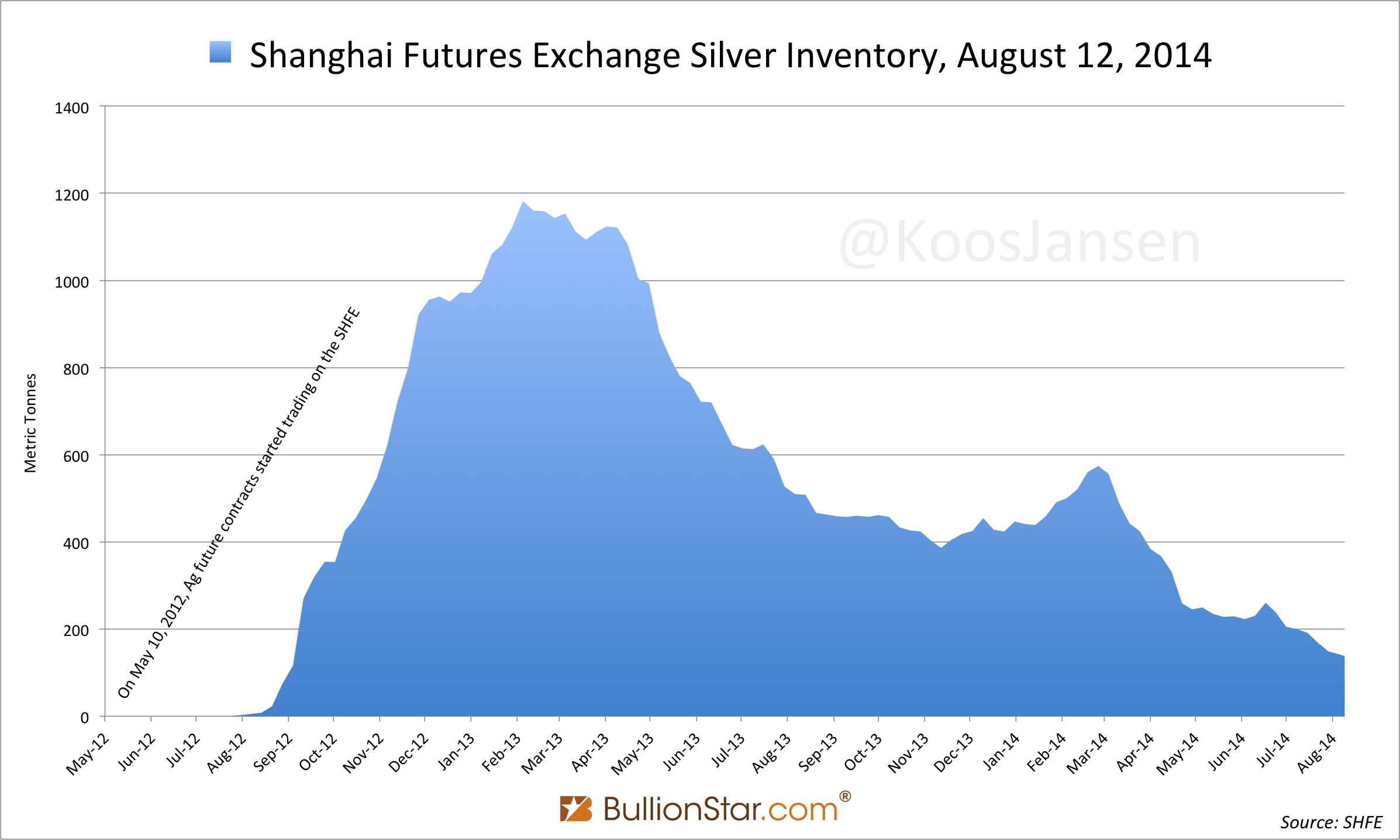
On the Shanghai Gold Exchange (SGE) we could see spot silver Ag99.99 trading at a premium over spot deferred silver Ag(T+D). The Ag(T+D) shorts chose not to deliver any metal, but instead pay the deferred compensation fee. Today Ag99.99 closed at a 7.8 % premium over London spot, Ag(T+D) at 7.3%. Note, the SGE does not close at the same time as the SHFE.
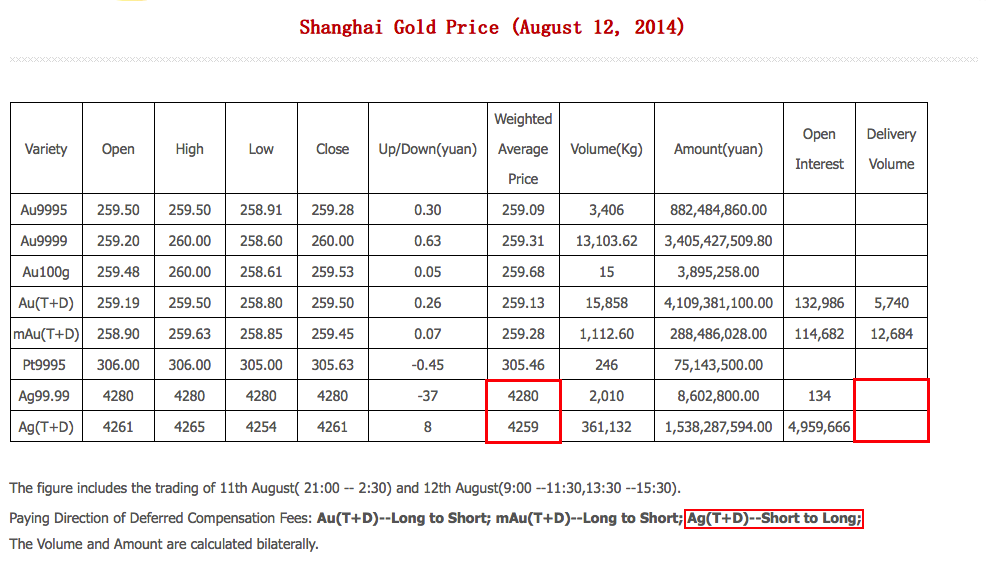
In May and June silver also traded in backwardation on the SHFE. The trading opportunity then attracted supply that pushed the futures curve in contango and the premiums lower. The next chart lags a couple of days.

Koos Jansen
Friday, August 1, 2014
Rothschild ICBC Bank Now Controls Asian Gold Exchanges
For more on the Rothschild ICBC see links below interviews.
Interview with BullionStar's CEO on the development of the Asian gold market
Mr. Persson touches specifically on the development of the Chinese and Singaporean gold markets
Published: 30-07-2014 02:25
BullionStar's CEO, Mr. Torgny Persson, was recently interviewed by Mr. Sunny Pannu of Minaurum.com on his views of the Asian gold market.
In the interview, Mr. Persson talks about the Chinese and Singaporean gold markets and how the respective Chinese and Singaporean governments are worldwide unique in facilitating for flourishing gold markets.
How come the Asians understand the concept of gold whereas the Westerners are struggling under an ever increasing mountain of debt?
There's two parts of the interview.
Part 1 of the interview:
Part 2 of the interview:
- ICBC: A New Global Currency & Gold ... Jul 16, 2014
- Rothschild may have already become the ... May 11, 2014
- Renewed Estimates of Chinese Gold ... Apr 05, 2014
- The Gold Rush Spreads From China And ... Dec 24, 2013
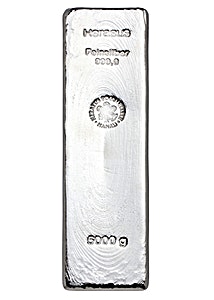
source bullionstar
Labels:
Banking
,
Central banks
,
China
,
China yuan renminbi
,
COMEX
,
Gold
,
ICBC
,
Rothschild
,
SGE
Thursday, June 26, 2014
Could this be the Big KA-BOOM? Up To $80 Billion Gold-Backed Loans Are Falsified, Chinese Auditor Warns
Submitted by Tyler Durden on 06/26/2014 10:32 -0400
As the probe into alleged fraud at Qingdao continues to escalate (with liquidity needs growing more and more evident as Chinese money-market rates surge), Bloomberg reports that China’s chief auditor discovered 94.4 billion yuan ($15.2 billion) of loans backed by falsified gold transactions, in "the first official confirmation of what many people have suspected for a long time - that gold is widely used in Chinese commodity financing deals." As much as 1,000 tons of gold may have been used in lending and leasing deals in China and Goldman reports that up to $80 billion false-loans may involve gold. As one analyst noted, this was unlikely to have a significant impact on the underlying demand for gold in China and as we have pointed out before, any unwind of the Gold CFDs would lead to buying back of 'paper' gold hedges and implicitly a rise in prices.
China’s chief auditor discovered 94.4 billion yuan ($15.2 billion) of loans backed by falsified gold transactions, adding to signs of possible fraud in commodities financing deals.
As much as 1,000 tons of gold may have been used in lending and leasing deals in China, where commodities including metals and agricultural products are used to get credit amid lending restrictions, according to World Gold Council estimates.
Of the as much as $160 billion in transactions projected by Goldman, $80 billion may involve gold, $46 billion copper, $13.8 billion iron ore and $10.3 billion soybeans, according to a March 18 report.
Steps by the Chinese government to rein in credit by raising borrowing costs in recent years created a surge in commodities financing deals that Goldman Sachs Group Inc. estimates to be worth as much as $160 billion.
The Chinese agency that stockpiles strategic commodities is checking to ensure its copper purchases are free of collateral risks while the customs authorities issued new rules to help prevent goods being pledged multiple times as collateral, people with direct knowledge of these matters said previously.
How the deals worked...
In some commodities financing transactions, owners of raw materials sitting in ports use receipts from warehousing companies to get credit from banks, which they put to work in high-yielding investments before repaying the debt.
Other deals involve a Chinese buyer placing orders for commodities with overseas companies and then applying for a letter of credit from a lender, which they use to import the materials. The buyer can then sell the consignment in the domestic market and use the money onshore at a higher interest rate before repaying the original loan.
But the flow is expected to continue...
“This is the first official confirmation of what many people have suspected for a long time -- that gold is widely used in Chinese commodity financing deals,” said Liu Xu, a senior analyst at Capital Futures Co. in Beijing.
...
Mark To, head of research at Wing Fung Financial Group in Hong Kong, said the audit office’s report was unlikely to have a significant impact on the underlying demand for gold in China.
...
The global flow of bullion from west to east that’s helped to make China the world’s largest user will probably last for as long as two decades as rising incomes spur demand, according to the China Gold Association.
* * *
As we commented previously:
When we previously contemplated what the end of funding deals (which the PBOC and the China Politburo seems rather set on) may mean for the price of other commodities, we agreed with Goldman that it would be certainly negative. And yet in the case of gold, it just may be that even if China were to dump its physical to some willing 3rd party buyer, its inevitable cover of futures "hedges", i.e. buying gold in the paper market, may not only offset the physical selling, but send the price of gold back to levels seen at the end of 2012 when gold CCFDs really took off in earnest.
In other words, from a purely mechanistical standpoint, the unwind of China's shadow banking system, while negative for all non-precious metals-based commodities, may be just the gift that all those patient gold (and silver) investors have been waiting for. This of course, excludes the impact of what the bursting of the Chinese credit bubble would do to faith in the globalized, debt-driven status quo. Add that into the picture, and into the future demand for gold, and suddenly things get really exciting.
Here's our previous explanation of gold's move... if we are right that somehow China managed to push gold lower via gold CFDs, then the unwind pushes gold higher:

Here's how that might work:
In the gold markets, the paper or synthetic 'demand/supply' dominates pricing as opposed to the non-precious metals which have at least a grain of fundamental sense to them still
Throughout 2012/2013 - as the gold CFDs were booming, Chinese demand for physical gold was soaring as the price plunged (due to the forward hedging required in the CFD transactions which pressured gold swaps/futures lower and thus dominated pricing)
As CFD unwinds hit en masse, these flows must unwind (cover hedges and ensure the underlying physical is there... and if not buy it)
This will pressure gold futures prices higher and because unlike in non-precious commodities where spot markets wag the tail of the futures markets - spot gold will likely be dragged higher also (as we know the demand for the physical has been high).
So unlike in the industrial commodities - where the CCFD unwind drives prices down as the image above shows, thanks to synthetic manipulation and domination of the paper gold (and silver) market, the opposite occurs in PMs.
via ZH
Labels:
banksters
,
Central banks
,
CFTC
,
China
,
COMEX
,
Crime
,
Germany's Gold Reserves
,
Gold
,
SGE
Friday, June 6, 2014
One Ton Gold Shipment Into Hong Kong Revealed To Contain Just Worthless Metal
This could be evidence that the gangster gold custodians have empty cupboards. More financial forensic sleuthing needed. Whistleblowers welcome. Until then hold gold AND silver in coin form only and off premise.
Submitted by Tyler Durden on 06/06/2014 14:49 -0400
Submitted by Tyler Durden on 06/06/2014 14:49 -0400
Two years ago, stories of fake tungsten-filled gold coins and bars began to spread; it appears, between the shortage of physical gold (after Asian central bank buying) and the increase in smuggling (courtesy of India's controls among others) that gold fraud is back on the rise. As SCMP reports, a mainland China businessman, Zhao Jingjun, discovered that HK$270 million of 998kg of gold bars he bought in Ghana had been swapped for non-precious metal bars. What is perhaps even more worrisome, given the probe into commodity-financing deals and the rehypothecation evaporation; these gold bars were shipped to a Chinese warehouse before Zhao was able to confirm the fraud.
As South China Morning Post reports, police were last night making arrangements with a mainland businessman to check whether HK$270 million of gold bullion he bought in Africa was genuine after part of the consignment was swapped with metal bars.
On Wednesday, Zhao Jingjun, 43, opened part of his shipment in front of his buyer in Hong Kong and discovered the gold had been switched for worthless metal.A senior officer said it would be the city's biggest heist in a decade if it was confirmed that all the gold had been stolen.An initial inquiry showed Zhao purchased 998kg of gold bars from a company in Ghana in mid-April, police said.The consignment, in 14 cases, was escorted by his staff and delivered from Ghana on a chartered flight late last month."Officers were told that his employee confirmed the cases contained the gold before it was loaded onto the chartered flight in Ghana," a police source said.The source said the employee left Hong Kong after the consignment was handed to the staff of a logistics company at Chek Lap Kok airport. It was then couriered to a Tsuen Wan warehouse.The businessman arrived from Hebei province on Monday and checked into the Kowloon Shangri-La hotel in Tsim Sha Tsui. On Wednesday, he had five of the cases couriered to his buyer's Hung Hom office."When he opened the boxes, he found they were filled with metal bars instead of gold bullion," the source said. "He told officers the cases appeared to have been tampered with."...A police investigator said: "We don't rule out the possibility that the gold bullion may have been switched for metal bars before being delivered to Hong Kong."Zhao has reportedly made several such transactions. His business activities include the purchase of iron ore from Australia, Africa and South America.Four years ago, 265 gold bars were taken from a Yuen Long company. Police arrested three men and recovered most of the HK$90 million in bullion stolen.
We can't help but feel this is not the last time as commodity-backed financings are unwound en masse and the underlying collateral found missing... sourcing the underlying by any means will be on the rise.
* * *
For those who want to learn more about China and gold, please read "How China Imported A Record $70 Billion In Physical Gold Without Sending The Price Of Gold Soaring"
For those curious what a fake 10oz bar looks like, here it is again:


It appears in thise case, the fraudsters could not even afford Tungsten (or maybe the Tungsten was rehypothecated elsewhere)...
Labels:
banksters
,
Central banks
,
China
,
Conspiracy
,
Crime
,
Germany's Gold Reserves
,
Gold
,
SGE
,
Whistleblowers
Thursday, June 5, 2014
ETF Securities joins LME with silver fix plan
To say these evolving developments could provide silver's price with levitation may be an understatement. Obviously, they've run out of plunder in London. Whether the Shanghai exchange will line their purses likewise, we'll have to see.

BloombergThe proposal made to the London Bullion Market Association would use a five-minute auction process that occurs on the London Stock Exchange and based on ETF Securities’ silver-backed fund that trades on the bourse
ETF Securities Ltd., an exchange-traded-products provider with about $19 billion of assets, proposed an alternative to the century-old London silver fixing benchmark process that’s set to end in August.
The proposal made to the London Bullion Market Association would use a five-minute auction process that occurs on the London Stock Exchange and based on ETF Securities’ silver-backed fund that trades on the bourse, said Graham Tuckwell, chairman and founder of the Jersey-based company. The company is talking to the LSE about moving the auction capability from 4:30 p.m. to noon, when the present silver fixing process is held, he said.
Related
- Historic silver price ‘fix’ coming to an end after 117 years
- How London’s gold and silver prices are ‘fixed’
The London Silver Market Fixing Ltd. will stop running the fixing on Aug. 14 after Deutsche Bank AG said it will withdraw from the process, leaving just two banks to conduct the ritual. The LBMA began a consultation in May seeking views for an alternative to the benchmark that’s used by miners to central banks. The London Metal Exchange got requests to provide a daily rate, CME Group Inc. has said it’s also helping to find a way to set prices and Platts said today it’s in talks with the LBMA.
“The system is already in place, it’s ready to go,” Tuckwell said today by phone from Amsterdam. “Our securities are settled in metal already. It’s a very transparent process.”
Regulatory focus on financial benchmarks is intensifying after rigging was uncovered in everything from interbank lending rates to currencies. Economists and academics have said fixings are susceptible to manipulation and lack sufficient regulation, while traders say the processes are efficient and crucial reference points for the market.
Deutsche Bank, HSBC Holdings Plc and Bank of Nova Scotia conduct the silver fixing each day at noon. The German bank said it’s withdrawing from fixings as it scales back its commodities business. It stopped taking part in gold fixings in May after failing to agree on a sale of its seat and postponed its April 29 resignation from the silver rate to Aug. 14.
During the silver fix, the three member banks declare how much metal they want to buy or sell for clients as well as their own accounts. Traders relay shifts in supply and demand to clients and take fresh orders as the price changes, before the fix is made. The first silver fixing took place in 1897.
Used as a benchmark to price holdings at, the fixing also allows participants to physically buy and sell metal. The proposal made by ETF Securities could allow the transfer of physical metal two days later, Tuckwell said.
“The only thing we need really to talk to the LSE about is asking to arrange the auction at midday, rather than at 4:30 p.m.,” he said. “They are already putting in place the possibility of having intraday auctions in all securities of about mid-September.”
The LME said May 29 it had requests from industrial and financial companies, has defined a “robust” process for a daily price and is working with the LBMA in consulting with the market. CME Group said that day it’s “working closely with the precious metals industry and LBMA to reduce market disruption by helping to find a robust transaction-based way to set the daily spot price.” An LBMA survey as part of the consolation closed May 30.
“Platts is in talks with LBMA officials, financial entities and others regarding continuity, transparency and best practices in the silver market,” Kathleen Tanzy, a spokeswoman in New York at the energy and commodities news and price publisher, said in an e-mailed statement today. “ Continuity in the provision of benchmarks, prices and assessments is critical to preserve the integrity of markets.”
Silver was fixed at $18.81 an ounce today. The metal for immediate delivery declined 2.5 percent this year, according to Bloomberg generic pricing.
“Clearly it gives us a higher profile in the market,” Tuckwell said. “It’s worth our doing.”
Saturday, May 31, 2014
Shanghai'd - Comex Gold Market Moves to China

- London and Wall Street are ending their 100 Yr old gold and silver price fix
- Deutsche Bank resigns gold, silver fix seat with no buyer
- Comex is out of physical gold and silver as China corners market
- Thus, Comex is out of the physical gold and silver trading market
- Comex now a derivatives market only – next to move to Shanghai
- China increases gold storage space with acquisition of JP Morgan headquarters
- China forms Global Gold Exchange
For those awaiting official news that the Comex is done, look no further, as this certainly will not be aired on CNN or FOXnews. The Comex, rather than publicly dissolving or going bankrupt, it has simply been moved to Shanghai, China. Whether this sleight of hand is a sale or a take-over we’ll never really know. However the result is very clear – gold and silver trading are now centered in China.

The Shanghai Gold Exchange (SGE) has been authorized by the People’s Bank of China (Central Bank of China) to request participation of the New Zealand Banking Group, HSBC, Standard Bank, Standard Chartered and Bank of Nova Scotia in this new and revised metals trading platform.
“The global platform will first host spot physical contracts for gold and other precious metals, before aiming to launch derivatives down the line, said a third source who is directly involved in the launch of the international exchange” — www.reuters.com/article/2014/05/26/us-china-gold-pricing-idUSBREA4P0HS20140526
The certainty is that China will now control the global gold transactions and storage, which is likely their reasoning for purchasing the famed JPMorgan building (Chase Manhattan Plaza) in NYC with its very large gold storage vaults adjacent to the Federal Reserve Building.
 |
| 'Gold Fixing' Jason Alden/Bloomberg |
Those fixing the gold and silver prices, aka price manipulation, for over one hundred years have done so for their own benefit and thus unfairly to all other traders. Should we expect a fairer market from Chinese control?
Just guessing, but we suspect that the paper market will be run like a casino and the physical gold will end up in Chinese hands. (Yes, really what’s changed!) In this case, the price will remain low until the Chinese purchase all they wish to acquire then the prices will skyrocket. But of course that is just one scenario.
For clues as to treatment of the gold markets and individual traders we should look to China's behavior and the recent precedent being set in other areas.
In their quest for raw materials we have two recent and progressing examples of China’s strategy and behavior – the Japanese islands of Senkaku and Diaoyu and in their dispute with Vietnam over territorial waters. In the Vietnam territorial waters dispute, China has stealthily positioned a $1 Billion oil rig into traditionally accepted Vietnamese territorial waters. In addition to the oil rig appearing like a rabbit out of a hat, the Chinese are now building an artificial island to further their claim to these waters and its ensuing oil and gas rights.

Laris Karklis / The Washington Post
Subscribe to:
Posts
(
Atom
)