Search Blog Posts

Showing posts with label pietism. Show all posts

Friday, September 26, 2014

A Must Read: The Lord is in Control, So Don't Worry (and above all, don't DO anything)

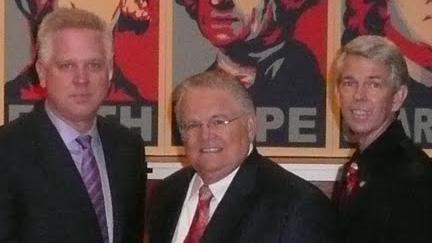
 "The Neutralizers" subverting the Christian South: Evangelists Glenn Beck, John Hagee, Dave Barton


by Al Benson Jr.

There seems to be a mindset in the evangelical community today, (though it’s not really new, it’s been there for 150 years) which, to me, seems like the great neutralizer of the church. It seems to be most prevalent in those you could wish would be more active and concerned, but are not. They seem to be possessed of the concept that if God is in control of all things, which He is, then there are some areas where believers just don’t need to get involved.

Should you become involved in one of these “forbidden” areas they will question you about any comments you happen to make. The question they usually start out with is “Do you believe God is in control of all things?” If you answer “yes” to that they will bombard you, almost immediately with the next question which will be “Then what are you so upset about?” 

The result of this is, in many cases, to shut down your complaint so you will feel a bit foolish trying to carry it any further, especially if you are in a group setting, and at that point, you are supposed to quietly bow out and allow the discussion to return to such important topics as “personal holiness.” 

Why discuss politics, education, the state of the culture or anything along those lines when you can just ignore all that and dwell on personal holiness? This somehow becomes the end-all of all discussion. It all amounts to personal holiness (pietism) and nothing else. I can’t count the times I have had this done to me and I am sure most of the folks that have done it were not real happy with me, because I refused to play the game and shut up.

Let me state here, before someone jumps up screaming, that I am not opposed to personal holiness. The Scriptures enjoin us to seek to live holy lives, to treat others as we would be treated, and, realizing we simply cannot do that in our own strength, we must admit that we need a Savior  who has already done all this perfectly for us and now sits at the right hand of God, Jesus, the God-man.

Along with this, at least for those of us in Reformed circles, there should come a certain outlook, a certain worldview if you will. Part of that worldview is that God is very concerned with what goes on here on earth and He wants His people to be concerned about it also. We are not just supposed to “get saved so we can go to Heaven” and that’s all there is.  Since “the earth is the Lord’s and the fullness thereof” I believe He wants us to be concerned about all areas of life–education, culture, art, music, –and the most dreaded of all for Christians–politics. God wants His people to be involved in what is happening in the world. He wants them to be concerned about it and He wants them to be knowledgeable about it. We are not just supposed to be so concerned with our own personal holiness that we let the world go to hell.

Many of our problems in this country today, along with our lack of repentance, are present just because Christians don’t want to be bothered. It’s really too much trouble to learn about a problem and why it exists, so why bother? If the Lord is in control, He’ll take care of it all, so I don’t need to do anything about it, or know anything about it. All I have to do is “trust God” and go on my merry way. Oh, there is one other thing I must do. Should someone come along that points out a particular problem, I need to try to keep their comments to a bare minimum so no one really gets shook up over this (especially me)!

The evangelical protests against any action at all run the gamut from “If God’s in control why worry about it” to “You’re not showing much love talking about all this stuff.” The idea being that if your were just a little more “loving” you would be content to give evil politicians or public school “change agents” a pass. The novel concept that Christians could also be “loving” by seeking to expose evil has never occurred to them, and probably won’t, as long as they can keep those who question what goes on quiet enough.

Many of these are the same folks that tell you that Romans 13 means that you must give unquestioning obedience to whatever government, at any level, wants to do. Government has the “authority” so you just cave in. After all, it’s what they do.The concept that governments are responsible to God, and that, under God, their authority is limited, is something that never seems to occur to them. It’s lots easier just to knuckle under than it is to find out what government has the legitimate authority to do or to require of you and what it does not. No one questions that where government performs its God-given functions it should be obeyed.  

Dave Barton at the RNC in Philadelphia, 2000
I am not preaching anarchy here. But what’s to be done when government starts usurping functions it has no right to? That’s another question–and one many in the evangelical community would prefer not to have to deal with–so just do whatever they tell you to do and shut up–after all, it is the government. I wonder how many Christians realize that in taking such an attitude what they are doing is reauthorizing the “divine right of kings” (or presidents) to do whatever they want.

This mindset, carried to its logical conclusion in this country, would leave us still as subjects of Great Britain and that Christian patriot, Patrick Henry, would never have gotten to say “give me liberty or give me death.” Or better yet, would Martin Luther have even dared to nail up his 95 theses on the door of the cathedral? After all, the Pope might not have liked it. Once you allow any government, church government or civil government unrestrained power they will do whatever they want, no matter how evil, until they are resisted.

Our current regime tells us we are being forced to buy “health care” and it has performed, along with the regimes before it, many unconstitutional actions.  The usual evangelical response to this is “God’s in control, so what are you upset about?”
The thought comes to mind that, possibly, God has allowed some of what has happened to occur in order to provoke a response from His people–repentance, yes, but also resistance to evil.  And the response for most of the church today is still “Hey, the Lord’s in control, just don’t worry about any of this (and certainly don’t ever try to DO anything about any of it).” And some tend to look down their noses at you for being such a cretin as to even dare to bring up some of these things. You’re just supposed to be silent, cave in to tyranny, all the time seeking more “personal holiness.”

Another thing we (are supposed to learn) in Reformed circles is that God works in history and that He is often please to use “means” (people) to do some of what He wants done. You can ask, what would have happened to the kids in public schools in West Virginia 40 years ago if their parents had not risen up and fought the corrupt school system and the rotten books it tried to foist on the kids? Would those kids have been better off if their Christian parents had just practiced “personal piety” and said nothing about the horrible textbooks? You know the answer to that one.

What if the Lord decides to use people to upset evil politicians, corrupt “educators” and others who do what they shouldn’t? Oh, I know, we don’t discuss all that. That’s not a debatable topic. That might require getting involved and learning something new, and we’re not sure we’re ready for that, so throttle the one who makes such an absurd suggestion and let’s all get back to personal pietism.

Now you might think I sound a little ticked at some of my fellow believers for their almost total lack of response in areas I feel they ought to be concerned about. You’d probably be somewhat correct in that assumption. I’ve been listening to evangelical responses in some areas for almost four decades, and most of it boils down to “Why are you telling us about the current Marxist in the White House when, in love, we should just be ignoring what he is doing to the country and loving him?” I often wonder if many evangelicals have ever (probably not) come up with the possible thought that “loving” whoever the current occupant of the Oval Office is might just entail exposing some of what he is doing and calling him to repentance for it. And this doesn’t just apply to whoever is currently the president, or the governor, or the head of the local school board.

After all, they don’t call Washington “Sodom on the Potomac” for nothing, and the same thing could probably be said for a number of state capitals.

As long as we continue to play the “just love ‘em and don’t get upset over anything” game, nothing will change.  The country will be judged and go down the tubes and the church will be judged also. What about the possibility that the Lord would like a response from His people to what is happening, and He’s not getting it?

SOURCE revisedhistory

Monday, July 14, 2014

The Progressive Era and the Family - Murray N. Rothbard

From this post we get snapshots from Rothbard explaining how we got to where we are by knowing where we've been. These summary briefs tell us what we didn't learn in 'public' schools and certainly not in college which promised us a 'broad-minded' education which as it turned out was their view, not a truthful one.

You'll discover you're not sexist afterall, but are you a pietist? 

Just knowing these few elements will fortify your literary armor for the uninformed or scornful remarks from leftists who must fall back on derogatory remarks because your knowledge flattens their argument into nonsense.

Maybe you're an Independent or libertarian Republican and didn't know it. Once apparent, you can then get the streaming vitriol from both Parties!

Mises Daily: Monday, June 30, 2003 by
[Originally from Joseph R. Peden and Fred R. Glahe (eds.), The American Family and the State (San Francisco: Pacific Research Institute, 1986).]

While the "Progressive Era" used to be narrowly designated as the period 1900–1914, historians now realize that the period is really much broader, stretching from the latter decades of the nineteenth century into the early 1920s. The broader period marks an era in which the entire American polity—from economics to urban planning to medicine to social work to the licensing of professions to the ideology of intellectuals—was transformed from a roughly laissez-faire system based on individual rights to one of state planning and control. In the sphere of public policy issues closely related to the life of the family, most of the change took place, or at least began, in the latter decades of the nineteenth century. In this paper we shall use the analytic insights of the "new political history" to examine the ways in which the so-called progressives sought to shape and control selected aspects of American family life.

ETHNORELIGIOUS CONFLICT AND THE PUBLIC SCHOOLS

In the last two decades, the advent of the "new political history" has transformed our understanding of the political party system and the basis of political conflict in nineteenth century America. In contrast to the party systems of the twentieth century (the "fourth" party system, 1896–1932, of Republican supremacy; the "fifth" party system, 1932–? of Democratic supremacy), the nineteenth century political parties were not bland coalitions of interests with virtually the same amorphous ideology, with each party blurring what is left of its image during campaigns to appeal to the large independent center. In the nineteenth century, each party offered a fiercely contrasting ideology, and political parties performed the function of imposing a common ideology on diverse sectional and economic interests. During campaigns, the ideology and the partisanship became fiercer and even more clearly demarcated, since the object was not to appeal to independent moderates—there were virtually none—but to bring out the vote of one's own partisans. Such partisanship and sharp alternatives marked the "second" American party system (Whig versus Democrat, approximately 1830 to the mid-1850s) and the "third" party system (closely fought Republican versus Democrat, mid-1850s to 1896).

Another important insight of the new political history is that the partisan passion devoted by rank-and-file Democrats and Republicans to national economic issues, stemmed from a similar passion devoted at the local and state level to what would now be called "social" issues. Furthermore, that political conflict, from the 1830s on, stemmed from a radical transformation that took place in American Protestantism as a result of the revival movement of the 1830s.

The new revival movement swept the Protestant churches, particularly in the North, like wildfire. In contrast to the old creedal Calvinist churches that stressed the importance of obeying God's law as expressed in the church creed, the new "pietism" was very different. The pietist doctrine was essentially as follows: Specific creeds of various churches or sects do not matter. Neither does obedience to the rituals or liturgies of the particular church. What counts for salvation is only each individual being "born again"—a direct confrontation between the individual and God, a mystical and emotional conversion in which the individual achieves salvation. The rite of baptism, to the pietist, therefore becomes secondary; of primary importance is his or her personal moment of conversion.

But if the specific church or creed becomes submerged in a vague Christian interdenominationalism, then the individual Christian is left on his own to grapple with the problems of salvation. Pietism, as it swept American Protestantism in the 1830s, took two very different forms in North and South, with very different political implications. The Southerners, at least until the 1890s, became "salvationist pietists," that is, they believed that the emotional experience of individual regeneration, of being born again, was enough to ensure salvation. Religion was a separate compartment of life, a vertical individual-God relation carrying no imperative to transform man-made culture and interhuman relations.

In contrast, the Northerners, particularly in the areas inhabited by "Yankees," adopted a far different form of pietism, "evangelical pietism." The evangelical pietists believed that man could achieve salvation by an act of free will. More particularly, they also believed that it was necessary to a person's own salvation—and not just a good idea—to try his best to ensure the salvation of everyone else in society:

"To spread holiness," to create that Christian commonwealth by bringing all men to Christ, was the divinely ordered duty of the "saved." Their mandate was "to transform the world into the image of Christ."1

Since each individual is alone to wrestle with problems of sin and salvation, without creed or ritual of the church to sustain him, the evangelical duty must therefore be to use the state, the social arm of the integrated Christian community, to stamp out temptation and occasions for sin. Only in this way could one perform one's divinely mandated duty to maximize the salvation of others. 2   And to the evangelical pietist, sin took on an extremely broad definition, placing the requirements for holiness far beyond that of other Christian groups. As one antipietist Christian put it, "They saw sin where God did not." In particular, sin was any and all forms of contact with liquor, and doing anything except praying and going to church on Sunday. Any forms of gambling, dancing, theater, reading of novels—in short, secular enjoyment of any kind—were considered sinful.

The forms of sin that particularly agitated the evangelicals were those they held to interfere with the theological free will of individuals, making them unable to achieve salvation. Liquor was sinful because, they alleged, it crippled the free will of the imbibers. Another particular source of sin was Roman Catholicism, in which priests and bishops, arms of the Pope (whom they identified as the Antichrist), ruled the minds and therefore crippled the theological freedom of will of members of the church.

Evangelical pietism particularly appealed to, and therefore took root among, the "Yankees," i.e., that cultural group that originated in (especially rural) New England and emigrated widely to populate northern and western New York, northern Ohio, northern Indiana, and northern Illinois. The Yankees were natural "cultural imperialists," people who were wont to impose their values and morality on other groups; as such, they took quite naturally to imposing their form of pietism through whatever means were available, including the use of the coercive power of the state.

In contrast to evangelical pietists were, in addition to small groups of old-fashioned Calvinists, two great Christian groups, the Catholics and the Lutherans (or at least, the high-church variety of Lutheran), who were "liturgicals" (or "ritualists") rather than pietists. The liturgicals saw the road to salvation in joining the particular church, obeying its rituals, and making use of its sacraments; the individual was not alone with only his emotions and the state to protect him. There was no particular need, then, for the state to take on the functions of the church. Furthermore, the liturgicals had a much more relaxed and rational view of what sin really was; for instance, excessive drinking might be sinful, but liquor per se surely was not.

The evangelical pietists, from the 1830s on, were the northern Protestants of British descent, as well as the Lutherans from Scandinavia and a minority of pietist German synods; the liturgicals were the Roman Catholics and the high-church Lutherans, largely German.

Very rapidly, the political parties reflected a virtually one-to-one correlation of this ethnoreligious division: the Whig, and later the Republican, party consisting chiefly of the pietists, and the Democratic party encompassing almost all the liturgicals. And for almost a century, on a state and local level, the Whig/Republican pietists tried desperately and determinedly to stamp out liquor and all Sunday activities except church (of course, drinking liquor on Sunday was a heinous double sin). As to the Catholic church, the pietists tried to restrict or abolish immigration, since people coming from Germany and Ireland, liturgicals, were outnumbering people from Britain and Scandinavia. Failing that and despairing of doing anything about adult Catholics poisoned by agents of the Vatican, the evangelical pietists decided to concentrate on saving Catholic and Lutheran youth by trying to eliminate the parochial schools, through which both religious groups transmitted their precious religious and social values to the young. The object, as many pietists put it, was to "Christianize the Catholics," to force Catholic and Lutheran children into public schools, which could then be used as an instrument of pietist Protestantization. Since the Yankees had early taken to the idea of imposing communal civic virtue and obedience through the public schools, they were particularly receptive to this new reason for aggrandizing public education.

To all of these continuing aggressions by what they termed "those fanatics," the liturgicals fought back with equal fervor. Particularly bewildered were the Germans who, Lutheran and Catholic alike, were accustomed to the entire family happily attending beer gardens together on Sundays after church and who now found the "fanatic" pietists trying desperately to outlaw this pleasurable and seemingly innocent activity. The pietist Protestant attacks on private and parochial schools fatally threatened the preservation and maintenance of the liturgicals' cultural and religious values; and since large numbers of the Catholics and Lutherans were immigrants, parochial schools also served to maintain group affinities in a new and often hostile world—especially the world of Anglo-Saxon pietism. In the case of the Germans, it also meant, for several decades, preserving parochial teaching in the beloved German language, as against fierce pressures for Anglicization.

In the last three decades of the nineteenth century, as Catholic immigration grew and the Democratic party moved slowly but surely toward a majority status, the Republican, and—more broadly—pietist pressures became more intense. The purpose of the public school, to the pietists, was "to unify and make homogeneous the society." There was no twentieth century concern for separating religion and the public school system. To the contrary, in most northern jurisdictions only pietist-Protestant church members were allowed to be teachers in the public schools. Daily reading of the Protestant Bible, daily Protestant prayers and Protestant hymns were common in the public schools, and school textbooks were rife with anti-Catholic propaganda. Thus, New York City school textbooks spoke broadly of "the deceitful Catholics," and pounded into their children, Catholic and Protestant alike, the message that "Catholics are necessarily, morally, intellectually, infallibly, a stupid race."3

Teachers delivered homilies on the evils of Popery, and also on deeply felt pietist theological values: the wickedness of alcohol (the "demon rum") and the importance of keeping the Sabbath. In the 1880s and 1890s, zealous pietists began working ardently for antialcohol instruction as a required part of the public-school curriculum; by 1901, every state in the Union required instruction in temperance.

Since most Catholic children went to public rather than parochial schools, the Catholic authorities were understandably anxious to purge the schools of Protestant requirements and ceremonies, and of anti-Catholic textbooks. To the pietists, these attempts to de-Protestantize the public schools were intolerable "Romish aggression." The whole point of the public schools was moral and religious homogenization, and here the Catholics were disrupting the attempt to make American society holy—to produce, through the public school and the Protestant gospel, "a morally and politically homogeneous people." As Kleppner writes:
When they [the pietists] spoke of "moral education," they had in mind principles of morality shared in common by the adherents of gospel religion, for in the public school all children, even those whose parents were enslaved by "Lutheran formalism or Romish supersitition," would be exposed to the Bible. That alone was cause for righteous optimism, for they believed the Bible to be "the agent in converting the soul," "the volume that makes human beings men."4
In this way, "America [would] be Saved Through the Children."5
The pietists were therefore incensed that the Catholics were attempting to block the salvation of America's children—and eventually of America itself—all at the orders of a "foreign potentate." Thus, the New Jersey Methodist Conference of 1870 lashed out with their deepest feelings against this Romish obstructionism:
Resolved, That we greatly deprecate the effort which is being made by "Haters of Light," and especially by an arrogant priesthood, to exclude the Bible from the Public Schools of our land; and that we will do all in our power to defeat the well-defined and wicked design of this "Mother of Harlots."6
Throughout the nineteenth century, "nativist" attacks on "foreigners" and the foreign-born were really attacks on liturgical immigrants. Immigrants from Britain or Scandinavia, pietists all, were "good Americans" as soon as they got off the boat. It was the diverse culture of the other immigrants that had to be homogenized and molded into that of pietist America. Thus, the New England Methodist Conference of 1889 declared:
We are a nation of remnants, ravellings from the Old World. . . . The public school is one of the remedial agencies which work in our society to diminish this . . . and to hasten the compacting of these heterogeneous materials into a solid nature. 7
Or, as a leading citizen of Boston declared, "the only way to elevate the foreign population was to make Protestants of their children."8

Since the cities of the North, in the late nineteenth century, were becoming increasingly filled with Catholic immigrants, pietist attacks on sinful cities and on immigrants both became aspects of the anti-liturgical struggle for a homogeneous Anglo-Saxon pietist culture. The Irish were particular butts of pietist scorn; a New York City textbook bitterly warned that continued immigration could make America "the common sewer of Ireland," filled with drunken and depraved Irishmen.9

The growing influx of immigrants from southern and eastern Europe toward the end of the nineteenth century seemed to pose even greater problems for the pietist progressives, but they did not shrink from the task. As Elwood P. Cubberley of Stanford University, the nation's outstanding progressive historian of education, declared, southern and eastern Europeans have served to dilute tremendously our national stock, and to corrupt our civil life. . . . Everywhere these people tend to settle in groups or settlements, and to set up here their national manners, customs, and observances. Our task is to break up these groups or settlements, to assimilate and amalgamate these people as a part of our American race and to implant in their children. . . the Anglo-Saxon conception of rightousness, law and order, and popular government. . . . 10

PROGRESSIVES, PUBLIC EDUCATION, AND THE FAMILY: THE CASE OF SAN FRANCISCO