Search Blog Posts

Showing posts with label EPA. Show all posts

Wednesday, August 13, 2014

Nevada Beats Feds By Turning Off Their Water on Yucca Mountain

 A state finds courage - loud huzzahs for Nevadans - Nullification Rules!
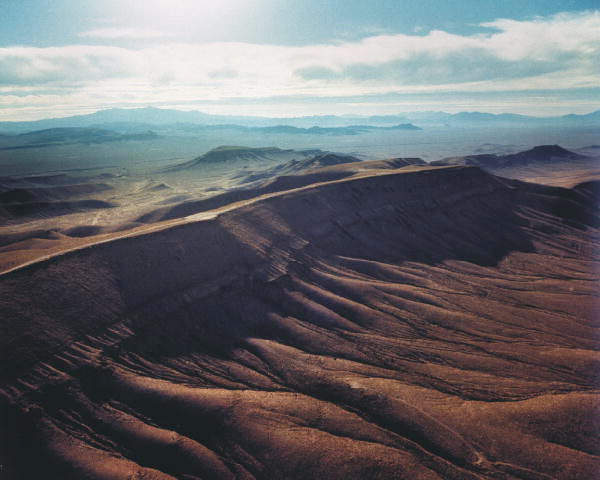
Yucca Mountain nuclear waste repository. From Wikipedia
 
August 13, 2014, from TurnItOffNow!

Nevada Beats Feds By Turning Off Their Water on Yucca Mountain

By Lori Rardon

Whenever I explain the OffNow Project to someone, they initially respond enthusiastically.  Something to the effect of, "Wow!  That's cool! The federal government shouldn't be spying on us!"  But when I further explain that the idea behind OffNow includes shutting off state supplied resources to NSA facilities – like the water necessary to cool the super-computers at the Bluffdale, Utah spy facility – those same people get nervous. "Shutting off the water seems like an extreme move.  Can we even  do that?" they ask.

Yes, we can do that.

And it will work.

It's been done before at a place called Yucca Mountain, Nevada.

Yucca Mountain is located about 90 miles northwest of Las Vegas.  It was originally selected as a nuclear waste dump site for the country in 1987, but it wasn't until 2002 that President Bush and Congress officially approved the site and moved to make the dump a reality.

This was not a popular move in Nevada. The Governor filed an official Notice of Disapproval of the site selection with Congress, but Congress overrode it.

In the years leading up to 2002, it became clear that Yucca Mountain would not meet EPA standards required for a nuclear waste dump.  The area is prone to earthquakes and even some recent volcanic activity.  Moreover, the nuclear waste repository would be located above the water table in an oxidizing setting that would corrode the waste containers over time.  Obviously, Yucca Mountain was not a safe place for nuclear waste. But the federal government apparently had its heart set on the site.  Instead of telling the Department of Energy (DOE) to abandon the proposed nuclear waste dumping site, the EPA just changed its standards so the project could move forward.

As a result, Nevada filed several lawsuits against the the EPA and the Nuclear Regulatory Commission (NRC) disputing the EPA's standards for the site, as well as asserting  the NRC's duty to uphold public and health safety standards.

But the state didn't simply count on the federal courts to protect it. It took some action of its own.

In addition to these lawsuits, Nevada denied the DOE's five applications for the use of water to construct and operate the proposed high-level nuclear waste repository at Yucca Mountain . The federal government wanted to continue taking soil samples from the site despite all of the negative results it had already obtained.  To run the drill rigs necessary to take soil samples as well as other operations , the feds needed to pump 430 acre-feet of water to the area each year.  But state law governs the use of groundwater.  So, the Nevada State Engineer rejected the applications on the basis that the intended repository was detrimental to the public interest.  Nevada still allowed DOE officials to use a limited amount of water at the site for showers, restrooms, and fire emergencies, but effectively blocked the drilling operation, slowing progress on the project to a crawl.

Of course,  DOE filed suit against Nevada in U.S. District Court in Las Vegas, arguing that federal law preempted state water law.

The court ultimately sided with Nevada.  In its 2007 ruling, the court found that the issues presented by the DOE did not involve federal preemption of state water law.  In the U.S. District Judge's opinion, "The validity of Western states' groundwater rights and the right to regulate water in the public interest is not a right to be taken lightly, nor is it a right that can cavalierly be ignored or violated by a federal agency."  Regarding the federal preemption argument he wrote,  "At present…the only public interest issue is whether state officials can be precluded from exercising their lawfully mandated duties, or whether a federal agency can run roughshod over a state's rights  or interest without specific authority and mandate to do the precise activities it wishes to do."

In 2010, after many years of legal wrangling, President Obama announced that the federal government planned to kill the project.  As a result, the Energy Department withdrew its application to the State of Nevada for access to water at the site.

Today, it appears that the Yucca Mountain project is dead.

The Yucca Mountain saga illustrates the power of state action. Nevada exercised its right to exercise control over its own resources and refused to provide them to the federal government. Essentially, Nevada said, "We are not going to help you complete a project that we believe will prove detrimental to the people of our state."

It worked. The feds didn't just march up the mountain and take the water. The court upheld the state's right to refuse cooperation under the anti-commandeering doctrine. And the state action ultimately forced the federal government to scrap its plan.

It was a major win for the state.

We plan to use the same tactics Nevada employed at Yucca Mountain against the NSA to turn it off and shut down its unlawful spying on American citizens.

We can do it. And it will work!

Wednesday, August 6, 2014

Meet OIRA – The Secretive White House Office with Disturbing Regulatory Powers

August 5, 2014

Source: Michael Krieger, Liberty Blitzkrieg

But in practice, OIRA operates largely in secret, exempt from most requests under the Freedom of Information Act. It routinely declines to release the changes it has proposed, the evidence it has relied upon to make them, or the identities and affiliations of White House advisers and other agencies' staff it has consulted. OIRA doesn't even disclose the names and credentials of its employees other than its two most senior officials.


Screen Shot 2014-08-05 at 11.42.23 AMIn 2013 the Administrative Conference, an independent federal agency that reviews government administrative processes, released a study of OIRA's effect on the application and interpretation of science the agencies gather and analyze to write rules. In examining a group of air-quality regulations, the study found that most of OIRA's suggestions involved substantive changes. The report concluded that in some instances, the office has proposed changes to the basic science underlying the rules. These included revising numbers in tables created by the EPA, altering technical discussions and recommending different standards altogether.

- From ProPublica's extremely important article: Lobbyists Bidding to Block Government Regs Set Sights on Secretive White House Office.

Have you ever heard of the Office of Information and Regulatory Affairs, otherwise known as OIRA? Yeah, neither had I.

As someone who prides himself on being a relatively informed citizen, it is always shocking and disturbing when I learn of a powerful organization operating in the shadows of America's faux democracy with which I am almost entirely unfamiliar. While I'm sure I've read many articles in which OIRA was mentioned, I had never fully understood exactly what it is, and how it is used by lobbyists and large corporate interests to further entrench the established oligarchic power structure. We can thank ProPublica for providing this service.

Let's start off with a little background. OIRA was created in 1980, and shortly thereafter the Reagan administration greatly expanded its powers by signing an executive order that gave the office the authority to review all federal rules. Ever since then, it has been used to rewrite or entirely block regulations from almost every regulatory body imaginable. While the initial idea of a government body to review newly proposed regulations and gather additional feedback before implementation is a noble one, in practice it has amounted to nothing more than the censorship of science in the name of protecting large corporate interests. Most importantly, all of this happens in total darkness.

For example, ProPublica notes that OIRA is disturbingly exempt from most requests under the Freedom of Information Act (FOIA). For example, the public cannot even find out the qualifications of the people who make drastic changes to proposed environmental regulations. In one specific case regarding a proposed EPA rule, we see an economist and a lawyer completely overruling peer-reviewed science.

Protect your wealth – Buy Gold and Silver Bullion with Goldbroker.com

Significantly, OIRA doesn't just interfere every once in a while. As ProPublic notes: "84% of the EPA's proposed rules from 2001 to 2011 featured changes suggested by OIRA." As mentioned earlier, the American public has no idea what was changed, why, or the qualifications of the people who made the changes. All of that is intentionally kept completely secret. Surely, in order to protect us from terrorists or something.

Even more worrisome, OIRA power is not only wielded for corporate profit protection purposes, but for political purposes as well. For example, according to OIRA's governing executive order, it is supposed to complete its review within 90 days of receiving a proposed regulation. Nevertheless, "delays reached an all-time peak under President Obama between 2011 and 2013."

High level EPA officials believe this was due to the 2012 election and not wanting to review any potentially controversial environmental regulations ahead of it. Quite often an OIRA strategy is to simply never review a proposed regulation until the regulatory body gives up and pulls it.

The anti-democratic, secretive and feudal power vested in the OIRA is an issue with which I was entirely unaware, but it is extremely important nonetheless. Here are some excerpts from ProPublica's very important article:

 A series of executive orders over the past three decades have given OIRA significant authority to reassess rules on every imaginable subject, from health care to the environment to transportation. The office shares early drafts of rules with the president's top advisers as well as other Cabinet-level agencies that might object.

Although some on OIRA's team have degrees in science and engineering, former officials say its leadership and staff are largely drawn from the realms of economics, law and public policy. Regardless, the office does not hesitate to rework agency rules that were years in the making and backed by peer-reviewed science. Often, OIRA officials make a proposed rule appear too costly by revising the calculation of benefits downward. As it did with the silica limits, the office can also prolong the process, holding regulations in limbo for months and sometimes years.

But in practice, OIRA operates largely in secret, exempt from most requests under the Freedom of Information Act. It routinely declines to release the changes it has proposed, the evidence it has relied upon to make them, or the identities and affiliations of White House advisers and other agencies' staff it has consulted. OIRA doesn't even disclose the names and credentials of its employees other than its two most senior officials. (Repeated requests to the office for the backgrounds of its employees drew no response.)

According to a study by the Center for Progressive Reform, a nonprofit research and educational organization critical of the office, 84 percent of the EPA's proposed rules from 2001 to 2011 featured changes suggested by OIRA as did 65 percent of other agencies' regulations. Officially, OIRA's "edits" are suggestions but they carry the weight of the White House and are typically accepted by the agency
In 2008, an OIRA review by the Bush administration deleted a provision intended to protect plant life from the effects of ozone, a key component of smog. The EPA had proposed a sharp reduction in the permissible levels of ozone to protect forests and vegetation, which naturally remove carbon from the atmosphere. According to an investigation by the House Committee on Oversight and Government Reform, the White House summarily overturned the unanimous recommendation of the EPA's Clean Air Scientific Advisory Committee and an array of expert testimony.

In 2013 the Administrative Conference, an independent federal agency that reviews government administrative processes, released a study of OIRA's effect on the application and interpretation of science the agencies gather and analyze to write rules. In examining a group of air-quality regulations, the study found that most of OIRA's suggestions involved substantive changes. The report concluded that in some instances, the office has proposed changes to the basic science underlying the rules. These included revising numbers in tables created by the EPA, altering technical discussions and recommending different standards altogether.

Congress created OIRA in 1980 to prevent federal agencies from demanding excessive amounts of data from public and private parties. President Reagan greatly expanded its powers, signing an executive order that gave the office the authority to review all federal rules. This was an important change, since most laws say the rules are to be written by the relevant Cabinet agency, not the president and his aides. At the time, Reagan's move kicked up controversy — still alive today — about whether it was appropriate for the White House to have such a direct say in government rulemaking.

Since then, both Republican and Democratic presidents have signed executive orders enshrining OIRA's pivotal role.

As usual, bipartisan criminality.


Cass R. Sunstein, a prominent legal scholar who led OIRA from 2009 to 2012, rejects many criticisms of the office, namely that it lacks transparency and that its suggested changes and delays are politically motivated. Sunstein, now a law professor at Harvard, responded neither to ProPublica's requests for an interview nor to written questions.

Once I realized Cass Sunstein was involved in this thing it all started to make perfect sense. Sunstein is one of the most unabashedly authoritarian Americans operating in the halls of government and academia today. As the Washington Post noted last year:

While at Harvard in 2008, Sunstein co-authored a working paper that suggests government agents or their allies "cognitively infiltrate" conspiracy theorist groups by joining "chat rooms, online social networks or even real-space groups" and influencing the conversation.

He is such a pernicious character, I wrote a post highlighting his dastardly ways last year. Please familiarize yourselves with the following: Obama Picks Cass Sunstein, America's Joseph Goebbels, to Serve on the NSA Oversight Panel.

Now back to ProPublica:

In the weeks leading to OIRA's completed review of the coal ash limits, a number of utility industry lobbyists and lawyers met with the office. While OIRA makes public a list of attendees and documents given to the office's representatives at meetings, it does not disclose the substance of their discussions. Such conversations are not unusual; any member of the public can meet with OIRA to discuss a rule. But the office has become a standard stop on the lobbying circuit for industries facing tighter regulations.

A 2003 Government Accountability Office study found that "regulated parties," typically corporations or their lobbyists, frequently get what they want after meetings with OIRA. Sometimes, the language of the edited rule is similar to that proposed by the regulated parties themselves.

The office also recast the EPA's scientific findings. The agency initially stated that using ponds for storing the most toxic form of coal ash, the emissions captured in the smoke stack's final filter, did "not represent the best available technology for controlling pollutants in almost all circumstances." Revisions made during OIRA review recommended eliminating this conclusion, giving no explanation why. Other changes included softening data, such as reducing coal-fired power plants' share of toxic pollutants discharged to surface water from "at least 60 percent" to "50-60 percent." The post-OIRA version also recommended reducing the projected benefits of the EPA's higher standards, which the agency did.

The EPA reached its findings for handling coal ash after almost 10 years of extensive data collection, modeling and analysis. This work required the knowledge of biologists, chemists, engineers and toxicologists working on a team that varied in size from about eight to around 30 people at various phases. The EPA lists the staff in its Office of Water responsible for the rule in the document itself, on the agency's website and in press releases.

It is difficult to know the qualifications of the people at OIRA who rewrote the EPA's draft rule. The only credentials disclosed by its website are those of the current administrator, Howard Shelanksi, who has a Ph.D. in economics, and his deputy, Andrei Greenawalt, a lawyer who was a policy adviser to the chief of staff from 2011 to 2013. ProPublica's request to the OMB for a list of OIRA staff went unanswered, as did repeated requests for an interview with Shelanski. OIRA also failed to respond to written questions about its lack of transparency.

According to OIRA's governing executive order, the office is supposed to complete its review within 90 days of receiving a regulation, with the option of one 30-day extension. But rules often gather dust for far longer. As documented in an Administrative Conference analysis, delays reached an all-time peak under President Obama between 2011 and 2013.

Least transparent administration ever.


High-level EPA staff interviewed for the analysis thought OIRA reviews took so long because of political concerns over contentious rules in the lead-up to the 2012 general election. According to the report, "The employees said their agencies were instructed that such rules were not to be issued unless deemed absolutely necessary (e.g., judicial deadline) or if it could be shown they were not controversial (e.g., clear net benefits)." Such instructions weren't issued in writing, but conveyed verbally by agency administrators who had been to meetings with key White House officials, the employees said.


The Administrative Conference report noted that in June 2013, 141 rules were under review at OIRA, of which over half had been there for more than 90 days. About half of those had been under review for more than a year, and 26 more for over two years. The rules were from a variety of agencies, including the EPA and the Departments of Energy and Labor.

Curtis Copeland, former specialist in American national government at the Congressional Research Service and author of the 2013 study for the Administrative Conference said, "What I heard when talking to the agencies was that OIRA often recommends agencies withdraw rules. Then it can all be done in the dark." 

As Copeland wrote in a 2009 Congressional Research Service survey of OIRA, "some agencies have indicated that they do not even propose certain regulatory provisions because they believe that OIRA would find them objectionable."

Morrall, the former deputy administrator of OIRA, acknowledged the lack of transparency and defended it on the grounds that it might be politically damaging if the public learned more about the office's inner workings. "To do our job we don't need what went into our decisions out in the public domain because opponents could use that against the president."

So once again political interests trump the public interest. These cronies aren't even ashamed to admit it publicly at this point.

The GAO's 2009 follow-up report found that OIRA and the agencies had failed to adhere to seven of eight transparency recommendations made in its 2003 assessment. The one measure OIRA had taken was to disclose logs of meetings with people outside government, which it continues to do, although they are nearly impossible to search, contain minimal, sometimes-unclear information about the attendees, and have scant information about what was discussed.

Rena Steinzor, a law professor at the University of Maryland and current president of the Center for Progressive Reform, the group critical of OIRA, has called for the office to be stripped of its rulemaking powers, terminating centralized White House regulatory review. In a 2012 law review article, Steinzor wrote that the Executive would still have rulemaking power: "The President can exert sufficient control over rulemaking through the political appointees he has selected to lead the agencies."

Got Democracy?

In Liberty, Michael Krieger


Tuesday, July 15, 2014

After $40 Billion, America’s Biggest Nuclear Dump Is Still Leaking

Other state legislatures are just as irresponsible for not expelling federal agencies, ie, FEMA, EPA, NSA, CIA, DOE, and so on from their respective sovereign state lands. The citizens are just as resentful of dogs who hike their cheeks and leave you a deposit on your front lawn.Why aren't the state representatives carrying out their lawful mandates? Git it done, or Git 'Em Out! Malingerers and hangers-on need not apply.

By on Jul 14, 2014
Washington State Ghost Town —Hanford.
Courtesy of photographer, Clane Gessel.
It's cost $40 billion so far to clean up America's biggest nuclear waste site—half the size of Rhode Island—and it's going to take another 40 years and $100 billion to finish the job.


In the meantime, workers from the Hanford nuclear site in Washington State are still getting sick from exposure to any one of 1,400 chemicals identified there, while allegations of mismanagement, negligence and secrecy over what may be life-threatening risks persist.


And delays keep piling up even though at least a third of the aging tanks storing 56 million gallons radioactive waste have leaked or are leaking, pouring some of the world's most dangerous contaminants into the Columbia River.


Yet the treatment plant to create safe storage for all that waste—which will remain radioactive for hundreds of thousands of years—still isn't built. It should have been finished three years ago. And the Environmental Protection Agency  is skeptical that the plant's current completion date of 2022 will be met.


Only Another 40 Years to Go


The plant is a crucial part of a wider remediation job that's decades from being done, according to Dennis Faulk, the EPA's program manager for Hanford


"I think we have another 40 years to go," Faulk told WhoWhatWhy. "And another $100 billion will be needed over that time." It costs about $2 billion a year to keep cleaning.


The EPA oversees and enforces the cleanup efforts, which are carried out by the Department of Energy and the contractors it hires. Both Congress and the Department of Energy itself have given those efforts a failing grade.


The Department of Energy's internal watchdog last year blamed the department and the contractor that's building the plant, Bechtel National Inc., for the delays. The Department of Energy's oversight lacked focus and Bechtel implemented scores of design changes without subjecting them to the required nuclear safety review, according to a report from the department's Inspector General.


Congress' Government Accountability Office was harsher. It recommended shutting down construction until the design work is completed safely, and said the Department of Energy was prematurely awarding millions in performance incentives to Bechtel. 

Most critical work on the plant has been shut down.


Columbia River, White Bluffs, part of Hanford
Meanwhile, Bechtel and another contractor are fighting whistleblower lawsuits from two former employees, and guess who's paying for their legal fees? The Department of Energy is.


All of those complications are worsened by the fact that the search for waste keeps turning up surprises, like nearly 100 pieces of spent fuel found in Native American burial grounds. So as the Herculean task creeps forward, occasional new contamination findings like that add time to the clock, which means the projected completion dates are really only theoretical.


Hanford wasn't built with an abundance of forethought. The job of making weapons-grade plutonium came first. Everything else, like planning for the waste and telling people about the release of radioactive materials, came second.


Hanford was one of the country's primary production centers for nuclear weapons, from the 1943 to the end of the Cold War. 

Located along the Columbia River, Hanford supplied plutonium for hundreds, if not thousands, of bombs for America's Cold War stockpile, and for the Manhattan Project, which helped end World War II while ushering in the nuclear age.


The War Department needed secrecy for the Manhattan Project and Hanford's remoteness afforded that. So in 1943, it evicted the 1,500 or so farmers living in the towns of Hanford and White Bluffs and relocated six Native American tribes who'd lived there for centuries.


Hurry Up With the Nukes, Already


After World War II, the government decided that one reactor at Hanford wasn't enough and built eight more to ramp up production of plutonium a material with a 24,000-year half-life. Hanford ballooned to 586 square miles in size. To put that in perspective, that's nearly half the size of Rhode Island. And a bigger site meant there was more nuclear waste to deal with.


"Low Level" Nuclear Waste 
Disposal, Hanford, 1950. 
Department of Energy Photo
As much as a million gallons of radioactive waste have leaked from Hanford's underground tanks—more than all of the leaks from all other nuclear facilities in the U.S. combined, according to Tom Carpenter, an attorney and the executive director of Hanford Challenge. The watchdog group represents Hanford workers and whistleblowers.


In a letter to Washington State Attorney-General Bob Ferguson in April, Hanford Challenge alleged that 38 workers had been exposed to vapors since March and urged the state to act where the Energy Department hasn't. There are currently about 11,000 workers at the site.


Another 20 Years of Failure


Further, contractors at Hanford have had a string of problems, from corruption to failing to meet deadlines. That kind of performance by the Department of Energy and its contractors is why there's no end in sight to the cleanup, he said.


"The one common denominator there is the Department of Energy and until you change them out as the manager of the cleanup, we're going to see another 20 years of failure out there," Carpenter said.


The delays are mainly due to the discovery of new waste, said Cameron Hardy, spokesman for the Energy Department's Richland, Washington, office. He said most of the contractors now are "high-performing. There was the potential for a lot of abuse in the early years, but things have changed since then."


Environmental Group: River Loaded With Contaminants


Contamination levels in and along the Columbia River—an outdoor Mecca for sporting enthusiasts and backpackers—are unsafe for people living and recreating downstream, not to mention a major Chinook salmon spawning point close to Hanford, according to conservationists.


The river is full of some of the most dangerous contaminants in the world, says one environmental monitor. The site's tanks are leaking into the soil, which ends up in the groundwater and eventually, the river, according to Dan Serres, conservation director with the Oregon-based environmental group Columbia Riverkeeper.


image001"In 25 years we've accomplished a lot in the cleanup, but the most difficult challenges lie ahead and the river is loaded with contaminants," he said.

Part of the challenges ahead included finishing the waste treatment plant, and sealing up the nine reactors so they can be dealt with when the technology exists. Hundreds of support buildings have to be demolished, too.


"Once these reactors get cleaned up, there's really not much left on the landscape," the Energy Department's Hardy said.


What's on the landscape, however, isn't the problem. It's what's going to be left in it.


Hanford and the Columbia River

​source via whowhatwhy​


Wednesday, June 25, 2014

More Proof U.S. Temperature Data Is Manipulated

Tuesday, 24 June 2014 18:41
Written by  Bob Adelmann
 
Writing in his Real Science blog, Steven Goddard explained how he found out that NASA had altered U.S. temperature readings to show a warming trend where none existed: He compared graphs published on NASA’s website in 1999 to those available today. He even set up an animation of the two temperature graphs to show the extent of the fraud.

Goddard went further by exhuming quotes from climate changers who also have changed their opinions, including the infamous James Hansen. In 2003 Hansen authored a paper for the UN’s Framework Convention on Climate Change entitled “Can We Defuse the Global Warming Time Bomb?” in which he concluded that “halting global warming requires urgent, unprecedented international cooperation” with the clear implication that the United Nations was just the group to accomplish it. But back in 1999, Goddard discovered that Hansen co-authored an article at NASA’s Goddard (no relation to Steven) Institute for Space Studies, “Whither U.S. Climate?” in which they claimed:

Empirical evidence does not lend much support to the notion that climate is headed precipitately toward more extreme heat and drought. The drought of 1999 covered a smaller area than the 1988 drought when the Mississippi almost dried up.... 1988 was a temporary inconvenience as compared with repeated droughts during the 1930s “Dust Bowl” that caused an exodus from the prairies as chronicled in Steinbeck’s Grapes of Wrath.

Hansen et al. added:
The U.S. has warmed during the past century, but the warming trend hardly exceeds year-to-year variability. Indeed, in the U.S. the warmest decade was the 1930s and the warmest year was 1934....

In the U.S. there has been little temperature change in the past 50 years ... in fact, there was a slight cooling throughout much of the country.

This reflected a study done in 1988 by the British Meteorological Office that concluded that the record set in 1988 “appeared to have been linked, at least in part, to natural fluctuations.” On top of that, scientists from the U.S. Commerce Department’s National Oceanic and Atmospheric Administration (NOAA) studied temperatures over the past 100 years leading up to the record year (1988) and concluded that “there had been no significant change in average temperatures over that period.”

Steven Goddard noted that apparently the EPA didn’t get the memo about the necessary change in graphology to promote the global warming myth, and consequently still shows on its website that temperatures have fluctuated precious little since the Dust Bowl.

Climate-change skeptic Christopher Booker, the author of the best-seller The Real Global Warming Disaster, saw this as vindication for all the flak he caught after the book was published in 2009. In that book he questioned whether there really was a “consensus” among scientists for AGW (anthropogenic global warming) after all. He went further to predict that once the whistle was blown on the global-warming canard, measures taken by governments to meet the so-called crisis “will turn out to be one of the most expensive, destructive and foolish mistakes the human race has ever made.”

Writing in The Telegraph, Booker examined Goddard’s claims, and expanded on them:
Goddard shows how, in recent years, NOAA’s US Historical Climatology Network (USHCN) has been “adjusting” its record by replacing real temperatures with data “fabricated” by computer models. The effect of this has been to downgrade earlier temperatures and to exaggerate those from recent decades, to give the impression that the Earth has been warming up much more than is justified by the actual data.

In several posts headed “Data tampering at USHCN/GISS”, Goddard compares the currently published temperature graphs with those based only on temperatures measured at the time. These show that the US has actually been cooling since the Thirties, the hottest decade on record; whereas the latest graph, nearly half of it based on “fabricated” data, shows it to have been warming at a rate equivalent to more than 3 degrees centigrade per century.

Someone else didn’t get the memo, either, about the need to adjust the numbers to fit the narrative: former Treasury Secretary Henry Paulson. Paulson is the fellow who made himself rich while heading up Goldman Sachs. When he left Goldman to take on his stint at Treasury, he sold all of his stock but was allowed to skip paying any capital gains on his profits, saving approximately $250 million in taxes. Now the head of his own climate-change disaster control center, the Paulson Institute, he has an opinion that still reflects the now-newly discredited data, which he expressed in a letter on Saturday to the New York Times:
We’re staring down a climate bubble that poses enormous risks to both our environment and economy. The warning signs are clear and growing more urgent as the risks go unchecked....
The carbon dioxide we’re sending into the atmosphere remains there for centuries, heating up the planet.

It’s necessary to ignore well-informed protests from the climate-change naysayers such as Booker and Goddard, says Paulson:
There is virtually no debate among scientists that the planet is warming and that the burning of fossil fuels is largely responsible....
Those who claim the science is unsettled or action is too costly are simply trying to ignore the problem ... waiting for more information before acting is actually taking a very radical risk.

And what is Paulson recommending, the same man who amplified and extended the Great Recession through massive government interventions rather than letting the free market adjust itself to the previous government-induced distortions? Doctor Fixit has the answer: "We can [solve] this by putting a price on emissions of carbon dioxide — a carbon tax."

It’s tempting to make light of efforts by climate-changers to manipulate the numbers to fit their own agenda. Indeed, the revelations by Steven Goddard make it easy to do so. But the larger climate-change narrative is the drive for more government control over the economy and, if successful, the economies of every country on the planet. In the brave new world they are planning, the air will be pristine but freedom will have vanished in the process.

Image: NASA 2013 temperature anomaly data from nasa.gov

A graduate of Cornell University and a former investment advisor, Bob is a regular contributor to The New American magazine and blogs frequently at www.LightFromTheRight.com, primarily on economics and politics. He can be reached at badelmann@thenewamerican.com.
via TNA

Tuesday, June 3, 2014

Hear Anything About Nevada's "Grass March"?

Hitler had his Waffen SS ("protective squadrons")  Washington's tyrants of today have their BLM and Homeland Security ....progress. Get it?


By Al Benson Jr.

The “Sagebrush Rebellion” continues in the Far West, but you are not hearing much about it around the rest of the country now. The BLM got a national black eye over the Cliven Bundy situation in April and so, almost as if by agreement, the “news” media seems to have backed off so they can do what they want with no media coverage, or as little as they can get by with. Should we expect anything else? The last thing the media is about is real news. They avoid it like the plague. The media is all about propaganda and spin. Real news doesn’t even enter into their equation.

A friend in Nevada sent me a clipping from the Las Vegas Review for May 18th. It was an article written by Sherman Frederick called A righteous protest of BLM. Mr. Frederick wrote about an event called the “Grass March” which was to take place on Memorial Day weekend in Nevada.

Mr. Frederick wrote: “Now comes the ‘Grass March’ from a group of Nevada ranchers looking to take their plight to the range of Northern Nevada in the form of a 70-mile horseback journey from Elko to Battle Mountain. The march will be a public protest highlighting the plight of ranchers under the yoke of federal oppression. It’s a smart move on the part of Westerners, especially in the aftermath of the confrontation between the BLM and Cliven Bundy in Bunkerville…But the cowboys in Elko, Ely, Eureka and Battle Mountain have a better idea. To draw attention to how the BLM has run roughshod over sane management of public lands, they will protest by riding horseback over public grasslands between Elko and Battle Mountain over Memorial Day weekend. Hopefully, Nevada’s newspapers and the nation’s large newspapers and television stations will come along and tell the story. 

Ranchers in 2014 are to the BLM what the people of India were to the British Empire in the 1930s—a subjugated people forced to live by the whims of a government that neither understands the people nor cares about the land.”

It was a good idea, but I don’t recall hearing much of anything about it over the Memorial Day weekend where I am in North Louisiana. Most of the papers that carried anything about it at all were small local papers in Nevada, although the Kansas City Star did carry an article and papers in Houston and Seattle had articles, but there was nothing of what I would call national coverage. Anything that would have made the BLM look bad or told the truth about how they bullied ranchers was to be avoided by the media. Now had a few militia members showed up to ride with the cowboys the “news” media would have crawled out from under their collectivist rocks and showed up in droves, and you can just imagine the headlines there would have been—“Extremist, Right-wing Militia Rides with Cowboys to Denigrate the BLM.” That’s how the “news” game is played in this country nowadays.

As you take a look at this whole game (and it is a game, the intent of which is to push ranchers and farmers off the land so the government can more effectively “manage” it) you find that there is a pattern to all of this BLM “concern” for the land.

There was an article in Imprimis, which is published by Hillsdale College, in April, 2014. It was written by William Perry Pendley, President of the Mountain States Legal Foundation. Mr. Pendley’s article was quite straightforward. He wrote: “…the Obama administration has picked up where the Carter and Clinton administrations left off, adopting the no-use policies promoted by environmental groups who view all federal lands as off limits to productive human activity. A typical way these policies get implemented is for environmental interest groups to sue a government agency under either the National Environmental Policy Act (NEPA) or the Endangered Species Act (ESA), and for the agency then to settle the lawsuit in the interest group’s favor.” So the radical environmental groups and the government agencies work hand in glove to get what they want—ordinary people off the land so it can be locked up. Mr. Pendly mentioned a group I have referred to before as being active in this landlocking game, Wild Earth Guardians. This group has attempted to restrict land use for agriculture, gas and oil drilling and wind farms in a five state area—Texas, Oklahoma, New Mexico, Colorado and Kansas because of certain areas inhabited by the lesser prairie chicken. All of this restricts use of the land by ranchers, oil and gas drillers and others. If the use of this land will, in any way, help the economic outlook for ordinary folks then that use must be suppressed. What else would you expect from a government at war with its own people? This is one reason they will try to delay work on the Keystone Pipeline project. That project will help people in the South and West, the most independent parts of the country, the people that voted against Obama’s Marxist policies. Therefore, it cannot be allowed to proceed. It must be stopped, delayed, or, if possible, shut down so that’s what they will do.

An article on http://4thst8.wordpress.com pretty well spells out what’s going on. It states: “President Obama this past week announced the creation of a national monument in southern New Mexico—the 500,000 acre Organ Mountains-Desert Peaks National Monument, which contains hiking trails, Native American ruins and Outlaw Rock, where Billy the Kid inscribed his name…Obama’s action looks suspiciously like an opening round in a bid to carry out a plan—first outlined in a secret Bureau of Land Management memo in 2010—that would lock up an area about the size of Colorado and Wyoming combined or about half of the BLM’s 264 million acres.. The Congressional Western Caucus released a copy of the 2010 memo—which is headed ‘Internal Draft—NOT FOR RELEASE’ and labeled ‘Treasured Landscapes.’ The memo lists more than two dozen specific areas from which the BLM seeks to lock out most human activity. Three of those are in Nevada…The Western Caucus described the 2010 memo as a plan to grab millions of acres of Western land: 

‘The President is going down the list, and sealing off vast swaths of the West on behalf of his special interest allies, who view our states as their personal playground.” That about says it all—their personal playground—and in order for them to enjoy it and to reap the financial benefits from it, ordinary folks, ranchers, farmers, and others, need to be removed.

Again, I have to ask, how much of this is tied into the United Nations Agenda 21 Program and Agenda 21’s “Rewilding Project” whereby most of the land is set aside for the animals and humans are reduced to living in sardine can-sized “apartments” and crowded together in huge megacities which they are not allowed to travel outside of? I’d be willing to bet there is, at least, an eventual connection to all of this with Agenda 21.

You can’t honestly tell me that Obama is concerned about all this natural habitat for animals. I doubt if he even knows where New Mexico or Oklahoma are situated. Although he does claim that he’s been in all 57 states!

Can anyone spell LAND GRAB?

via Revised History

Wednesday, May 14, 2014

A Mouse, a Mouse-My Kingdom For a Mouse-the Sagebrush Rebellion Continues

By Al Benson Jr., Revised History

We’ve all heard about the federal officers in Nevada trampling on the rights of Cliven Bundy and his family and trying to steal his cattle, while at the same time roughing up members of his family. Who knows what wonders those federalized thugs may have performed had there not been a bit of opposition to them on hand to protect the Bundy family. That situation is far from over. 

Thursday, November 7, 2013

Beware the Subversive Whistleblower Recruiters!: The Subversive Ties of the Government Accountability Project

By Charleston Voice on November 7, 2013 | Edit
Subversives in the Lens
Government Accountability Project (GAP)

The Government Accountability Project (GAP), was spawned by the Institute for Policy Studies in the early 1970s as a vehicle through which to attract government "whistleblowers" with emphasis on those with knowledge of covert intelligence activities. The GAP was separately incorporated in 1977, but retains ties to IPS. GAP's executive director was Louis Clark; success breeds success in attracting whistleblowers, Clark saying in a fundraising letter of the late 80′s:

Monday, May 27, 2013

Obama's EPA Attempts to Ban Ammunition

Can your state representative spell N-U-L-L-I-F-I-C-A-T-I-O-N ?


By NWV News Writer Jim Kouri
Posted 1:00 AM Eastern
May 27, 2013


A federal court on Thursday halted -- at least for the time being -- an effort by the Environmental Protection Agency to ban all ammunition containing lead, much to the dismay of gun control groups hoping to use environmentalism to "make an end run around the Second Amendment" right of access to ammunition, according to officials from several organizations representing gun owners and manufacturers.

Friday, April 13, 2012

EPA Collusion in Monsanto Coverup **Two Videos**

April 13, 2012
Source: OrganicConsumers.org


2,4-D and the dioxin pollution it creates are too dangerous to allow, period, but in the hands of bad actors like Monsanto and Dow Chemical the dangers increase exponentially. What's the Environmental Protection Agency doing? Helping coverup the chemical companies' crimes!

In February, Monsanto agreed to pay up to $93 million in a class-action lawsuit brought by the residents of Nitro, West Virginia, for dioxin exposure from accidents and pollution at an herbicide plant that operated in their town from 1929 to 2004.