Search Blog Posts

Showing posts with label VA. Show all posts

Friday, March 27, 2015

US military officers resort to lying and deception at all levels, finds damning official report

  • Shock 52-page report finds dishonesty at all levels in the U.S. Army 
  • Warns officers have become 'ethically numb' and urges quick action 
  • Says leaders 'espouse lofty values' but slog 'through mire of dishonesty' 
  • Finds personnel expect requested information to be 'questionable' 
  • But notes staff are 'happy to go along with the illusion all is well'  
Published: 08:55 EST, 20 February 2015

A damning official report claims dishonesty within the U.S. military is so endemic that everyone assumes they are being lied to at all times.

The shock report calls on officials to 'urgently confront the corrupting influence of dishonesty' within the army, warning officers have become 'ethically numb'.

The situation has become so bad, the executive summary concludes it has 'allowed leaders to espouse lofty professional values while slogging through the mire of dishonesty and deceit'. 
Dishonesty: The report claims dishonesty is endemic in the army on all levels, discovering personnel expect to not be told the truth at certain points, and accusing officers of becoming 'ethically numb' (Stock picture)

The report's executive summary also claims 'much of the deception and dishonesty... is actually encouraged and sanctioned by the military institution'.

Report authors Leonard Wong and Stephen J. Gerras say it is often justified one of three ways: 'mission accomplishment', 'supporting the troops' or that the task or reporting requirement is unreasonable or 'dumb'.

They go onto note lying and 'adjusting the truth' is so common, military personnel who order a report do not trust its content.

The report authors, who interviewed staff at all levels in the army in order to compile the 53-page document, state: 'It appears that a peculiar situation where those requesting the information, and those supplying it know that the information is questionable.'

However, they add, personnel are 'happy to go along with the illusion all is well'.  
Concerns: Former U.S. Defense Secretary Chuck Hagel sent a memo to military leaders before he stepped down from his post asking to deal with 'unethical or morally questionable behaviour'

The report, created for the Strategic Studies Institute and U.S. Army War College Press, say comes just a week after departing Secretary of Defense Chuck Hagel's final words of advice to senior military staff were to sort out 'unethical behaviour'.

According to CNN, Hagel wrote: 'The vast majority of our senior leaders are men and women who have earned the special trust and confidence afforded them by the American people.

'However, when senior leaders forfeit this trust through unprofessional, unethical or morally questionable behavior, their actions have an enormously negative effect on the profession.' 

via dailymail

Tuesday, February 17, 2015

VA 'I CARE' slogan slammed by veterans, employees as mockery of reform

Reform, restructuring, management modelling, or even "caring" are disingenuous expectations for the VA to achieve. The VA can't achieve these objectives as they like all government agencies flounder inefficiently and expensively outside the traditional American marketplace of competitiveness. 

The VA has a captive clientele. VA doctors and medical staff have had to set aside their Hippocratic oath of placing patient care above all else. That promise of real patient care has been superseded by government edict. 

For the VA's McDonald to promise America otherwise is dishonest, he knows it, and that is...immoral

Veterans Affairs Secretary Robert McDonald says the "I CARE" principles "focus our minds on our mission of caring and thereby guide our actions toward service to others." "I CARE" stands for integrity, commitment, advocacy, respect and excellence. (Associated Press)
Veterans Affairs Secretary Robert McDonald says the “I CARE” principles “focus our minds on our mission of caring and thereby guide our actions toward service to others.” “I CARE” stands for integrity, commitment, advocacy, respect and excellence. (Associated Press) more >

By Dave Boyer - The Washington Times - Sunday, February 15, 2015 

The embattled Veterans Affairs Department, now ranked by a government watchdog as among the most troubled federal agencies, is reminding employees in a memo why they should care about their work.

The document circulating among employees is titled the “I CARE Quick Reference” sheet, and it spells out the desired core values of the VA: integrity, commitment, advocacy, respect and excellence. The memo says the VA is “a model of unrivaled excellence due to employees who are empowered, trusted by their leaders, and respected for their competence and dedication.”

But after a year in which VA officials were accused of keeping secret waiting lists and concealing delayed care for veterans, some agency employees and veterans are questioning the “I CARE” program as a cosmetic effort that will do little to improve services.

“Management has made a mockery of it,” said one VA employee, who asked not to be named for fear of retaliation.

The head of a veterans group said veterans and active-duty service members are still waiting for “real, meaningful change” in the VA’s quality and promptness of health care services.

“Adopting a catchy acronym and circulating a checklist is not enough,” said Pete Hegseth, CEO of Concerned Veterans for America. “It’s easy to put on an ‘I CARE’ pin, but it doesn’t matter unless you actually demonstrate that care through your actions and the results you deliver. That’s what veterans, military members and their families are looking for: real results, not a slogan.”

But a spokesman for the Veterans of Foreign Wars said the memo could be useful and called it “a good example of getting people to sing the same tune by providing the same sheet of music.”

“The reference sheets leave little doubt about the direction VA leadership is headed, which for employees means either get with the program or get out,” said VFW spokesman Joe Davis. “The VFW wants the VA to identify and fix what’s broken, to hold employees appropriately accountable, and to help restore the faith of veterans in their VA.”

VA Secretary Robert McDonald, tapped by President Obama last year to revamp the embattled agency, said in a statement on the agency’s website that the “I CARE” principles “focus our minds on our mission of caring and thereby guide our actions toward service to others.”

“These values define our culture and strengthen our dedication to those we serve,” Mr. McDonald said.

But the VA culture was responsible for the agency’s addition last week to the Government Accountability Office’s “high-risk list” of troubled federal programs. The GAO said it has “serious concerns” about VA management and oversight of its health care system and found “inadequate training for VA staff.”

The watchdog agency’s report noted that Congress approved $15 billion last year to address rising demand for veterans’ health care, including increased use of non-VA health care providers.

“Coordination of care between VA and non-VA providers is critical,” the GAO report said. “Without it, there is increased risk of unfavorable health outcomes for veterans. The quality of care may be adversely affected if important clinical information is not promptly communicated between VA and non-VA providers.”

Mr. McDonald said he wanted the agency on the high-risk list to shine a light on problems and what officials are doing to fix them. In an effort to increase accountability, Mr. McDonald said Sunday, the department fired 900 employees under his leadership.
“We’re not where we need to be yet, I’m not saying that. What I’m saying is we’re making progress,” he said on “Meet the Press.”

Mr. McDonald encountered opposition last week from House Veterans’ Affairs Committee Chairman Jeff Miller, Florida Republican, to an administration proposal to cut some funding from the $10 billion VA Choice Card program. Mr. McDonald said he wants greater flexibility to expand services.

About 24,000 veterans have made appointments for private care since the Choice Card program was enacted last summer. Mr. Miller said any extra money in the program should be used to make sure other veterans can enroll.

The VA’s nationwide system of 150 medical centers and more than 800 community-based outpatient clinics has faced growing demand in the past decade, largely because of the wars in Iraq and Afghanistan. The GAO said enrollment in the VA health care system increased from 6.8 million veterans in fiscal year 2002 to 8.9 million veterans in fiscal year 2013, and outpatient medical appointments increased by about 85 percent over that period.

Congress more than doubled the VA’s annual health care budget over that period, from $23 billion in 2002 to $55.5 billion in fiscal 2013.

“Despite these substantial budget increases, for more than a decade there have been numerous reports — by GAO, VA’s Office of the Inspector General, and others — of VA facilities failing to provide timely health care,” the GAO report said.

Mr. Hegseth said veterans’ patience with Mr. McDonald is growing thin.

“The VA reform bill signed into law last August provided Secretary McDonald with the authority he needed to hold failing senior executives accountable and expand patient choice for veterans to allow them access to the care they need, but he has been consistently resistant to dismissing failing executives and now is even seeking to undermine funding for the choice provision — despite his promises to bring changes to the VA,” Mr. Hegseth said. “When Secretary McDonald was nominated by President Obama, we said we were cautiously optimistic about his nomination. In retrospect, it’s clear that the caution was warranted but the optimism was not.”

Mr. Davis, of the VFW, said more patience is required to let proposed reforms take hold.

“This crisis in access and confidence is still less than a year old,” Mr. Davis said. “The VA is a very large but decentralized organization, which means it can’t turn on a dime like the military can. Just as it took awhile for all the past problems to reach critical mass, it may take even longer for the VA to properly identify all that’s broken before the healing can begin.”

Jacqueline Klimas contributed to this report.
Source washingtontimes

Veterans could visit doctors or hospitals closer to home under federal proposal

Now this will delight many of my out-of-town VA acquaintances who must travel overnight distances to reach the Charleston VA.  I've been a longtime advocate for farming out veteran care to community hospitals. 

Much greater convenience for the vet and their families, and reduced expenses for the VA. The biggest hurdle as we see it is the government puts itself first to protect their monopolistic control over this one segment of Americans. Greed, personal careers and non-accountability trump performing up to what's needed in a competitive market. Mouthing care for the veteran is the routine practice while actual concern is not the result. Morality does not have a role.


Congressman Frank Lobiondo after he first unveiled his proposed new legislation to allow veterans to receive Healthcare at local non-VA Hospitals, on the steps of Nabb Leslie American Legion in Millville, Tuesday, May 27, 2014. (Staff Photo by Cindy Hepner/South Jersey Times)

By Alex Young | South Jersey Times
on February 16, 2015 at 12:00 PM

Congressman Frank LoBiondo (R-2) has reintroduced a bill that seeks to expand reforms enacted last year by allowing veterans to receive hospital care at non-Department of Veterans Affairs facilities, he announced in a statement recently.

LoBiondo said last year's reforms were a step in the right direction, but they didn't go far enough.

Under the 2014 VA reform law, veterans have to fall into certain categories to use a non-VA facility.

They either have to live more than 40 miles from a VA medical facility or outpatient clinic, or they have to show that they waited at least 30 days for an appointment at a VA facility.

When reached by phone Friday, LoBiondo said that because of the area's VA clinics, veterans in South Jersey don't qualify for the distance category even if they need to get a service that is only offered at one of the larger medical centers.

Joe Hannagan, veterans' service officer for Salem County, said many veterans in South Jersey -- especially those from Atlantic and Cape May counties -- face a tough road of reaching a VA hospital in Wilmington, Delaware, or Philadelphia.

"They have to be put on a bus and travel three hours," he said. "They stay at the hospital half a day and then go back home."

LoBiondo said there is a bus that starts in Atlantic County and heads through Vineland before going on to Wilmington.

"It's a new bus, but it's not the best option if you're an older vet and you've got a long ride on your hands," he said. "All of the vets on the bus have to have their appointments in Wilmington before you head home."

LoBiondo's new bill would eliminate the distance and wait criteria and allow veterans to go to the doctor or hospital of their choosing.

"South Jersey veterans must continue to travel out of state for complex medical care despite quality health care providers available locally," he said in the release. "My legislation would give South Jersey veterans that choice and complete the reforms Congress began last year."

The act would require the VA to establish pilot programs in each of the 23 Veterans Intergrated Service Networks and would provide eligible veterans with a unique identification card that would allow them to receive medical care at non-VA facilities at the VA's expense.

The legislation specifically states that LoBiondo's 2nd Congressional district will be one of the pilot-program areas.

State Sen. Jeff Van Drew (D-1) said this legislation would be a huge benefit to the veterans in his district, as well as in other areas.

He said veterans in Ocean County have to travel all the way up to East Orange to get special treatments.

Van Drew also believes the act could give a nice boost to the local economy at local hospitals.

"The hospitals are so anxious," he said. "I meet with hospital representatives regularly, and they're really pleased about us heading in this area. There isn't a hospital yet that isn't anxious to be involved in some way.

"It's not going to be easy. ... We thank the congressman for his work and look forward to working with him in a bipartisan way. We'll continue to push no matter how long it takes."

LoBiondo believes this bill would be a big positive in fulfilling a promise to the nation's veterans.

"These are men and women who have put their lives on the line in service to the United States," he said. "They were promised that we would take care of them and their health care needs."

Alex Young may be reached at alexyoung@southjerseymedia.com. Follow him on Twitter @AlexYoungSJT. Find the South Jersey Times on Facebook.
 
via nj.com

Saturday, February 7, 2015

Pentagon's Shameful Record of Finding (POW/MIA) U.S. Soldiers in Foreign Lands

Can Pentagon Fix Shameful Track Record of Finding and Identifying Remains of Missing U.S. Soldiers in Foreign Lands?


Saturday, February 07, 2015


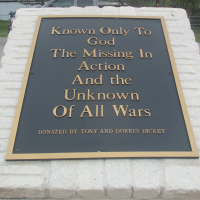
Plaque at Veterans
Memorial Park in
Rhome, Texas
(photo: Wikipedia)
The remains of thousands of American soldiers dating as far back as World War II still have not been brought home, despite the Department of Defense spending millions every year to locate and return these remains to their families.
 
Outgoing Defense Secretary Chuck Hagel promised to implement reforms to erase the backlog of “unknowns,” buried around the world, believed to be about 9,400 according to ProPublica. Some of the missing fought in Vietnam, others during the Korean War, and still others in World War II.

One unknown was Private Arthur “Bud” Kelder, who died in the Philippines 73 years ago. Kelder was buried with several other prisoners in 1942 near the Japanese prison camp in which he died. Although Kelder’s family members provided strong evidence of the location of his remains, the Joint Prisoners of War/Missing in Action Accounting Command (J-PAC) and its longtime scientific director, Tom Holland, refused to investigate the grave and have Kelder’s remains shipped home. Only after the Kelder family’s story was published did the Pentagon officially identify his remains last month. Holland was fired late last year.

J-PAC also declined to work to return home the remains of another soldier, this one from Europe. Private First Class Lawrence Gordon was killed in Normandy in 1944 and was mistakenly identified as a German soldier and buried in a German cemetery. It fell to the Germans, our former enemies, and the French to send Gordon’s remains home.

A key to identifying remains buried overseas is DNA—that of the soldiers and any relatives still alive. But with many from the World War II era in their 80s and 90s, fewer relatives are available for officials to contact and collect genetic material from.

Holland’s office was reluctant to use DNA to identify soldiers’ remains for fear of making an error, saying they must first narrow down who the person might be. “It doesn’t matter that I’ve identified 500 people correctly. If I misidentify one, that’s what going to be the focus. That’s what’s going to be on the news. That is what is going to erode the credibility. That’s what I go home with every night,” Holland told ProPublica last year.

Hagel hopes to address these problems through “sweeping reforms to address the current inefficiency” and the establishment of a new office to oversee the POW/MIA identification. In addition, “a medical examiner will lead identification efforts that will rely heavily on the latest in DNA testing and a new database will list all of the missing. The new agency will also seek assistance from other organizations and outside groups,” according to Sara Afzal at ProPublica.

The changes should improve a process that currently identifies an average of only 72 people a year, even though the Pentagon spends $100 million annually on this effort.

-Noel Brinkerhoff, Steve Straehley
To Learn More:
Pentagon Overhauls Effort to Identify its Missing (by Megan McCloskey, ProPublica)
The Military Is Leaving the Missing Behind (by Megan McCloskey, ProPublica)
Defense POW/MIA Accounting Agency (U.S. Department of Defense)


Monday, January 26, 2015

U.S. nursing homes' new tactic to collect debts: Seizing power of attorney from patients' relatives

If you haven't already cleared your remaining savings and other assets off the table, you probably should not rule it out until checking out this new government/corporatist fraud. Government is but the collection enforcement agent for the Corporatists.
 ~~~~~~~~~~~~~~~~~~~~~~~~~~~~~~~~~~~~~~~~~~
The New York Times | January 26, 2015 | Last Updated: Jan 26 11:16 AM ET
Piotr Redlinski/The New York Times: Dino and Lillian Palermo at the Mary Manning Walsh Nursing Home, which filed a guardianship petition asking the court to give a stranger full legal power over Lillian Palermo and complete control of her money, in New York, Oct. 31, 2014. 

NEW YORK — Lillian Palermo tried to prepare for the worst possibilities of aging. An insurance executive with a Ph.D. in psychology and a love of ballroom dancing, she arranged for her power of attorney and health care proxy to go to her husband, Dino, eight years her junior, if she became incapacitated. And in her 80s, she did.

Dino Palermo, who was the lead singer in a Midtown nightclub in the 1960s when Lillian’s elegant tango first caught his eye, now regularly rolls his wife’s wheelchair to the piano at the Catholic nursing home in Manhattan where she ended up in 2010 as dementia, falls and surgical complications took their toll. He sings her favourite songs, feeds her home-cooked Italian food, and pays a private aide to be there when he cannot.

It’s a strategic move to intimidate. Nursing homes do it just to bring money.

But one day last summer, after he disputed nursing home bills that had suddenly doubled Lillian Palermo’s copays, and complained about inexperienced employees who dropped his wife on the floor, Dino Palermo was shocked to find a six-page legal document waiting on her bed.

It was a guardianship petition filed by the nursing home, Mary Manning Walsh, asking the court to give a stranger full legal power over Lillian Palermo, now 90, and complete control of her money.

Few people are aware that a nursing home can take such a step. Guardianship cases are difficult to gain access to and poorly tracked by New York state courts; cases are often closed from public view for confidentiality.
Piotr Redlinski/The New York Times: Nursing homes are using a New York State statute created to protect the infirm as a way to get paid.

It’s so cruel. Mr. Palermo loves his wife, he’s there every single day, and they just threw him to the courts.

But the Palermo case is no aberration. Interviews with veterans of the system and a review of guardianship court data conducted by researchers at Hunter College at the request of The New York Times show the practice has become routine, underscoring the growing power nursing homes wield over residents and families amid changes in the financing of long-term care.

In a random, anonymized sample of 700 guardianship cases filed in Manhattan over a decade, Hunter College researchers found more than 12 percent were brought by nursing homes. Some of these may have been prompted by family feuds, suspected embezzlement or just the absence of relatives to help secure Medicaid coverage.

But lawyers and others versed in the guardianship process agree that nursing homes primarily use such petitions as a means of bill collection – a purpose never intended by the Legislature when it enacted the guardianship statute in 1993.

At least one judge has ruled that the tactic by nursing homes is an abuse of the law, but the petitions, even if they are ultimately unsuccessful, force families into costly legal ordeals.

The Palermo case is no different than any other nursing home bill that they had difficulty collecting. When you have families that do not co-operate and an incapacitated person, guardianship is a legitimate means to get the nursing home paid.

“It’s a strategic move to intimidate,” said Ginalisa Monterroso, who handled patient Medicaid accounts at the Mary Manning Walsh Nursing Home until 2012, and is now chief executive officer of Medicaid Advisory Group, an elder care counselling business that was representing Dino Palermo in his billing dispute. “Nursing homes do it just to bring money.”

“It’s so cruel,” she added. “Mr. Palermo loves his wife, he’s there every single day, and they just threw him to the courts.”

Brett D. Nussbaum, a lawyer who represents Mary Manning Walsh and many other nursing homes, said Dino Palermo’s devotion to his wife was irrelevant to the decision to seek a court-appointed guardian in July, when the billing dispute over his wife’s care reached a stalemate, with an outstanding balance approaching $68,000.
Nina Bernstein/The New York Times Dino and Lillian Palermo

“The Palermo case is no different than any other nursing home bill that they had difficulty collecting,” Nussbaum said, estimating that he had brought 5,000 guardianship cases himself in 21 years of practice. “When you have families that do not co-operate and an incapacitated person, guardianship is a legitimate means to get the nursing home paid.”
READ MORE

Wednesday, January 7, 2015

What do you know about your own "STATE DEFENSE FORCE" ?

As it's becoming apparent our country is being overrun, it's time for state governors to adorn a mantel of responsibility for the safety of their citizens. Order home the national guards from foreign deployment, establish operational relationships as well with their respective State Defense Force. Expel federal troops, ICE, Homeland, and nuisance agencies from state sovereign land.  

Nullification is the people's tool - use it! Afterall, if the federal government is incapable, or criminally deliberate in disrupting our society, culture, sovereignty and economics, let the people participate in their own defense!


The Georgia State Defense Force’s rich heritage dates back to England. Under the direction of General James Edward Oglethorpe, Sergeants of the Guard trained future colonists in militia tactics. Georgia settlers arriving in 1733 became members of General Oglethorpe’s militia. These militia forces later joined General George Washington to secure American Independence.


The volunteer militia remained in continuous service throughout the 1700’s and 1800’s. During the War Between the States Georgia responded with over 100 volunteer regiments, battalions, and batteries. This volunteer commitment was second only in number to the State of Virginia.

During World War II, the 8,000 members of the volunteer militia force guarded war plants, critical communications facilities, utilities, reservoirs, and transportation facilities. Although not officially disorganized until 1951, the Georgia State Guard began its retirement in July 1946. The Georgia State Defense Force was re-authorized in 1973.

Today, the Georgia State Defense Force is authorized under the Official Code of Georgia, Title 38. The Georgia Department of Defense is comprised of the Army National Guard, the Air Guard and the State Defense Force, all of whom serve under the direction of the Adjutant General of Georgia. Source


State Defense Force


From Wikipedia, the free encyclopedia

This article is about defense forces of individual states of the United States of America. For defense forces of states countries and nations, see military.

State defense forces: army
units highlighted in red, naval
units in blue, those with both
in green, inactive in purple.

State defense forces (SDF) (also known as state guards, state military reserves, or state militias) in the United States are military units that operate under the sole authority of a state government; they are partially regulated by the National Guard Bureau but they are not a part of the Army National Guard of the United States.[1] State defense forces are authorized by state and federal law and are under the command of the governor of each state.

State defense forces are distinct from their state's National Guard in that they cannot become federal entities (all state National Guard personnel can be federalized under the National Defense Act of 1933 with the creation of the National Guard of the United States).[2] The federal government recognizes state defense forces under 32 U.S.C. § 109 which provides that state defense forces as a whole may not be called, ordered, or drafted into the armed forces of the United States, thus preserving their separation from the National Guard. However, under the same law, individual members serving in the state defense force are not exempt from service in the armed forces (i.e., they are not excluded from the draft). Under 32 USC § 109(e), "A person may not become a member of a defense force . . . if he is a member of a reserve component of the armed forces."

Nearly every state has laws authorizing state defense forces, and 22 states, plus Puerto Rico, have active SDFs with different levels of activity, support, and strength. State defense forces generally operate with emergency management and homeland security missions. Most SDFs are organized as army units, but air and naval units also exist.[3][4]

Origins


From its founding until the early 1900s, the United States maintained only a minimal army and relied on state militias to supply the majority of its troops.[5] As a result of the Spanish-American War, Congress was called upon to reform and regulate the training and qualification of state militias. In 1903, with passage of the Dick Act, the predecessor to the modern-day National Guard was formed. It required the states to divide their militias into two sections. The law recommended the title "National Guard" for the first section, known as the organized militia, and "Reserve Militia" for all others.[6]

During World War I, Congress authorized the states to maintain Home Guards, which were reserve forces outside the National Guards being deployed by the Federal Government. The Secretary of War was authorized to furnish these units with rifles, ammunition, and supplies.[7]

In 1933, Congress finalized the split between the National Guard and the traditional state militias by mandating that all federally funded soldiers take a dual enlistment/commission and thus enter both the state National Guard and the newly created National Guard of the United States, a federal reserve force. In 1940, with the onset of World War II and as a result of its federalizing the National Guard, Congress amended the National Defense Act of 1916, and authorized the states to maintain "military forces other than National Guard."[8] This law authorized the War Department to train and arm the new military forces that would come to be known as State Guards. Many states took advantage of this law and maintained distinct state military forces throughout the war to defend their own territories, shorelines, and airspaces.


Sunday, January 4, 2015

How the Military Fails U.S. Veterans


 ~~~~~~~~~~~~~~~~~~~~~~~~~~~~~~~~~`

 Show me a wartime US veteran who doesn't agree with Col. Wilkerson and I'll show you a pansy. Senators McCain and Graham are two that come to mind.

 Larry Wilkerson, in 1966, while he was studying philosophy and literature, joined the Army and volunteered to go to Vietnam. The same man who believed in the American narrative enough to put his life on the line in Asia 40, 50 years later is one of the harsher critics of US foreign policy.

Bio

Lawrence Wilkerson
is a retired United States Army soldier and former chief of staff to
United States Secretary of State Colin Powell. Wilkerson is an adjunct
professor at the College of William & Mary where he teaches courses
on US national security. He also instructs a senior seminar in the
Honors Department at the George Washington University entitled "National
Security Decision Making."

Full transcript of this viewing can be found:  How the Military Fails U.S. Veterans

Tuesday, November 4, 2014

Why Government Fears Veterans - Battle of Athens, Tennessee

Imagine for a moment if you will what these Party voting fraudsters can pull off with computer voting replacing hard copy paper ballots!

Posted on June 7, 2014 by Joe from MassPrivateI
The Battle of Athens, Tennessee is not only a pristine example of a fight for freedom and democracy, but it also shows perhaps why the government is afraid of a fearless veteran.

Source From the Trenches

Monday, October 6, 2014

TRAITORS WITHIN THE GATES: CFR'S MILITARY MEMBERSHIP ROSTER

Read:  Cover-up at 1600 Pennsylvania Avenue

Traitors within the gates. Is your sailor, soldier or airman really defending our country, or instead is he/she building an empire for the Corporatist cabal? Inform yourself, then decide.

NOPE. YOU WON'T FIND ANY SMEDLEY BUTLERS AMONGST THESE TRAMPS.


AMERICA'S CFR-led US Military:

Friday, September 19, 2014

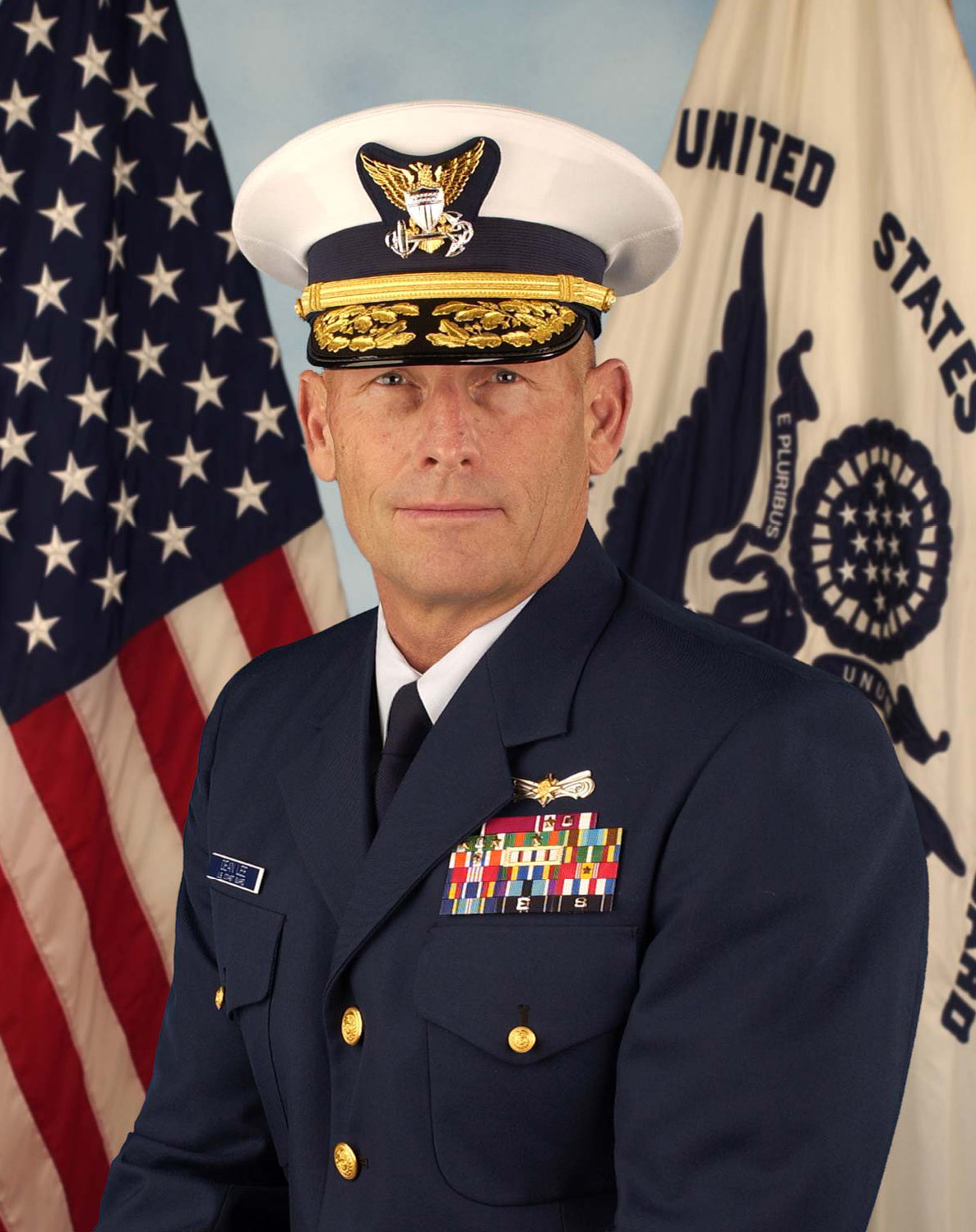
POWERFUL! Coast Guard Admiral Lee Addresses Restrictive Regulations on Religious Liberty - YouTube

Makes me proud to have been a Coastie.


"I am not really a religious  man, only a sinner in a sailor suit," he  says.

Coast Guard  Rear Admiral William Lee, ditched his prepared speech,  and delivered a scathing indictment of federal rules regarding  expression of faith in the  Military. The video has just now become  available.


But, then as you'd expect ... there are those who dishonor the US military uniform by choosing Treason over Morality: Traitors Within the Gates: CFR's Military Membership Roster