Search Blog Posts

Showing posts with label Swiss. Show all posts

Thursday, October 9, 2014

Notice that ISIS Isn’t Beheading Swiss Citizens

by
When President Obama and his army began their bombing campaign against Islamic State forces in Iraq and Syria, they cited as their justification the Islamic State’s (aka ISIS) beheading of a private American citizen. The beheading, U.S. officials, said demonstrated what a dangerous threat the Islamic State was to the United States.
 
But there was one big problem with that reasoning: Those who did the beheading cited Obama’s bombing campaign against ISIS as the justification for beheading the American citizen. Since the bombing campaign succeeded in killing Islamic State friends and comrades, the Islamic State claimed that it was justified in retaliating by beheading an American citizen.

So, is this a chicken and egg quandary? Which came first: the bombing or the beheading? Does it make any difference?
 
Ever since 9/11, this has been the major issue facing the American people with respect to U.S. foreign policy: Did terrorism come to the United States because of the ferocity of radical Muslims who hate America for its freedom and values? 
 
Or did terrorism come to the United States out of retaliation for what the U.S. government was doing to people in the Middle East, many of whom were Muslims, including such things as the U.S. government’s partnership with Middle East dictatorships, including Saddam Hussein, the Persian Gulf intervention, the sanctions against Iraq that were killing tens of thousands of Iraqi children on an annual basis, U.S. Ambassador to the UN Madeleine Albright’s statement that the deaths of half-a-million Iraqi children from the sanctions were “worth it,” the stationing of U.S. troops near Islamic holy lands, the deadly no-fly zones over Iraq, and the unconditional military and financial support to the Israeli government.
 
One clue to which version is correct is Switzerland. That’s a country whose freedom and values are similar to those of the United States but with one major exception.
 
Like the United States, Switzerland has a welfare state and a regulated society.

Yet, notice something important: Switzerland isn’t the subject of terrorist attacks, and the Islamic State isn’t beheading Swiss citizens. Wouldn’t  you think that if radical Muslims hate the United States for its freedom and values, they would also hate Switzerland for its freedom and values, especially since the freedom and values of the United States are similar to those of Switzerland, with one major exception?

So, what’s that major exception? Is it possible that that major exception could provide a clue as to which comes first: terrorism or U.S. interventionism?

One of the big things that distinguishes Switzerland from the United States is its foreign policy. Unlike the U.S. government, the Swiss government does not maintain military bases in foreign countries. It doesn’t meddle in or intervene in the internal affairs of other countries. It doesn’t engage in bombing campaigns against foreigners. It doesn’t commit kidnappings, coups, torture, assassinations, and indefinite military detention of foreigners. It doesn’t partner with brutal foreign dictatorships. It doesn’t get involved in civil wars or conflicts between nations.

The Swiss government, unlike the U.S. government, minds its own business.

In fact, the Swiss government’s foreign policy pretty much mirrors the foreign policy on which the United States was founded. That foreign policy of non-interventionism was summarized in John Quincy Adams’ Fourth of July Speech to Congress in 1821 entitled “In Search of Monsters to Destroy.”
 
And it’s not as though the Switzerland is a nation of pacifists. On the contrary, the Swiss people are among the fiercest and most competent fighters in history. Swiss citizens maintain assault rifles in their homes and most every one of them are trained to use them. In fact, shooting is a national pastime in Switzerland.
 
The difference is that the Swiss military, which relies in large part on well-trained citizen soldiers, is entirely oriented toward genuine defense — that is, the defense of Switzerland from an attack or invasion.
 
Thus, I find it amusing whenever American conservatives say they favor “a strong national defense.” The Swiss model — which constitutes genuine defense — is not what conservatives mean by that term. What conservatives mean by the term “a strong national defense” is actually a powerful overseas military empire, one that maintains military bases all over the world, engages in coups and other regime-change operations, kidnaps, tortures, assassinates, and indefinitely detains people through the Pentagon and CIA, partners with brutal dictatorships, interferes with the internal affairs of other countries, and uses foreign aid to manipulate foreign regimes.
 
So, why do foreigners initiate terrorist attacks against the United States and not against Switzerland?
 
It shouldn’t take a rocket scientist to figure that one out.
This post was written by:
Jacob G. Hornberger is founder and president of The Future of Freedom Foundation. He was born and raised in Laredo, Texas, and received his B.A. in economics from Virginia Military Institute and his law degree from the University of Texas. He was a trial attorney for twelve years in Texas. He also was an adjunct professor at the University of Dallas, where he taught law and economics. In 1987, Mr. Hornberger left the practice of law to become director of programs at the Foundation for Economic Education. He has advanced freedom and free markets on talk-radio stations all across the country as well as on Fox News’ Neil Cavuto and Greta van Susteren shows and he appeared as a regular commentator on Judge Andrew Napolitano’s show Freedom Watch. View these interviews at LewRockwell.com and from Full Context

Monday, September 15, 2014

Ron Paul: Will the Swiss Vote to Get Their Gold Back?

Ron Paul

Will the Swiss Vote to Get Their Gold Back?

September 15, 2014
Editorial By Ron Paul

On November 30th, voters in Switzerland will head to the polls to vote in a referendum on gold. On the ballot is a measure to prohibit the Swiss National Bank (SNB) from further gold sales, to repatriate Swiss-owned gold to Switzerland and to mandate that gold make up at least 20 percent of the SNB's assets. Arising from popular sentiment similar to movements in the United States, Germany and the Netherlands, this referendum is an attempt to bring more oversight and accountability to the SNB, Switzerland's central bank.

The Swiss referendum is driven by an undercurrent of dissatisfaction with the conduct not only of Swiss monetary policy, but also of Swiss banking policy. Switzerland may be a small nation, but it is a nation proud of its independence and its history of standing up to tyranny. The famous legend of William Tell embodies the essence of the Swiss national character. But no tyrannical regime in history has bullied Switzerland as much as the United States government has in recent years.

The Swiss tradition of bank secrecy is legendary. The reality, however, is that Swiss bank secrecy is dead. Countries such as the United States have been unwilling to keep government spending in check, but they are running out of ways to fund that spending. Further taxation of their populations is politically difficult, massive issuance of government debt has saturated bond markets, and so the easy target is smaller countries such as Switzerland which have gained the reputation of being "tax havens." Remember that tax haven is just a term for a country that allows people to keep more of their own money than the US or EU does, and doesn't attempt to plunder either its citizens or its foreign account-holders. But the past several years have seen a concerted attempt by the US and EU to crack down on these smaller countries, using their enormous financial clout to compel them to hand over account details so that they can extract more tax revenue.

The US has used its court system to extort money from Switzerland, fining the US subsidiaries of Swiss banks for allegedly sheltering US taxpayers and allowing them to keep their accounts and earnings hidden from US tax authorities. EU countries such as Germany have even gone so far as to purchase account information stolen from Swiss banks by unscrupulous bank employees. And with the recent implementation of the Foreign Account Tax Compliance Act (FATCA), Swiss banks will now be forced to divulge to the IRS all the information they have about customers liable to pay US taxes.

On the monetary policy front, the SNB sold about 60 percent of Switzerland's gold reserves during the 2000s. The SNB has also in recent years established a currency peg, with 1.2 Swiss francs equal to one euro. The peg's effects have already manifested themselves in the form of a growing real estate bubble, as housing prices have risen dangerously. Given the action by the European Central Bank (ECB) to engage in further quantitative easing, the SNB's continuance of this dangerous and foolhardy policy means that it will continue tying its monetary policy to that of the EU and be forced to import more inflation into Switzerland.

Just like the US and the EU, Switzerland at the federal level is ruled by a group of elites who are more concerned with their own status, well-being and international reputation than with the good of the country. The gold referendum, if it is successful, will be a slap in the face to those elites. The Swiss people appreciate the work their forefathers put into building up large gold reserves, a respected currency and a strong, independent banking system. They do not want to see centuries of struggle squandered by a central bank

The results of the November referendum may be a bellwether, indicating just how strong popular movements can be in establishing central bank accountability and returning gold to a monetary role.

This article provided courtesy of the Ron Paul Institute for Peace and Prosperity.

via thedailybell

Monday, August 25, 2014

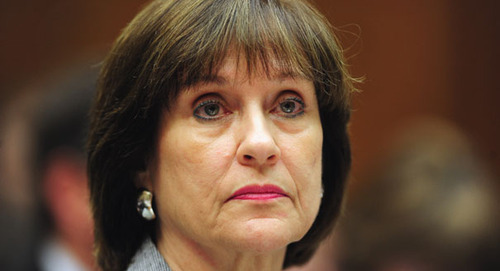
DOJ official admits what we all know: Lois Lerner's emails exist–they just refuse to retrieve them


Emails don't just disappear in a puff of smoke when a hard drive crashes.  That's not how the internet works.  It's how the Obama administration wants you to the think the internet works, but that's not how the internet actually works. 

Now, the Justice Department is admitting just that.
from National Review:
A Justice Department official admitted that former IRS official Lois Lerner's apparently missing e-mails actually exist on a backup server, but the government doesn't plan to retrieve them.

"A Department of Justice attorney told a Judicial Watch attorney on Friday that it turns out the federal government backs up all computer records in case something terrible happens in Washington and there's a catastrophe, so the government can continue operating," Judicial Watch president Tom Fitton told Fox News's Shannon Bream.
"But it would be too hard to go get Lois Lerner's e-mails from that backup system," Fitton continued, paraphrasing the DOJ official. "So, everything we've been hearing about scratched hard drives, about missing e-mails of Lois Lerner, other IRS officials, other officials in the Obama administration, it's all been a pack of malarkey. They could get these records, but they don't want to."
read the rest

Americans can be thankful to Judicial Watch for the tireless efforts they have made towards holding the government accountable.  At some point, we will get to the bottom of the IRS targeting of Conservative groups, and we will hold those responsible accountable.

via PoorRichardsNews

Monday, August 11, 2014

Liechtenstein

We are informed by an alert reader that Liechtenstein did not debase their own fiat currency because...the Swiss franc was their national currency.
 
​If you know our own founding fathers, it seems Liechtenstein did too, but unlike us they benefited by implementing.​

August 11th, 2014   Submitted by Anthony Caprio, Daily Anarchist


FireRepressionThe twentieth century was defined by the nation state, and the wars, which resulted from the clash of these leviathans as they competed for power and influence. The British, Soviet, American, German, Russian, Japanese, and Chinese empires all controlled nearly every square inch of the Earth at one time or another in the last century. There is one notable bastion of freedom that survived unscathed during this clash of empires, and it did so with no military. That country is Liechtenstein.

"Why have I never heard of Liechtenstein?" you ask. Well, if you went to a state sponsored school it could be that Liechtenstein existence defies most of the lessons you were taught in history class. Most of the lessons taught in public school history classes are about the importance of having a democratically elected head of state, a strong central government, a fiat currency, and a strong standing army to keep you safe from invading neighbors. Liechtenstein turns all of that conventional wisdom on its head.

Now I know I probably don't need to say this, but Liechtenstein is not an Anarcho-Capitalist enclave. It is however a minarchist state, which has done away with it's military. The absence of a state controlled military is essential to the existence of an Anarcho-Capitalist enclave. Most statists (even minarchists) argue that the primary role of the state is to maintain a military, which will defend the state's national territory. If this is true, and no territory can stay free without a military, how then do they explain that Liechtenstein has remained free from invaders for over 140 years?

Liechtenstein is a tiny nation tucked between Switzerland, Austria, and Germany. The land mass is only 60 square miles, and since the 19th century its head of state has been a Prince from the House of Liechtenstein. Notice the head of state uses the title Prince, which comes from the Latin princeps, which means first citizen, not ruler.
 

Today Liechtenstein enjoys the worlds highest per capita GDP. The country's wealth has been attributed to its extremely low tax burden, strong respect for property rights and fair court system. 

Like Costa Rica, Liechtenstein does allow private gun ownership but the laws are much stricter than the United States. The Princes of Liechtenstein are surprisingly anti-state, which I believe accounts for much of their success. Given the Prince's distrust of the state, perhaps it is not surprising that in 1868 Liechtenstein decided the cost of having a standing military too expensive and abolished their army. So, without an army, how did Liechtenstein survive the turbulent twentieth century?

Well, to start with Liechtenstein does not suffer from the tragedy of the commons that plagues so many of today's nation states. All of the land in this 60 square mile country is owned by someone who is accountable for that piece of property, and has an interest in what happens to that property. Let's take a moment to look at why this is important. In most modern nation states the government is responsible for many critical services, like national defense, transportation, and the management of natural resources. Having a large faceless collective of people managing resources means there is little in the way of accountability, and incentive to manage those resources well.

Consider the National Forest Service in the United States. For decades they carried out a policy of preventing all forest fires. This allowed brush to build up to the point where forest fires became almost impossible to stop. Private landowners and people who relied on the forest to make a living knew that forests needed controlled burns. Not only to reduce the fuel load, but to germinate seeds that need fire in order to open, and give fertilizer to grasses that need the ash. Because the National Forest Service did not rely on the forest for its livelihood, they got away with this destructive policy for decades.

In the case of Liechtenstein, the Liechtenstein family owns most of the land. Think of the implications. Would George W. Bush have launched the war in Iraq if he were spending the Bush family fortune instead of taxpayer money? Would Bill Clinton have declared any land off limits to logging in the North West if he had owned the land himself? Spending other people's money is easy, especially when your actions have few consequences. In the case of Liechtenstein, the Prince is directly responsible, and he has a huge stake in the outcome of his decisions. So, if the army is too costly he doesn't have the luxury of inflating the money supply to pay for it. If he inflates the money supply no one will use his fiat currency. He can't raise taxes on the land, because his family owns most of the land. This forces the head of state to make cost effective decisions, like abolishing the army. Without an army you can neither invade another country, nor be antagonistic towards other states. You're pretty much left with just minding your business, and as it turns out, that is a great recipe for peace.

Whether the nation of Liechtenstein realized it or not, they were following the advice of U.S. President Thomas Jefferson who called for "peace, commerce, and honest friendship with all nations, entangling alliances with none" in his 1801 inaugural address. 
Liechtenstein followed this course, and still avoided being invaded by Nazi Germany in World War Two, and even managed to get Liechtenstein passports to Jewish refugees, which likely saved their lives. Out of all the German-speaking countries in Europe only two, Switzerland and Liechtenstein, managed to stay unoccupied by Nazis. Austria's politicians willing ceded their country to the Nazi regime. The countries antagonistic to Hitler's Germany were overwhelmed by his military. France and Poland were run by politicians who lied to their citizens, or were just plain wrong about their countries' defensive capabilities. Thus the average citizen of Poland or France was caught completely off guard when the blitzkriegs overwhelmed their defenses. Liechtenstein was not a vocal opponent of Hitler and his atrocities, but by remaining free, and not getting into "entangling alliances," they managed to harbor refugees from the Nazi regime (and later the Soviet regime), and avoided the fate of their neighbors.

As I mentioned in a previous article, Liechtenstein had a Jewish Princess up until 1938 (Hitler took power in 1933). Princess Elsa Guttman was married to Prince Franz I, the ruler of Liechtenstein. She survived the war, and expatriated to neighboring Switzerland in order put some distance between herself and the nearby Nazi State. Liechtenstein has been accused of profiteering from the sale of its passports to Jews, but consider the fate of Jews with Polish or French passports, compared to those with Liechtenstein passports. Under Liechtenstein's comparatively free market system persecuted people were able to pay a modest price and escape the Nazi regime. Under the statist model of relying on the state for protection the Jews of the occupied countries typically lost their life and property. Liechtenstein was also instrumental in helping hundreds of Russian soldiers escape the Soviet regime at the end of World War Two.

If history has taught us anything it's that politicians lie. If a politician is telling you something is safe, beware. I imagine that many millions of Frenchmen thought they were safe behind the Maginot line, and the Poles thought that their horseback Cavalry would defend them from the German tanks. The price of freedom is eternal vigilance, but vigilance by the individual, not the state. A standing army emboldens politicians. It encourages them to take risks, and form alliances they would otherwise avoid. It provides a false sense of security, and lures its citizens into thinking they are safe from outside enemies, and safe from their own government. Of all the nation states of Europe only a handful remained unoccupied by the Nazi's in WWII. Three of those nations did not have a standing army: Liechtenstein, Andorra, and the Vatican City. All of the nations Hitler invaded had a standing military, or a protection agreement with a country, which had a military. Monaco for example had a protection agreement with France and was invaded by the Nazi's. I would also like to note that the wealthy Jewish citizens of Monaco had their lives and their property taken by the Nazi's while Liechtenstein's Jews remained free.

Some have made the argument that Hitler just never got around to invading Liechtenstein. An argument that seems quite ridiculous when you consider he found the time to invade three continents, and enslave millions. Yet he could not spare an afternoon to march a company (or even a platoon), and plant a Swastika in tiny Liechtenstein, which was next door? Other's have argued that Liechtenstein owes it's freedom to Switzerland (whose military was tiny in comparison to Germany's). Or that Liechtenstein was somehow protected by the USA, which was thousands of miles away and didn't send a single soldier to Liechtenstein until after the fall of the Nazi's. I find both positions lacking in plausibility. There is no evidence that Liechtenstein ever made any protection agreements with any other nation. To claim that a benevolent state is responsible for the protection of a country that has never needed or asked for that protection is arrogant at best. I might as well claim that I am responsible for the safety of everyone who has never been attacked because I secretly watch over them. Such a claim is as ridiculous by an individual as it is by a nation. However, this narrative does play nicely into the hands of politicians trying to get more funding for their military, and adds more credibility to their war mongering.

Liechtenstein owes its freedom to following the non-aggression principle in foreign relations. It is often said that Hitler was born at Versailles. Meaning that without the treaty of Versailles after WWI that imposed crushing war reparations on the German people and led to runaway inflation, Hitler would never have come to power. Indeed Hitler gained the support he needed from the German people because he promised to regain German territory lost during WWI, and to avenge Germany's humiliation by the Allies. Switzerland, Liechtenstein, Sweden, Andorra, and Vatican City all stayed neutral during both wars. They didn't participate in the destruction of the German economy, so Hitler didn't have the political capital he needed to invade them, despite their small size and weak defenses.

I'm no pacifist, although I do sympathize with that position. People do have a right to defend their lives and their property. But, is the state the best choice to provide the defense of your life and property? How often have we seen militaries that are incompetent, or just downright belligerent? Defense is always the reason given by politicians for having a standing army. Defense of life and property is arguably the most important service in the world, but given the lousy track record governments have running anything, why should anyone trust something as enormously important as defense into the hands of something as inept as a government? Especially when countries like Liechtenstein show that they can do a better job of protecting its citizens with no military than a country like France can do with one of the world's largest militaries.


Thursday, June 26, 2014

Secretive Swiss vaults may hold missing link in platinum price equation

This could grow into a fascinating thread. Many will recall the Goldman Sachs warehousing scam: Goldman's new money machine: warehouses

Wed Jun 25, 2014 8:53am EDT 

* Platinum price reaction to strike milder than expected
* Stock estimates range between 4 mln and 20 mln oz
* No data available for total stocks in Zurich free zone
 
By Silvia Antonioli and Clara Denina

LONDON, June 25 (Reuters) - Underground vaults next to a Swiss farming village may reveal one reason for the platinum market's indifference to its biggest ever supply shock.

Most analysts and market players expected steep price increases for the precious metal as a record five month mining strike in South Africa, which ended on Tuesday, wiped out some 40 percent of global supply.
Yet values have been stuck in a $140 an ounce range gaining just five percent so far this year.

Estimates of total platinum stock value vary by billions of dollars, mainly because of uncertainty over how much metal is stored in off-shore vaults.

The Zurich Freilager
The Zurich Freilager, or freezone, has been used since the 1920s to store valuables, but very little is known about what goes and out of the industrial park, advertised by precious metals brokers for the high level of privacy it offers.

Its vaults alone could hold around 20 percent of the total stocks of platinum in London and Zurich, the world's two main two storage centres for the metal, market players said.

"Miners, refiners, investors, trade houses: they all hold stocks there," a German trader close to the car industry said.

He and other sources in the industry, the main consumer of the metal for catalytic converters, said this was a major reason prices did not shoot up with the strike.
"Every company knows how much it has but not how much the others have. But users know that there is metal there and therefore there was no panic buying," the trader said.

Storing metal in bonded warehouses is routine practice among purveyors of commodities and the companies involved have not come under the kind of international pressure for more disclosure felt by Switzerland's famously secretive banks.

The Swiss Federal Department of Finance (FDF), however, voiced concern over the Freilager system in a consultation paper in 2012 that is expected to lead to some reforms by the end of this year. Among issues it raised was the ease with which the stored goods can be sold in the vaults without tax consequences.

In April, the Swiss Federal Audit Office noted the warehouses' role in easing trade but asked the government to present a more comprehensive plan for them by the end of 2015 "that takes the economic and political stakes into account".

Its report noted issues such as "errors relating to the customs tariff, declaration of origin when declaring goods; inventory irregularities; a lack of traceability of the merchandise; and flaws in stock accounting".
The Swiss Union of Freeports which represents the industry was not immediately available to comment.

PRIVACY

Freilager's tax-exempt status means any platinum stored there does not appear in official import/export data and few people get to see it, let alone assess how much is there.

Mark O'Byrne, director of precious metals brokerage Goldcore, visited an underground vault there in 2008 and saw 1kg and 6kg bars or platinum. But it was not stored by itself. "There were a large number of pallets on which were piled an array of gold, silver, platinum and palladium bars," he said.

While small holders might share a vault with others, medium-large companies would normally have their own.

Zurcher Freilager AG, the company named after the free zone area in which it lets space for storage, said that what companies store in rented premises was "beyond our knowledge".

It declined Reuters access to their facilities.

"We don't ... give information about clients' business and the facilities of our company," chief financial officer Frank Smits said in an email.

Logistics firm Via Mat International, one of the main companies that brokers say rents space from Zurcher Freilager AG to store customers' metal, said it operates vaults in bonded warehouses in the greater Zurich area but declined to give further information, citing security and confidentiality.

Zurich has traditionally been the hub of platinum storage and distribution by traders, bankers and producers, although Singapore, Hong Kong and London have tax free storage areas too.

INCREASED STORAGE

Swissmetal Inc. (SMI) stores over 400 tonnes of precious and rare strategic metals in Zurich Freilager, with a partner, but said it could not disclose how much of it was platinum.

"Over the past few years, the amount of metal stored in the Zurich free zone has increased a lot," said General Manager Knut Anderson, who last visited the Freilager vaults five months ago. "Demand for storage space (there) now outstrips supply."

Market players in all commodities seek to keep their holdings under wraps, but most do not have the option, for largely logistical reasons.
Large amounts of copper for example are stored in bonded warehouses in China but flows have been tracked since the warehouses started to be used, in the 2000s.

Bonded stocks estimates for copper are available and vary by only about 10-20 percent unlike those for platinum, which has been stored in vaults for almost a hundred years.

"Copper warehouses are still generally accessible. You can go and take a look or probably you know somebody who has taken a look," Macquarie head of metals research Colin Hamilton said.

"But platinum has been there for years and the metal is stored in a vault so unless you have access to that vault, which would be limited to very few people, then no one is going to know."

Given the lack of visibility, most platinum analysts ignore off-shore stock movements when estimating global inventories, generally including import data, stocks backing platinum futures contracts and exchange-traded fund (ETF) holdings.

The resulting estimates range from 4 million to 20 million ounces, worth anything between $5.8 billion and $29 billion. 
(Additional reporting by Joshua Franklin and Paul Arnold in Zurich, Ed Cropley in Johannesburg, Noah Barkin in Berlin and Polina Devitt
via Reuters