Search Blog Posts

Showing posts with label Lobbyists. Show all posts

Wednesday, March 4, 2015

US Taxpayers Pay 25% of Israel's Defense Budget & List of US Politicians Who Hold Dual US/Israeli Citizenship

Keep at my fellow Americans we've got foreigners' bills to pay too!

Part I

A Reminder: U.S. Pays One Quarter of Israel's Defense Budget


Wednesday, March 04, 2015
(graphic: AllGov)
With Capitol Hill abuzz over Israeli Prime Minister Benjamin Netanyahu's appearance before Congress this week, there is no time like the present for a refresher on how much the American taxpayers spend on Israel's defense.

If it wasn't for Washington's longtime commitment to bolstering the Israel Defense Forces, Netanyahu and Israeli lawmakers would have a serious shortfall on their hands.
After all, the U.S. funds about 25% of Israel's annual spending on its military, thanks to $3 billion a year in aid.

"Since it was founded in 1948, Israel has become the largest single recipient of U.S foreign assistance — a total of $121 billion, almost all of which has been in the form of military assistance," Brandon Ward wrote at Journalist's Resource, citing a 2014 Congressional Research Service report (U.S. Foreign Aid to Israel [pdf]).

Among the items funded by the United States is Israel's Iron Dome anti-missile system. The 2015 budget allows $175.9 million for the system on top of $234 million in 2014 and $704 million in the years before that, according to the report.

The really big-ticket item is a purchase of 19 F-35 fighter planes financed with a $2.75 billion grant. The planes were supposed to have been delivered this year, but problems with the F-35 program have pushed the delivery date to 2016 or 2017.
-Noel Brinkerhoff, Steve Straehley
To Learn More:
U.S. Foreign Aid to Israel (by Jeremy M. Sharp, Congressional Research Service) (pdf)
U.S. Aid to Israel Equals $4.9 Million a Day for 64 Years (by Noel Brinkerhoff and David Wallechinsky, AllGov)

via AllGov
~~~~~~~~~~~~~~~~~~~~~~~~~~~~~~~~~~~~~~
Political Polygamy is Moral and OK for America

Part II

US Politicians Who Hold Dual US/Israeli Citizenship

August 18, 2014

"If Americans were ever polled on it—and they never are—the majority who now object to increasing aid to Israel would also likely object to quasi-governmental and governmental positions being staffed by people who—by citizenship or sheer strength of identity politics—are primarily occupied with advancing Israeli interests rather than those of the United States. It is obvious that the real reason AIPAC and its economic luminaries such as Fischer never substantiate any of the advertised benefits the U.S.-Israel "special relationship" delivers to America in return for all of the costs is simple—there simply aren't any. As greater numbers of Americans become aware that the entire "special relationship" framework is sustained by nothing more than Israel lobby campaign-finance and propaganda networks, the harder the lobby will have to work… In the very short term, Americans can only fight such undue Israel lobby influence by again—like during the drive to attack Syria—staging a mass action to demand their senators reject Stanley Fischer's nomination," Grant Smith, IRMEP

Past and Present:
1. Attorney General – Michael Mukasey
2. Head of Homeland Security – Michael Chertoff
3. Chairman Pentagon's Defense Policy Board – Richard Perle
4. Deputy Defense Secretary (Former) – Paul Wolfowitz
5. Under Secretary of Defense – Douglas Feith
6. National Security Council Advisor – Elliott Abrams
7. Vice President Dick Cheney's Chief of Staff (Former) – "Scooter" Libby
8. White House Deputy Chief of Staff – Joshua Bolten
9. Under Secretary of State for Political Affairs – Marc Grossman
10. Director of Policy Planning at the State Department – Richard Haass
11. U.S. Trade Representative (Cabinet-level Position) – Robert Zoellick
12. Pentagon's Defense Policy Board – James Schlesinger
13. UN Representative (Former) – John Bolton
14. Under Secretary for Arms Control – David Wurmser
15. Pentagon's Defense Policy Board – Eliot Cohen
16. Senior Advisor to the President – Steve Goldsmith
17. Principal Deputy Assistant Secretary – Christopher Gersten
18. Assistant Secretary of State – Lincoln Bloomfield
19. Deputy Assistant to the President – Jay Lefkowitz
20. White House Political Director – Ken Melman
21. National Security Study Group – Edward Luttwak
22. Pentagon's Defense Policy Board – Kenneth Adelman
23. Defense Intelligence Agency Analyst (Former) – Lawrence (Larry) Franklin
24. National Security Council Advisor – Robert Satloff
25. President Export-Import Bank U.S. – Mel Sembler
26. Deputy Assistant Secretary, Administration for Children and Families – Christopher Gersten
27. Assistant Secretary of Housing and Urban Development for Public Affairs – Mark Weinberger
28. White House Speechwriter – David Frum
29. White House Spokesman (Former) – Ari Fleischer
30. Pentagon's Defense Policy Board – Henry Kissinger
31. Deputy Secretary of Commerce – Samuel Bodman
32. Under Secretary of State for Management – Bonnie Cohen
33. Director of Foreign Service Institute – Ruth Davis
34. Federal Reserve Chair – Janet Yellen
35. Federal Reserve Vice-Chair – Stanley Fischer
Current (and past) Members of Senate:
  Representative Gary Ackerman (New York)
  Representative John H. Adler (New Jersey)
  Representative Shelley Berkley (Nevada)
  Representative Howard Berman (California)
  Representative Steve Cohen (Tennessee)
  Representative Susan Davis (California)
  Representative Eliot Engel (New York)
  Representative Bob Filner (California)
  Representative Barney Frank (Former) (Massachusetts)
  Representative Gabrielle Giffords (Arizona)
  Representative Jane Harman (California)
  Representative Paul Hodes (New Hampshire)
  Representative Steve Israel (New York)
  Representative Steve Kagen (Wisconsin)
  Representative Ronald Klein (Florida)
  Representative Sander Levin (Michigan)
  Representative Nita Lowey (New York)
  Representative Jerry Nadler (New York)
  Representative Jared Polis (Colorado)
  Representative Steve Rothman (New Jersey)
  Representative Jan Schakowsky (Illinois)
  Representative Adam Schiff (California)
  Representative Arlen Specter (Pennsylvania)
  Representative Allyson Schwartz (Pennsylvania)
  Representative Brad Sherman (California)
  Representative Debbie Wasserman Schultz (Florida)
  Representative Henry Waxman (California)
  Representative Anthony Weiner (New York)
  Representative John Yarmuth (Kentucky)
House of Representatives:
  Representative Gary Ackerman (New York)
  Representative John H. Adler (New Jersey)
  Representative Shelley Berkley (Nevada)
  Representative Howard Berman (California)
  Representative Steve Cohen (Tennessee)
  Representative Susan Davis (California)
  Representative Eliot Engel (New York)
  Representative Bob Filner (California)
  Representative Barney Frank (Massachusetts)
  Representative Gabrielle Giffords (Arizona)
  Representative Alan Grayson (Florida)
  Representative Jane Harman (California)
  Representative Paul Hodes (New Hampshire)
  Representative Steve Israel (New York)
  Representative Steve Kagen (Wisconsin)
  Representative Ronald Klein (Florida)
  Representative Sander Levin (Michigan)
  Representative Nita Lowey (New York)
  Representative Jerry Nadler (New York)
  Representative Jared Polis (Colorado)
  Representative Steve Rothman (New Jersey)
  Representative Jan Schakowsky (Illinois)
  Representative Adam Schiff (California)
  Representative Allyson Schwartz (Pennsylvania)
  Representative Brad Sherman (California)
  Representative Debbie Wasserman Schultz (Florida)
  Representative Henry Waxman (California)
  Representative Anthony Weiner (New York)
  Representative John Yarmuth (Kentucky)


There are no better people to run America than European American people. European peoples should be able to organize and advance their own interests just like every other group.

via american3rdposition

Monday, February 23, 2015

▶ AIPAC -- The Israeli Lobby - YouTube


Uploaded on Apr 3, 2011

The United States supports Israel in a variety of ways. We give them all sorts of military and economic support, roughly 3 billion dollars a year. Israel, despite the fact, it is a relatively rich country, receives more foreign aid than any other other country in the world. We veto resolutions in the United Nations all the time that are critical to Israel. Is one allowed to question that reality, or is the pro-Israel lobby so strong, financially and politically, that the relationship with Israel is taboo and therefore unmentionable? And what happens to those who dare expose the unmentionable?

In March 2006 the American political scientists John Mearsheimer (University of Chicago) and Steve Walt (Harvard) published the controversial article 'The Israel Lobby and US foreign policy'. In it they state that it is not, or no longer, expedient for the US to support and protect present-day Israel. Together with the power shifts in Congress and the increasing doubts about the current Middle-East policy, this could become the fuse in the powder keg. Backlight talks to the people concerned in this 'new realism' debate.

The documentary sheds light on both parties involved in the discussion: those who wish to maintain the strong tie between the US and Israel (Neocon Richard Perle, televangelist John Hagee, and lobby organization AIPAC), and those who were critical of it and not infrequently became 'victims' of the lobby. 


Member of Congress Earl Hilliard from Alabama advocated a rapprochement with the Arab world and was promptly ousted by a political adversary who had the support of Aipac money. 

Historian Tony Judt, who tried to maintain that Israel was becoming a belligerent and intolerant ethno-state, driven by religion, found a lecture cancelled at the last minute. And Human Rights Watch director Kenneth Roth was personally attacked after he had criticised the violence Israel had used in the mini-war against Lebanon last summer.
 

Finally the question arises to what extend the pro-Israel lobby ultimately determines the military and political importance of Israel itself. Colonel Lawrence Wilkerson (Colin Powell's ex chief-of-staff) explains how the lobby's influence affects the decision-making structure in the White House. The lobby, Congress, the White House and Israel itself seem to have ended up in a suffocating embrace: will it ever change and how could it? Tony Judt and Richard Perle conclude by raising the crucial matters: what is the alternative? And what other friends can Israel count on?
Related Articles
The Israel lobby in United Kingdom - Who Runs Britain?
Israel Lobbyist - We Need a False Flag to Start War with Iran!
Defamation - Behind the Scenes of the ADL
The Dark Side of the Anti-Defamation League


For more documentaries: http://www.topdocumentaryfilms.com/

Tuesday, February 3, 2015

Finding the Foreign Agents


Isn't it unlawful for our congress members to receive donor contributions from foreigners and not be registered as foreign agents under FARA? Nearly every US congressman is on Israel's payroll. See the complete list HERE. Pretty unlikely that an honest game will ever be seen by the American people when the 'umpires' are on the other team!
~~~~~~~~~~~~~~~~~~~~~~~~~~~~~~~~~~~~~~~~~~~~~~

Posted by Philip Giraldi on February 3, 2015

One suspects that the Barack Obama/Eric Holder Justice department has little stomach for going after any organization linked to Israel... 


In monitoring the activities of foreign organizations, the DOJ often gives powerful political lobbies a pass.


by Philip Giraldi 

American Conservative

In high school civics classes, Americans are brought up to believe that in their nation a rule of law prevails. Justice is depicted as blind and the rules apply to everyone. All Americans will receive the same fair hearing in court or at the hands of the government. Of course the reality is that experience tells us that those who trust in impartial justice are somewhat delusional as the criminal justice and regulatory systems do not operate in a reliably mechanical fashion. Many factors determine whether a suspect actually goes to trial or whether an organization is regulated or investigated and there are a number of roadblocks along the way that influence the outcome.

One of the federal government regulatory bodies that few have heard about is the board at the United States Department of Justice’s Counterespionage Section that administers the Foreign Agents Registration Act (FARA). The original FARA was passed in 1938 just before the outbreak of war in Europe and was intended to monitor the activities of front organizations being directed by the German and Italian governments. From its inception FARA was politicized and selective. Rome and Berlin were potential enemies while the extremely active British government efforts to draw the United States into what eventually became a European and then a world war were largely ignored.

The original act was loosely worded to include anyone propagandizing for a foreign power but an amended version in 1966 narrowed the definition of whom would be covered to include only actual “agents of a foreign principal” working directly for a foreign government in an attempt to influence U.S. economic or political decision making. Since 1966 there have been no successful criminal prosecutions under FARA and nearly all compliance has been more-or-less voluntary. There have, however, been a number of civil cases and administrative resolutions in which the government asserted the viability of the act. In 2004, for example, Susan Lindauer, a former congressional staffer, was charged with taking payments from an Iraqi government source. Her case was finally dropped in 2009.

There are somewhat less than 2,000 foreign agents registered under the act representing more than 100 countries. Their names and their periodic financial and activities filings are accessible by the public at the FARA Unit office in Washington. Most are associated with law or lobbying firms that represent foreign governments as part of their business. Former Speaker of the House Dennis Hastert was, for a time, a registered agent for Turkey when he held that account while working for the Dickstein Shapiro law firm, which he joined after leaving congress. Former Congressman Dick Gephardt also headed a company engaged in lobbying for Turkey. Both Gephardt and Hastert were involved in lobbying Congress to oppose pending legislation calling the First World War massacre of Turkish Armenians a “genocide.”

The disadvantage of registering under FARA is that you have to disclose your sources of income and you also have to detail what you are doing on behalf of the foreign government. Organizations that do not consider that they are actually directed by a foreign government or who assess their relationship to be borderline are consequently reluctant to comply.

FARA inevitably is selective in its targeting. Agents of nations hostile to the United States are pursued with some vigor while organizations linked to powerful domestic political lobbies tend to get a pass. This has been historically true of Irish republican groups as well as of the predecessor of the powerful American Israel Public Affairs Committee (AIPAC), which was founded in 1949 as the American Zionist Council. The American Zionist Council was funded directly by the Jewish Agency for Israel. Attorney General Robert Kennedy ordered the group to register in 1962 but the death of his brother led to an intense lobbying campaign to influence his strongly pro-Israel successor Lyndon B. Johnson who obligingly instructed the Justice Department to stand down.
I am sometimes asked if I have any regrets about publishing our book. As of today, my only regret is that it is not being published now. After the humiliations that Obama has endured at the hands of the Israel Lobby and the Hagel circus, we would sell even more copies and we would not face nearly as much ill-informed criticism. — Stephen Walt, co-author of the book.

Since that time repeated efforts to compel AIPAC to register have failed due to White House and Justice Department unwillingness to confront the issue but a new initiative by the Israeli government might well be construed as having crossed the line in violation of FARA. In early January the Prime Minister’s Office of the Israeli government funded a joint project to be run by the government’s National Information Directorate and StandWithUS, which has been described as an “American hasbara organization.” In Hebrew the name, hasbara, means literally “public explanation” but the expression is generally applied to anyone involved in generating pro-Israeli propaganda. It is also sometimes more politely described as a program of “perception management,” a euphemism made popular by the Donald Rumsfeld Pentagon in 2004.

Tuesday, January 27, 2015

Experts to Scrutinize Israel Lobby During April 10 Conference at National Press Club

WASHINGTON, Dec. 17, 2014 /PRNewswire-USNewswire/ -- Register online for "The Israel Lobby: Is It Good for the US?" today at http://IsraelLobbyUS.org

"The Israel Lobby: Is It Good for the US?" is an all-day conference which will take place April 10 in the National Press Club ballroom in Washington, DC.  Questions will be addressed by experts of all ages and backgrounds from academia, government, independent research organizations and alternative news media shut out of public discourse.  The conference is co-sponsored by the American Educational Trust's publication Washington Report on Middle East Affairs (WRMEA) and the Institute for Research: Middle Eastern Policy, Inc (IRmep).


Hundreds of organizations lobbying for Israel behind the American Israel Public Affairs Committee (AIPAC) continue to push for U.S. economic warfare and military actions against Iran. Most Americans support negotiations to resolve questions over Iran's civilian nuclear program and oppose efforts to torpedo diplomacy.  Americans also overwhelmingly (63.9%) believe Israel is a Middle East nation with nuclear weapons.

Recent passage of the US-Israel Strategic Partnership Act of 2014 gives Israel expanded rights to U.S. weapons stockpiles, diplomatic support, additional foreign aid and future visa-free entry, despite Israel's long history of espionage against the United States.  Yet six in ten Americans, advised that the U.S. gives Israel over $3 billion annually (9% of the foreign aid budget and more than any other country), believe such aid is "too much."

Pro-Israel donors and political action committees are working hard to ensure that when Americans head to the polls to choose a president in 2016, both candidates will be Zionists.  Delegates who oppose special pro-Israel planks in conventions are shut down by rigged votes.

How did Israel lobbying organizations become so influential in America? Are U.S. and Israeli interests, as claimed by the lobby, truly "the same"? Does Israel's strategic value drive massive U.S. aid, or is it mostly the influence of Israel's lobby in this country? What laws govern lobbying for a foreign government, and are they enforced? Why is ongoing economic, military, industrial and nuclear espionage by Israeli spies working with American supporters almost never punished? 

How big, in terms of revenue, activists and organizations, is the lobby today? How are lobby operatives targeting critics and pro-Palestinian activists on campus? Are qualified government appointees blacklisted if they do not espouse sufficiently pro-Israel views? How can Americans who do not believe in massive aid, pro-Israel slogans, activities and policies become enfranchised?

The conference includes luncheon and is open to members of the public and news media who register in advance.

Register online today at http://IsraelLobbyUS.org  and follow us on Twitter @IsraelLobbyUS

WRMEA is a magazine published 8 times yearly by the American Educational Trust which focuses on news and analysis from and about the Middle East and U.S. policy in the region.

IRmep is a Washington, DC-based nonprofit researching U.S. Middle East policy formulation and how warranted law enforcement and civil action can improve outcomes.

SOURCE Institute for Research: Middle Eastern Policy
via prnewswire.com

Monday, January 26, 2015

Lobbyists can make You Rich if you're a Politician

Instead of honoring your oath of office and following the rule of law, just feign 'love of country', stick to Party commandments, and the special interests will stuff your every pocket in every suit.

Sincere or Strategic, Lobbyists Give Big

by Emily Kopp on March 12, 2014 8:00 AM

It seems a lobbyist's work is never done.

You have to know policy, wrangle with legislative language, persuade important people of the rightness of your cause, market yourself to clients. And then, for many on K Street, there's another key part of the job: pulling out your checkbook. Federal lobbyists are often campaign contributors, too -- sometimes offering, sometimes responding to not-so-subtle requests.  

And the sums can be large. In fact, the 25 lobbyists who have given the most to political campaigns in the first half of the 2014 cycle have combined to give a total of $1.85 million. Whether they give strategically or out of partisan passion depends on the donor, but there's little doubt that their generosity can play a role in wedging doors open in congressional office buildings.

Or, as sixth-ranking lobbyist-donor Ben Barnes put it, "I think anyone could be sanctimonious and say they're donating for the love of their country, but how you make a living has something to do with it." Barnes, whose clients include Texas A&M University, Texas Gulf Energy and Huntsman Corp., has long been a fixture of Democratic politics in Texas, and is a top bundler for congressional campaigns. So far in this cycle, he has given out about $79,000.

Lobbyists rank 13th among all interest groups in contributions so far in the 2014 campaigns, a jump from 22nd at the end of the 2012 cycle. Individual lobbyists contributed far more than lobbying firms' PACs -- 22 times as much. 
And as in 2012, the big-giving lobbyists prefer writing their checks to candidates or committees, rather than sending them funds into a larger pool -- for instance, a super PAC. Only four lobbyists on our list contributed to super PACs. Tonio Burgos, the director of his own lobbying firm, contributed $25,000 to the liberal House Majority PAC, though even absent his super PAC donation Burgos would have earned a spot in the top 25.

Overall, super PACs have received a pitiful 2 percent of lobbyists' donations so far, a dip from their 7 percent share in 2012.

An array of clients -- unions excepted


Among our top 25 contributors, 24 work for a lobbying or law firm or for a consulting group. Their major clients include household names like General Electric, Caterpillar and Microsoft.

Fifteen of our top 25 represent firms in the insurance industry, while 14 count pharmaceutical firms among their clients. Altogether the top lobbyist-donors are associated with 65 different industries in 12 sectors. Labor is the only industry not represented by even one of the the top 25.

Together this band of lobbyists represented 481 discrete clients in 2013, about 19 clients per lobbyist.

The exception? Nicholas Calio, a former aide to President George W. Bush, who lobbies in-house at Airlines for America, a trade association that spent nearly $8.5 million lobbying in 2013.

The technology sector is well represented by this coalition. General Electric, Microsoft, Intuit Inc. and Blackberry each number four clients among the group. Seven lobbyists of our top 25 represent Blue Cross/Blue Shield, while five represent the Edison Electric Institute, a trade group of power companies.

Kenneth Kies is the top lobbyist-donor so far this time around, having given close to $140,000. Together with his wife, he's given nearly $200,000 to candidates and committees in the 2014 cycle, putting them 22nd among all donors. Kies, who years ago worked for two tax committees in Congress, is now with the lobbying firm Federal Policy Group, where his clients include the American Bankers Association, Blue Cross Blue Shield and Microsoft.

Party matters, again
There are deep partisan divisions among the top 25. Sixteen of them gave exclusively to one party or the other: Five donated solely to Republicans, 11 gave only to Democrats. Some who work at the same firm were diametrically opposed in their giving patterns: Capitol Counsel LLC's Sharon Finley funneled all of her contributions to Democrats, while 100 percent of her partner Jeffrey Walter's donations went to the GOP.

The nine who divided their donations showed strong party preferences too, though. Even the two most even-handed donors contributed $4 to one party for every $1 they gave the other. James D. Massie donated $44,000 to Democrats and $11,000 to Republicans; David E. Franasiak donated $51,000 to Republicans and $12,600 to Democrats.

In D.C., genuine friendships often overlap with relationships built on mutual favors. Add the fact that many well-paid lobbyists once worked in congressional and agency offices where they still know people and it can be especially hard to tease out the motivations behind any single donation.

"If I only donated for the good of my firm or business I wouldn't have donated to candidates that I knew had no chance. But I knew it was important for them to have a voice," one lobbyist on the list told OpenSecrets Blog. His belief that a Democratic majority is better for the country "animates my giving," he said.

Another lobbyist on the list was more pragmatic. He favors the pro-business stance of Republicans and hopes they take control of the Senate and then the White House. At the same time, "this is politics, and you have to participate in the system," he acknowledged in an interview.

Lobbyists prefer incumbents, bolster embattled Democrats
Federally registered lobbyists have spread $18 million in contributions among over 100 candidates and members of Congress so far in the 2014 cycle, with donations tilting to the right: $7.4 million has gone to Democrats, $8.35 million to Republicans. Super PACs received a very small share, only about $71,000.

About 93 percent of lobbyists' total spending has gone to incumbents, and much of it has gravitated to just a few veteran lawmakers in the leadership. While lobbyists aim for access, they love stability, not eager to have to forge new relationships every election cycle. 
Top Recipients of Lobbyist-Donors, 2014 cycle

Sen. Mitch McConnell (R-Ky.)
$281,301
Rep. John Boehner (R-Ohio)
$278,380
Sen. Mark Pryor (D-Ark.)
$221,450
Sen. Mark Udall (D-Colo.)
$204,400
Sen. John Cornyn (R-Texas)
$194,300
Sen. Mark Begich (D-Alaska)
$160,300
Sen. Jeanne Shaheen (D-N.H.)
$129,433
Sen. Kay Hagan (D-N.C.)
$123,733
Sen. Mark Warner (D-Va.)
$121,750
Sen. Susan Collins (R-Maine)
$121,486

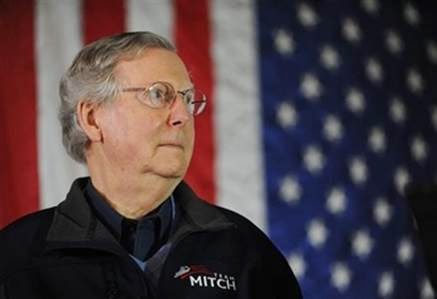
Senate Minority Leader Mitch McConnell (R-Ky.), who faces a primary challenge, has received the most from lobbyists in the midterm cycle so far, more than $281,000. House Speaker John Boehner (R-Ohio) is a close second at $278,380.


Tuesday, January 13, 2015

One Federal Lawmaker's Household Wealth Equals that of 18 American Households Combined

One Member of Congress = 18 American Households: Lawmakers’ Personal Finances Far From Average


It would take the combined wealth of more than 18 American households to equal the value of a single federal lawmaker’s household, the Center for Responsive Politics’ latest analysis of congressional wealth finds.


The median net worth of a member of Congress was $1,029,505 in 2013 — a 2.5 percent increase from 2012 — compared with an average American household’s median net worth of $56,355. Once again, the majority of members of Congress are millionaires — 271 of the 533 members currently in office, or 50.8 percent.


EMCW
(Click to expand)


While the median net worth of an American family has declined by nearly one-third between 2007 and 2013, members of Congress have recovered quite well from the recession. The Senate’s median net worth went from $2.3 million to $2.8 million over that period, while for members of the House the numbers went from $708,500 to $843,507.


Not all members of Congress are millionaires. While there are seven whose net worth is in the nine figures, totaling at least $100 million, there are two dozen who are in the minus column.


Those are the extremes. But overall, CRP’s annual analysis of lawmakers’ financial statements once again shows that they are not remotely similar to the typical American in terms of wealth, investments and economic security.


Half of this year’s freshman class were already millionaires upon their arrival. While the retirement of one senator whose name is the very symbol of wealth — Jay Rockefeller (D-W.V.), whose median net worth was $101.2 million in 2012 — might have been expected to depress Congress’ numbers, the incoming freshmen include Rep. Dave Trott (R-Mich.) and his net worth of $200.5 million.


“At a time when income inequality is much debated, the representatives we choose are overwhelmingly affluent,” said CRP’s Executive Director Sheila Krumholz. “Whether voters elect them because they are successful or because people of modest means do not run, or for other reasons, is unclear, but struggling Americans should not assume that their elected officials understand their circumstances.


It’s almost never a down year for Congress. Since OpenSecrets.org began publishing an annual report on lawmakers’ net worth in 2006, the numbers have increased every year but one — 2008. This year’s jump of over 2.5 percent is slightly less than the increase between 2011 and 2012 of 4.4 percent, but still greater than the rate of inflation.


Not all subgroups have grown their wealth, though. In 2013, the median net worth of all Democratic members dropped below $1 million, a decline of 14.3 percent from 2012. 

Republicans, however, had a good year. Their median net worth was barely $1 million in 2012, and in 2013 it eased into more comfortable millionaire territory, $1.1 million — an increase of 10.1 percent.


The House’s median net worth of $843,507 is an increase over the $708,500 figure in 2007, and it is a 3.6 percent increase from the previous year. Senators fared slightly better as well, though the median net worth in that chamber crept up less than the rate of inflation, from $2,794,024 to $2,794,518 in 2013.


CRP’s analysis is based on financial disclosure forms filed by members of Congress in May 2014, reporting assets and liabilities as of Dec. 31, 2013. For freshmen members, CRP uses candidate filings made in 2014 covering the previous year. The law allows lawmakers to report the value of their individual debts and holdings in ranges.


Adding up the average value of the current 533 members who have filed their reports, Congress was worth roughly $4.3 billion in 2013 — the equivalent of more than 76,000 typical American households, and a $400 million increase from the last Congress in 2012. Rep. Steve Knight (R-Calif.) has not filed a disclosure to date and Rep. Michael Grimm (R-N.Y.) resigned the day before the new Congress was sworn in.

Wealthiest Individuals


Rep. Darrell Issa (R-Calif.) is once again the wealthiest member of Congress. In 2013, he had an average net worth of $448.2 million. (AP Photo/Molly Riley)
Rep. Darrell Issa (R-Calif.) is once again
the wealthiest member of Congress. In
2013, he had an average net worth of
$448.2 million. (AP Photo/Molly Riley)
Rep. Darrell Issa (R-Calif.) retains his claim as the wealthiest member of Congress, with an average net worth of $448.4 million. That’s an eye-popping number but it is also a $15.6 million decline from his value last year. Issa made his fortune with the car alarm business he built from scratch, but according to his most recent disclosure, the bulk of his money is now invested in high yield mutual funds. He also owes $75 million to $100 million on two personal loans.


The wealthiest member of the Senate — and second richest member of Congress — is Sen. Mark Warner (D-Va.), who comes in at $254.1 million. Like Issa, Warner is slightly less wealthy than he was in 2012.


Of the other five members worth $100 million or more, two are Republicans and three are Democrats. House Minority Leader Nancy Pelosi broke into the nine figures in 2013, increasing her average net worth from $87.9 million in 2012 to $100.8 million in 2013. Pelosi’s increased wealth seems to result from the increased value of several pieces of property she owned in northern California. She also has a stake in the United States Football League, worth between $5 million and $25 million, and a similar-sized stake in the league’s Sacramento franchise.


The Top 20 Wealthiest Members


On the other end of the spectrum, Rep. David Valadao (R-Calif.) remains the poorest member of Congress, at least on paper. His net worth in 2013 was negative $11.5 million, which is actually a $575,000 improvement from 2012. This is the third year running that Valdao has brought up the rear of the net worth list, apparently because of sizable revolving loans he has taken out to support his family dairy farm.


The poorest member of the Senate is, once again, Sen. Debbie Stabenow (D-Mich.). On paper, she’s worth just $32,500, her only reported asset being a checking account. Disclosure forms don’t require lawmakers or candidates to report the values of their primary residences, but where they do we have included the values in our analysis.


The median net worth of freshmen lawmakers this year was $995,000.


Of the 14 new senators, only six are true freshmen who didn’t jump from the House to the Senate and thus entered Congress, and our analysis, for the first time. All six are Republicans, and five had an average net worth of $1 million or more in 2013.


The wealthiest was Sen. David Perdue (R-Ga.), the former chief executive of Dollar General, whose average net worth tallies up to be $31.6 million. Perdue is heavily invested in stocks and bonds, especially Georgia state and local municipal bonds. He also reported between $1.3 million and $5.6 million in deferred “board compensation,” mainly from the Alliant Energy natural gas and electric utility company. Sen. Joni Ernst (R-Iowa) was the least wealthy of the incoming senators, with an average net worth of $504,000.


Trott was the wealthiest incoming freshman in the House and Senate combined, with an average net worth of $200.5 million. 

He represents a district in suburban Detroit, and is one person who has done well from that city’s hard luck. Trott made much of his fortune in the mortgage crisis last decade. His largest investment in 2013 was Trott & Trott, a real estate law firm that specialized in representing lenders (he unloaded his stake in the firm before the election). He also listed investments in Detroit Legal News Publishing (a legal newspaper that publishes foreclosure notices) and a title company that handled much of the paperwork for foreclosures.


The least wealthy member of the freshman class is Rep. Mark Walker (R-N.C), a pastor, who had a listed average net worth of negative $67,000. Walker’s debts included $15,000 to $50,000 in student loans.


Congressional Holdings


As in years past, the most popular investment for members of Congress was real estate — either property itself or companies in the real estate business. The value of congressional real estate holdings varies widely because of the ranges permitted on disclosure forms, but could be anywhere between $357 million and $1.2 billion.


Many members of Congress have significant investments in specific pieces of property. These are mostly commercial — Issa, for instance, owns a number of pieces of commercial real estate, like a building that houses a Hooters restaurant and an industrial property that is leased by a nonprofit for its work program for developmentally disabled adults. Pelosi’s commercial property includes numerous buildings in San Francisco’s soaring market, like a 59,000 square foot brick warehouse near the waterfront that is being leased for office space. Pelosi lists its value as $5 million to $25 million.


Pelosi also reported a Napa vineyard, worth between $5 million and $25 million. Sen. Deb Fischer (R-Neb.) listed her family’s 10,000-acre Sunny Slope Ranch as being worth between $2 million and $6 million.


After real estate, the securities and investment industry draws the most congressional investment — again, either through stakes in financial services companies or their products, like mutual and investment funds. Congressional investment here is valued between $90.3 million and $253.7 million. Congressional investment in commercial banks is almost identical, between $90.3 million and $212.4 million in 2013.


Ownership of individual stocks is becoming less common, as we’ve noted in previous years. The stock most widely held by members of Congress is, once again, that stalwart of the New York Stock Exchange, General Electric; 62 members own shares of GE worth as much as $63 million in total. In previous years, General Electric was far and away the most widely held stock; this year the stock is only slightly more popular than runner-up Wells Fargo, in which 58 members are invested.


Top 20 Congressional Stocks


That’s not to say members of Congress are getting out of the stock market, but they are using more mutual funds, managed portfolios and hedge funds. Rep. John Delaney (D-Md.), who is the third richest member of Congress with an average 2013 net worth of $222.4 million, lists investments with hedge funds like Blue Spruce Fund and Farallon Capital Management, the investment firm and hedge fund founded by Democratic mega-donor Tom Steyer.
 
Many lawmakers also own part or all of various businesses. Rep. Chris Collins (R-N.Y.) owns a stake worth between $5 million and $25 million in Zepto Matrix Corp Biotechnology, a biotech firm that handles highly infectious diseases, and a similar stake in Innate Immunotherapeutics MS Drug Development, a company developing drugs to treat multiple sclerosis. Rep. Vernon Buchanan (R-Fla.), who was worth an average of $98.2 million, owned several car dealerships and an aircraft leasing business. Rep. Tom Rooney (R-Fla.), son of Pittsburgh Steelers founding owner Art Rooney, lists a stake in Yonkers Raceway, a New York horse racing track and casino, that he values at between $6.5 million and $31 million. Given that investment, it’s not surprising that Rooney also reported owning a two-year old racehorse, valued at between $1,000 and $15,000.

arrow_pointing_down.jpg Download the full list of all current members of Congress and the most popular congressional investments here.

Monday, December 22, 2014

USAID: Its Role in the Cuba Subversion: A history of front companies acting on behalf of the CIA


By Wayne Madsen Posted on April 8, 2014 
 
(WMR)—The recent disclosure by the Associated Press that the U.S. Agency for International Development (USAID), a notorious nexus for contract fraud within the State Department, contracted out a project to develop a rival to Twitter in order to foment rebellion in Cuba has refocused attention on USAID's long history of acting as a contract vehicle for various CIA covert activities.

The setting up of the Cuban Twitter-like system, called ZunZuneo, was contracted to Creative Associates, Inc. (CAI), which conducted most of its out-of-Cuba operations in Costa Rica. The contract to CAI was awarded as part of the State Department's "Civil Society Support Program," the same program that has been used by the CIA to foment rebellions in Ukraine, Syria, Libya, Egypt, Iran, and other countries.

Some 40,000 ZunZuneo users in Cuba mistakenly believed their messages were private, when, in fact, they were recorded by USAID, which likely turned them over to the National Security Agency (NSA) for analysis and database archival.

CAI was not the only entity awarded USAID Office of Transition Initiatives (OTI) money to help foment dissension and rebellion in Cuba as part of USAID's "civil society program." Other recipients included the International Republican Institute (IRI), a branch of the Republican Party; the National Democratic Institute, a branch of the Democratic Party; the Pan American Development Foundation, on whose board of trustees are found lobbyists for Exxon Mobil, Chevron, Caterpillar, Greenberg Traurig, Royal Caribbean Cruise Lines, Citibank, Unibank of Haiti, Educational Testing Service (ETS),and Occidental Petroleum; Loyola University of Chicago; Center for a Free Cuba (which was caught embezzling $570,000 from USAID in 2008); the neo-conservative non-profit Freedom House; the Christian evangelical group Echo Cuba; Cuba On-Line; the Miami-based Plantados Until Freedom and Democracy in Cuba; and Development Alternatives, Inc. (DAI)/Nathan Group.

ZunZuneo was created just after the December 2009 arrest in Cuba of DAI sub-contractor for USAID Alan Gross who was allegedly setting up satellite equipment and computer networks in Cuba to provide greater Internet access to Cuba's Jewish community. Cuba's Jewish community leaders denied any knowledge of the project or even knowing Gross, who was sentenced by Cuba to 15 years in prison for espionage. Gross's firm, JBDC, was subcontracted to DAI for the "civil society" work in Cuba.


In addition, USAID funding documents for the ZunZuneo (a Cuban slang word for a hummingbird's tweet) and other "civil society" projects state that USAID money went to "miscellaneous foreign contractors" and domestic contractors (undisclosed)" to support the Cuban initiatives. ZunZuneo was a pet project of then-Secretary of State Hillary Clinton, who, according to AP, had her social media chief Suzanne Hall, contact Twitter founder Jack Dorsey to take over ZunZuneo. Dorsey has refused comment on the report.


DAI has a long history in supporting CIA operations. 

President Obama's mother, Ann Dunham Sutoro, worked for DAI in Java. DAI was also accused of supporting the April 2002 coup against Venezuelan President Hugo Chavez. In 2005, right-wing Colombian President Alvaro Uribe stunned his audience by announcing that former Venezuelan military officers planned their coup against Chavez from Colombia. USAID and its contractors were heavily involved with anti-Chavez-activities in Colombia at the time of the 2002 coup...
​..​Read much more>>