Search Blog Posts

Showing posts with label Lincoln. Show all posts

Monday, March 2, 2015

Local, County, State Police Collude with Feds to Raid Republic Of Texas Meeting

21st century Honest Abe re-visits sovereign southern US state to maintain Washington's tyranny grip. State scalawag law enforcements & VFW complicit in Treason.

TEXIANS UNDER ATTACK # 2

At the regularly scheduled meeting of the Republic of Texas, officially starting at 9:50 a.m. and held, as usual, at the rented VFW Post 4892 in Bryan, Texas, the congenial and unimposing group was raided at 10:10 a.m. by an army of policing agencies with flashing emergency lights: Police Departments of Bryan and College Station along with their Brazos County Sheriff’s Office counterparts (northeast of San Antonio) along with deputies from the Kerr County Sheriff’s Office (west of San Antonio), The Texas Rangers, Department of Public Safety Highway Patrol State Troopers, The Texas State Attorney General’s Office, the FBI, and the US Marshall Service. Ingress and egress from Harvey Mitchell Parkway was sealed even to the media that responded two hours later from KBTX television during the four-hour ordeal.
 

How is it that a supposedly free people can be subjected to intimidating, rough and highly intrusive search and seizure when assembling lawfully and peaceably from all corners of this vast Country of Texas to educate those in attendance about the Historical 1836 Republic of Texas Constitution and celebrate a Nation wide Valentine’s Day and a fellow Texian’s 89th birthday?

The lead Kerr County deputy named in the paperwork, Jeff McCoy, who initially pretended to be a guest from Houston at the freely open-to-the-public meeting, stood up and blocked the only exit to the Republic of Texas’ rented room with armed and threatening police, announcing that he had a search warrant but he would not present it despite repeated requests stating that it would be made available AFTER the investigation. Everyone present was put on notice that they were not to leave the room without permission and escort by uniformed officers, almost all armed and wearing bulletproof vests. Some 15 to 30 minutes later a fleeting copy of the search warrant surfaced unannounced on the main table of which was never officially presented to those detained and searched.

As if dangerous criminals, many of the Texian people – generally seniors of respected middle-class business, farming, broadcasting, engineering, scientific, health, veterans and faith-based backgrounds – were one-by-one physically searched on their person and in their vehicles, finger printed, detained and then had their personal belongings and property searched and seized. Surprisingly, the warranted DNA swabbing was omitted.

A receipt (not well detailed or itemized) was issued to only SOME whose property was seized. Therefore most all seizures that day are considered LEGAL THEFT. Among the items stolen were cell phones, iPads, laptops, business papers, Republic of Texas paperwork and coinage of precious metals along with other valuables.

Some of the phones were essential to their owners in conducting business and schoolwork, safely traveling the highways and attending to emergency medical calls as health professionals. One of the senior Texians often featured in documentaries and alternative radio and known to suffer with health concerns had to be taken by emergency vehicle to a hospital as a result of the forced takeover of the peaceful assembly.

The team of investigators left with the trunk and backseat of an unmarked sedan apparently belonging to Deputy Jeff McCoy, fully packed with confiscated belongings without a copy of the Search Warrant provided to anyone associated with the Republic of Texas. Instead, the warrant was given to the Post Commander of the VFW facility who was instructed not to copy the document nor divulge its contents to anyone.

The fortuitously warrant revealed it was issued by 216th District Court Judge N. Keith Williams of Kerr County alleging an unauthorized summons had been issued by the Republic of Texas. The documents alleged to be unauthorized were a Writ of Mandamus and a Writ of Quo Warranto issued by “The Officers and Constituents of The International Common Law Court for the Republic of Texas to Melvin Rex Emerson Jr., Court Administrator, and Color of Law ID No. 24009018, 700 Main Street, Kerrville, Texas. Kerr County” and was so stated on the document “This writ is hereby served by said Petitioner upon you, Melvin Rex Emerson Jr. as an individual”. In no way was the “State of Texas” intimated to be part or parcel to the documents.

If the Writ of Mandamus and the Quo Warranto issued for the Republic of Texas International Common Law Court were purely frivolous in nature, then why did this judge call out HIS MILITIA to address this action? What instilled such fear in him?

Why was it necessary to confiscate tens of thousands of dollars, Gold and Silver Metals being private and confidential property that was unrelated to the search warrant for a allegedly Class A Misdemeanor offense? One Texian noted that one officer confided that he probably would NEVER see his property again. Just who is the guilty party here? Could it be that the people of the Republic of Texas are rightfully fully vested with the power of the paperwork served on Judge Everson? Undoubtedly, additional paperwork needs to be issued! You decide.

Contrary to patently false reports by KBTX that the Republic of Texas and its assemblage were a militia group, the truth is that the Republic of Texas is a self-determined people attempting to throw off the yoke of military occupation of Texas through peaceful and lawful process. The entire land boundaries of the United States are also under military occupation thanks to the Fourteenth Amendment to the Constitution of the United States. If you don’t believe it, you can read it for yourself: (http://thetexasrepublic.com Select: History Tab; Select “The Non-Ratification of the 14th Amendment – Highlighted by Robert Wilson” Selection option).

John Harold Jarnecke
President of the republic of Texas
February 17, 2015
Contact: www.thetexasrepublic.com for the Secretary of State
Excerpts from:Senate Report 93-549


Senate Report 93-549 “EMERGENCY POWERS STATUTES: Provisions of Federal Law Now In Effect Delegating To The Executive Extraordinary Authority In Time of National Emergency” November 19, 1973 (cover page)
Background and History
Senate Report 93-549 entitled “EMERGENCY POWERS STATUTES: Provisions of Federal Law Now In Effect Delegating To The Executive Extraordinary Authority In Time of National Emergency” was issued on November 19, 1973 by the “Special Committee on the Termination of the National Emergency” pursuant to Senate Resolution No. 9 – 93rd Congress, 1st Session.[1]
…..These proclamations give force to over 470 provisions of Federal law. These hundreds of statutes delegate to the President extraordinary powers, ordinarily exercised by the Congress, which affect the lives of American citizens in a host of all-encompassing manners. This vast range of powers, taken together, confer enough authority to rule the country without reference to normal constitutional processes.[4]
Under the powers delegated by these statutes, the President may: seize property; organize and control the means of production; seize commodities; assign military forces abroad; institute martial law; seize and control all transportation and communication; regulate the operation of private enterprise; restrict travel; and, in a plethora of particular ways, control the lives of all American citizens.[5]


….The “termination” was in name only. The emergency powers are now continued in the U.S. Code as permanent everyday powers.[8] The state of national emergency has become a permanent condition.[9]


….Every president since Roosevelt has used emergency powers extensively, some claim falsely that the United States has been in a continual and permanent state of declared national emergency since March 9, 1933.[14]
….The US Senate Report states: “That since March 09, 1933 the United States has been in a state of declared national emergency.”[29]
“A majority of the people of the United States have lived all of their lives under emergency rule. For 40 years, freedoms and governmental procedures guaranteed by the Constitution have, in varying degrees, been abridged by laws brought into force by states of national emergency.” [30]


30^ [U.S. Congress, Senate Special Committee on the Termination of the National Emergency, Emergency Powers Statutes, 93rd Cong., 1st sess., S.Rept. 93-549 (Washington: GPO, 1973) | page= 1]


Friday, January 23, 2015

The Real Lincoln, from the Testimony of his Contemporaries (1904)

CHAPTER II


Was Lincoln a Christian? 

The real Lincoln : from the testimony of his contemporaries
- - pages 25-29

ALMOST all the Christians of Springfield, his home, opposed him for President. He was an infidel, and when he went to church, he went to mock and came away to mimic. He wrote and talked against religion in the most shocking words. He never denied the charge, publicly urged, that he was an infidel. His wife and closest friends attest all this. He became reticent about his religious views when he entered political life, and thereafter indulged freely in pious phrases in his published documents and passionate expressions of piety began to abound in his speeches; but he never denied or flinched from his religious opinions and never changed them.

As to Lincoln's attitude towards religion. Dr. Holland, in his Abraham Lincoln, says (p. 286) that twenty out of the twenty-three ministers of the different denominations of Christians, and a very large majority of the prominent members of the churches in his home, Springfield, Illinois, opposed him for President. He says (page 241) : . . . . "Men who knew him throughout all his professional and political life" have said "that, so far from being a religious man, or a Christian, the less said about that the better." He says of Lincoln's first recorded religious utterance, used in closing his farewell address to Springfield, that it " was regarded by many as an evidence both of his weakness and of his hypocrisy, .... and was tossed about as a joke — 'old Abe's last.' "

Hapgood's Lincoln (page 291, et seq,) records that the pious words with which the Emancipation Proclamation closes were added at the suggestion of Secretary Chase, and so does Usher (Reminiscences of Lincoln, ikc, p. 91), and so does Rhodes; and Rhodes shows him "an infidel, if not an atheist," and adda, "When Lincohi entered political life he became reticent upon his religious opinions." {History of the United States, Vol. IV., p. 213, et seq.). 


Of his words that savor of religion, Lamon says (Life of Lincoln, page 503) : " If he did not believe in it, the masses of 'the plain people' did, and no one was ever more anxious to do what was of good report among men." Lamon further says (page 497) that after Mr. Lincoln "appreciated .... the violence and extent of the religious prejudices which freedom of discussion from his standpoint would be sure to rouse against him," and "the immense and augmenting power of the churches," .... (page 502), "he indulged freely in indefinite expressions about 'Divine Providence,' 'the justice of God,' the 'favor of the Most High,' in his published documents, but he nowhere ever professed the slightest faith in Jesus as the Son of God and the Savior- of men." (Page 501, et seq.)

" He never told any one that he accepted Jesus as the Christ, or performed one of the acts which necessarily followed upon such a conviction." .... " When he went to church at all, he went to mock, and came away to mimic." (Page 487.) Leland says (Abraham Lincoln, Vol. IL, p. 55, et seq.): . . . "It is certain that after the unpopularity of free-thinkers had forced itself upon his mind, the most fervidly passionate expressions of piety began to abound in his speeches." Lamon tells in detail (Life of Lincoln, p. 157, et seq.) of the writing and the burning of a "little book," written by Lincoln with the purpose to disprove the truth of the Bible and the divinity of Christ, and tells how it was burned without his consent by his friend Hill, lest it should ruin his political career before a Christian people. He says that Hill's son called the book "infamous," and that " the book was burnt, but he never denied or regretted its composition; on the contrary, he made it the subject of free and frequent conversations with his friends at Springfield, and stated with much particularity and precision the origin, arguments, and object of the work.''
 

Rhodes (History of the United States, Vol. IV., p. 213) tells the same story, with confirmation in another place (Vol. ni., p. 368, in note).

Herndon describes the "essay" or "book" as "an argument against Christianity, striving to prove that the Bible was not inspired, 'and therefore not God's revelation, and that Jesus Christ was not the Son of God." Herndon says that Lincoln intended to have the "essay" published, and further quotes one of Lincoln's associates of that day, who says that Lincoln " would come into the clerk's office where I and some young men were writing, .... and would bring a Bible with him; would read a chapter and argue against it."

A letter of Herndon (Lamon's Lincoln, p. 492, et seq,) says of Lincoln's contest with the Rev. Peter Cartwright for Congress in 1848 (page 404) : " In that contest he was accused of being an infidel, if not an atheist; he never denied the charge; would not; 'would die first," because he knew it could be and would be proved." And Lamon further says (page 499): "The following extract from a letter from Mr. Herndon was extensively published throughout the United State about the time of its date, Hemdon'a Lincoln, Vol. III., p. 39, et seq., and 439, et seq., and Lamon's Lincoln, p. 492.

February 18, 1870, and met with no contradiction from any responsible source; 'When Lincoln was a candidate for oiu- Legislature, he was accused of being an infidel; of having said that Jesus Christ was an illegitimate child. He never denied the opinions or flinched from his religious views.' "

On pages 487 to 514 Lamon's Lincoln copies numerous letter from Lin(«ln's intimate associates, one from David Davis,' a Justice of the Supreme Court, and one from Lincoln's wife, that fully confirm the above as to his attitude of hostility to religion. Lamon copies {Life of Lincoln, p. 495) another letter of Hemdon, as follows: " When Mr, Lincoln left this city" — Springfield, Illinois — "for Washington, I know that he had undergone no change in his religious opinions or views." And Lamon gives (page 480) a letter of Nicolay, his senior private secretary throughout his Administration, which states that he perceived no change in Lincoln's attitude toward religion after his entrance on the presidency. The Cosmopolitan, of March, 1901, says that Nicolay probably was closer to the martyred President than any other man; .... that he knew Lincoln as President and as man more intimately than any other man." ....


(29)

Thursday, January 22, 2015

Was Lincoln a Christian? If You're an American You Should Know

Friday, February 19, 2010


The Unregenerate Faith of the 16th President

By: Jonathan Harris

On March 27th of 2004 Dr. H. Rondel Rumburg formally debate Dr. D. James Kennedy on the subject of Lincoln’s personal faith at Liberty University’s Civil War Seminar.

Dr. Kennedy, certainly a heavy-weight in the evangelical world, took the position that in fact Lincoln was a Christian, and that he was “putty in the hands of the almighty” through “studying the Scriptures.” Dr. Rumburg, an author and member of the Sons of Confederate Veterans took the opposite side claiming that indeed Lincoln was not a Christian.

This work is a transcript of Dr. Rumburg’s response, and will leave little doubt in the mind of any reasonable person that Lincoln was indeed unregenerate. Rumburg starts off by stating his premise that

. . .a Christian is a regenerate person who has repented of sin and savingly believed on Christ Jesus as Lord and Saviour, who alone can save from sin, and then, as an act of obedience, that believer follows his Saviour in life.

Drawing upon various Biblical references, among them Matt. 7:16,19, John 3:7, John 1:12-13, etc. Rumburg supports his view of Soteriology setting up what proves to be the death blow to Kennedy’s assertion. Fourteen separate lines of reasoning are used to either cast doubt or prove conclusively that Lincoln could not have been a Christian. First and foremost among his arguments are perhaps the first hand observations made by close friends and associates. I will not endeavor to list all of them, but perhaps a portion will serve to grant the reader a taste into Rumburgs argument.

Mary Todd Lincoln [Lincoln’s Wife]: “Mr. Lincoln had no hope and no faith, in the usual acceptance of those words. He never joined a church. . . he was never a technical Christian.”

William H. Herndon [Law Partner and Friend]:“I have never seen the name of Jesus mentioned by Mr. Lincoln.” “Lincoln was not a Christian in any sense other than that he lived a good life and was a noble man.”

Judge David Davis [Friend, Lincoln’s Estate Administrator, Chief Justice Supreme Court Nominee]: “He had no faith, in the Christian sense of the term.”

Among other quotations, Dr. Rumburg proceeds to expose Lincoln’s personal actions as well. He allowed his wife, after the death of their son Willie, to conduct seances in the White House which proved to be, “more comforting than the visits of Presbyterian Clergymen.” A personal friend, Jesse W. Fell describes Lincoln’s faith as “the Fatherhood of God, and the brotherhood of man.” This loose doctrinal statement more in keeping with Unitarian and Transcendentalist views, explains why Lincoln would not join New York Avenue Presbyterian Church due to their strict Confession of Faith. Lincoln only told the Pastor Dr. Phineas D. Gurley that he would endeavor to keep the two great commandments (Love the Lord, and Thy Neighbor). In fact, according Lincoln’s bodygaurd and personal friend Ward Hill Lamon,

[He] was never a member of any church, nor did he believe in the inspiration of the Scriptures in the sense understood by evangelical Christians. . . Overwhelming testimony out of many mouths, and none stronger than out of his own, place these facts beyond controversy. . . When he went to church at all, he went to mock, and came away to mimic.

Lincoln admirers such as Dr. James Kennedy like to focus on the 16th presidents references to God (though he never mentioned Jesus) and Biblical quotations, but forget that even Satan himself is good at quoting Scripture (out of context – much like the Gettysburg Address) and referencing God in a less than worshipful way. If Lincoln was truly a Christian, his suspension of habeas corpus in which tens of thousands of political rivals, military leaders, and newspapermen were imprisoned, his shutting down of hundreds of Northern newspapers, his affirmation of total war in which thousands of civilians were raped, murdered, and vandalized (even burning churches and impounding Bible’s as contraband), and his refusal to negotiate a peace deal, speak volumes more than his statements about God. As the Apostle Matthew stated: “So then, you will know them by their fruits.”

I encourage any serious student of history to get a hold of this pamphlet by Dr. H. Rondel Rumburg. Christians have immortalized Lincoln and attempted to pair him with modern Christian concerns such as abortion in an attempt to further their legitimacy. At the same time progressives have successfully harnessed the legend of Lincoln for their own centralized government schemes (appropriately). As the Apostle Paul says, “What agreement has the temple of God with idols?” It’s time we stop paying homage to a modern day idol (Just look at Lincoln’s monument, Mt. Rushmore, the Five Dollar Bill, etc.) and instead support our causes upon their own ethical merit. Otherwise we will continue to buy into more government control based on Lincoln’s legacy, and futilely fight a losing battle by trying to enlist our enemies hero in our very ranks.

SOURCE TheRisingSeed


Wednesday, December 31, 2014

America's Obscured History of its Police State Roots

12/31/2014

The (Yankee/Marxist) Secret Police

by Al Benson Jr.

The New York Tribune reported, on September 6, 1861, that: "Eight hundred names are now entered on the books of the secret police in New York City, of persons suspected of treason, and many arrests will be made."

"Secret Police" in New York City in 1861? It almost sounds like the trailer for an old movie about how the KGB operated/operates in Moscow. Truly, there is nothing new under the sun. That which has been will be. But it almost seems as if the Lincoln administration was giving us kind of a sneak preview of what was to come. Of course, present day "historians" would not quite see it that way. At least they wouldn't admit to it.

Even modern, politically correct (cultural Marxist) "historians" although they agree with and try to whitewash the great socialist emancipator, are forced to concede that his administration was quite ruthless. Those in Lincoln's cabinet  were willing to go along with Lincoln's Jacobin mindset, and after his death, they were more than willing to exceed it.

Mark Neely Jr., in his book The Fate of Liberty--Abraham Lincoln and Civil Liberties wrote of Secretary of State William Seward in the same vein. When a political prisoner from Kentucky was arrested, a friend of his came to Washington to plead for his release. Neely wrote: "...the Secretary of State readily admitted that no charges were on file against the prisoner. When asked whether he intended to keep citizens imprisoned against whom no charges had been made, Seward apparently answered: 'I don't care a d--n whether they are guilty or innocent. I saved Maryland by similar arrests, and so I mean to hold Kentucky'." In other words, to "preserve" the Union you destroy all of its supposed constitutional guarantees of protection against intrusive government.  It almost reminds one of a mad doctor trying to kill his patient in order to save his life. "The operation was a smashing success--the patient died!"

Fascinating story of how Lewis Thornton Powell, CSA paid Steward his due.

The willingness to kill something in order to "save" it is quite consistent with the Yankee/Marxist mindset.  Even their own records bear this out. Neely stated that: "Just after the Civil War  The American Annual Cyclopedia and Register of Important Events of the Year 1865 stated that the total number of military arrests in the North had been thirty-eight thousand." Neely's book even had s small section on torture employed by the North, (pages 109-112). So for you who think that the American government's torturing of prisoners is a new thing with the advent of Iraq and all the rest, think again. American torture of prisoners is not new. It is at least as old as the War of Northern Aggression.

If readers haven't figured out by now what all this has to do with today, then there is little that I can explain to them. We have experienced runaway big government intrusion into our lives for almost as long as most of us have been alive. We have a "voluntary" income tax that would have made Lincoln drool with anticipation. Since we were all born after 1860, none of us has ever had the opportunity to live under the system that was envisioned for us by great men like Patrick Henry. Indeed, those in his own day, thanks to the ratification of the Constitution, never had a chance to live under it. We do, however, live under increasing degrees of state socialism--euphemistically labeled as "democracy."

Did the Lincoln administration during the War, and Thaddeus Stevens and his radical abolitionist cohorts after the War, like Robespierre and other French revolutionaries, labor to "reconstruct" American society in such a way as to conform it to some form of socialism? You get three guesses--and the first two don't count!


PoP's Southern Thangs

Friday, December 19, 2014

Martin Luther King (MLK)...and His Communist Affiliations


Scanned & Posted by Charleston Voice

Excerpted from COMMUNIST REVOLUTION in the STREETS by Gary Allen

KING OF AMERICA


He is a winner of a Nobel "peace" prize, but he is continually at war with the white man. He presents himself as a Christian minister, but J. Edgar Hoover has called him the "most notorious liar in the country." Many are wondering what is behind the man whom some people call...

Saturday, November 29, 2014

About Lincoln and His Republicans You Might Not Know

Little attention is given to the punishing protective tariffs imposed by the Republican congress on the South to eliminate the import of foreign manufactured goods. As industrial production of the ante-bellum period was largely in Pennsylvania and purchased by the southern agrarian states, the additional penalties were passed along to the South. Today, we call a government "law" such as this a "wealth transfer scheme", or more accurately Corporatism or Fascism.


As it is, reading the below certainly screams out to be identified as a repeat of Washington's policies to interfere in America's cultural, race, and economic mix. Even the coloreds of today now recognize it as a scheme to import foreigners to take their jobs. 


Union members can see it as a hammer to break unions, replacing any strikers with immigrant scabs (union leaderships cannot be counted on to 'interfere' to protect their current members).  Organized workers: Look to whom your union dues are politically supporting - Republican or Democrat is inconsequential. Tell us how tolerant communist governments are of labor unions - - only in the establishment of total government, then jettisoned and banished under death. While your union job may have been exported from the US, was it re-incarnated in Red China?


Corporatist dinner menu - we're still on it

Only communist or fascist you say? Bone-up on the Versailles Treaty after WWI prompting German workers in the Ruhr Valley to strike because Germany could not pay the horrendous reparations to the allied victors.


Indeed, we do not learn from history because human nature does not change.


The 'Great Emancipator' and the Issue of Race

Abraham Lincoln's Program of Black Resettlement


By Robert Morgan

Many Americans think of Abraham Lincoln, above all, as the president who freed the slaves. Immortalized as the "Great Emancipator," he is widely regarded as a champion of black freedom who supported social equality of the races, and who fought the American Civil War (1861-1865) to free the slaves.

While it is true that Lincoln regarded slavery as an evil and harmful institution, it is also true, as this paper will show, that he shared the conviction of most Americans of his time, and of many prominent statesmen before and after him, that blacks could not be assimilated into white society. He rejected the notion of social equality of the races, and held to the view that blacks should be resettled abroad. As President, he supported projects to remove blacks from the United States.

Early Experiences


In 1837, at the age of 28, the self-educated Lincoln was admitted to practice law in Illinois. In at least one case, which received considerable attention at the time, he represented a slave-owner. Robert Matson, Lincoln's client, each year brought a crew of slaves from his plantation in Kentucky to a farm he owned in Illinois for seasonal work. State law permitted this, provided that the slaves did not remain in Illinois continuously for a year. In 1847, Matson brought to the farm his favorite mulatto slave, Jane Bryant (wife of his free, black overseer there), and her four children. A dispute developed between Jane Bryant and Matson's white housekeeper, who threatened to have Jane and her children returned to slavery in the South. With the help of local abolitionists, the Bryants fled. They were apprehended, and, in an affidavit sworn out before a justice of the peace, Matson claimed them as his property. Lacking the required certificates of freedom, Bryant and the children were confined to local county jail as the case was argued in court. Lincoln lost the case, and Bryant and her children were declared free. They were later resettled in Liberia.1

In 1842 Lincoln married Mary Todd, who came from one of Kentucky's most prominent slave-holding families.2 While serving as an elected representative in the Illinois legislature, he persuaded his fellow Whigs to support Zachary Taylor, a slave owner, in his successful 1848 bid for the Presidency.3 Lincoln was also a strong supporter of the Illinois law that forbid marriage between whites and blacks.4

"If all earthly power were given me," said Lincoln in a speech delivered in Peoria, Illinois, on October 16, 1854, "I should not know what to do, as to the existing institution [of slavery]. My first impulse would be to free all the slaves, and send them to Liberia, to their own native land." After acknowledging that this plan's "sudden execution is impossible," he asked whether freed blacks should be made "politically and socially our equals?" "My own feelings will not admit of this," he said, "and [even] if mine would, we well know that those of the great mass of white people will not ... We can not, then, make them equals."5

One of Lincoln's most representative public statements on the question of racial relations was given in a speech at Springfield, Illinois, on June 26, 1857.6 In this address, he explained why he opposed the Kansas-Nebraska Act, which would have admitted Kansas into the Union as a slave state:

There is a natural disgust in the minds of nearly all white people to the idea of indiscriminate amalgamation of the white and black races ... A separation of the races is the only perfect preventive of amalgamation, but as an immediate separation is impossible, the next best thing is to keep them apart where they are not already together. If white and black people never get together in Kansas, they will never mix blood in Kansas ...

Racial separation, Lincoln went on to say, "must be effected by colonization" of the country's blacks to a foreign land. "The enterprise is a difficult one," he acknowledged,

but "where there is a will there is a way," and what colonization needs most is a hearty will. Will springs from the two elements of moral sense and self-interest. Let us be brought to believe it is morally right, and, at the same time, favorable to, or, at least, not against, our interest, to transfer the African to his native clime, and we shall find a way to do it, however great the task may be.

To affirm the humanity of blacks, Lincoln continued, was more likely to strengthen public sentiment on behalf of colonization than the Democrats' efforts to "crush all sympathy for him, and cultivate and excite hatred and disgust against him ..." Resettlement ("colonization") would not succeed, Lincoln seemed to argue, unless accompanied by humanitarian concern for blacks, and some respect for their rights and abilities. By apparently denying the black person's humanity, supporters of slavery were laying the groundwork for "the indefinite outspreading of his bondage." The Republican program of restricting slavery to where it presently existed, he said, had the long-range benefit of denying to slave holders an opportunity to sell their surplus bondsmen at high prices in new slave territories, and thus encouraged them to support a process of gradual emancipation involving resettlement of the excess outside of the country.

Earlier Resettlement Plans


The view that America's apparently intractable racial problem should be solved by removing blacks from this country and resettling them elsewhere -- "colonization" or "repatriation" -- was not a new one. As early as 1714 a New Jersey man proposed sending blacks to Africa. In 1777 a Virginia legislature committee, headed by future President Thomas Jefferson (himself a major slave owner), proposed a plan of gradual emancipation and resettlement of the state's slaves. In 1815, an enterprising free black from Massachusetts named Paul Cuffe transported, at his own expense, 38 free blacks to West Africa. His undertaking showed that at least some free blacks were eager to resettle in a country of their own, and suggested what might be possible with public and even government support.7

In December 1816, a group of distinguished Americans met in Washington, DC, to establish an organization to promote the cause of black resettlement. The "American Colonization Society" soon won backing from some of the young nation's most prominent citizens. Henry Clay, Francis Scott Key, John Randolph, Thomas Jefferson, James Madison, James Monroe, Bushrod Washington, Charles Carroll, Millard Fillmore, John Marshall, Roger B. Taney, Andrew Jackson, Daniel Webster, Stephen A. Douglas, and Abraham Lincoln were members. Clay presided at the group's first meeting.8

Measures to resettle blacks in Africa were soon undertaken. Society member Charles Fenton Mercer played an important role in getting Congress to pass the Anti-Slave Trading Act of March 1819, which appropriated $100,000 to transport blacks to Africa. In enforcing the Act, Mercer suggested to President James Monroe that if blacks were simply returned to the coast of Africa and released, they would probably be re-enslaved, and possibly some returned to the United States. Accordingly, and in cooperation with the Society, Monroe sent agents to acquire territory on Africa's West coast -- a step that led to the founding of the country now known as Liberia. Its capital city was named Monrovia in honor of the American President.9

With crucial Society backing, black settlers began arriving from the United States in 1822. While only free blacks were at first brought over, after 1827, slaves were freed expressly for the purpose of transporting them to Liberia. In 1847, black settlers declared Liberia an independent republic, with an American-style flag and constitution.10

By 1832 the legislatures of more than a dozen states (at that time there were only 24), had given official approval to the Society, including at least three slave-holding states.11 Indiana's legislature, for example, passed the following joint resolution on January 16, 1850:12

Be it resolved by the General Assembly of the State of Indiana: That our Senators and Representatives in Congress be, and they are hereby requested, in the name of the State of Indiana, to call for a change of national policy on the subject of the African Slave Trade, and that they require a settlement of the coast of Africa with colored men from the United States, and procure such changes in our relations with England as will permit us to transport colored men from this country to Africa, with whom to effect said settlement.

In January 1858, Missouri Congressman Francis P. Blair, Jr., introduced a resolution in the House of Representatives to set up a committee

to inquire into the expediency of providing for the acquisition of territory either in the Central or South American states, to be colonized with colored persons from the United States who are now free, or who may hereafter become free, and who may be willing to settle in such territory as a dependency of the United States, with ample guarantees of their personal and political rights.

Blair, quoting Thomas Jefferson, stated that blacks could never be accepted as the equals of whites, and, consequently, urged support for a dual policy of emancipation and deportation, similar to Spain's expulsion of the Moors. Blair went on to argue that the territory acquired for the purpose would also serve as a bulwark against any further encroachment by England in the Central and South American regions.13

Lincoln's Support for Resettlement


Lincoln's ideological mentor was Henry Clay, the eminent American scholar, diplomat, and statesman. Because of his skill in the US Senate and House of Representatives, Clay won national acclaim as the "Great Compromiser" and the "Great Pacificator." A slave owner who had humane regard for blacks, he was prominent in the campaign to resettle free blacks outside of the United States, and served as president of the American Colonization Society. Lincoln joined Clay's embryonic Whig party during the 1830s. In an address given in 1858, Lincoln described Clay as "my beau ideal of a statesman, the man for whom I fought all of my humble life."14

The depth of Lincoln's devotion to Clay and his ideals was expressed in a moving eulogy delivered in July 1852 in Springfield, Illinois. After praising Clay's lifelong devotion to the cause of black resettlement, Lincoln quoted approvingly from a speech given by Clay in 1827: "There is a moral fitness in the idea of returning to Africa her children," adding that if Africa offered no refuge, blacks could be sent to another tropical land. Lincoln concluded:15

If as the friends of colonization hope, the present and coming generations of our countrymen shall by any means succeed in freeing our land from the dangerous presence of slavery, and, at the same time, in restoring a captive people to their long-lost fatherland, with bright prospects for the future, and this too, so gradually, that neither races nor individuals shall have suffered by the change, it will indeed be a glorious consummation.

In January 1855, Lincoln addressed a meeting of the Illinois branch of the Colonization Society. The surviving outline of his speech suggests that it consisted largely of a well-informed and sympathetic account of the history of the resettlement campaign.16

In supporting "colonization" of the blacks, a plan that might be regarded as a "final solution" to the nation's race question, Lincoln was upholding the views of some of America's most respected figures.

Thursday, October 30, 2014

When It All Goes South - by Alabama YouTube


It'll creep up on you like a kudzu vine
Even miles above the Mason-Dixon line
'Til one day you're craving hominy grits
And scanning the jukebox for George Jones hits
Drinkin' Jack Black tryin' to kick back
'Til the condo's looking like a shotgun shack
You'll be one of us no matter where you're at

When it all goes south
(You'll be drivin' around on a John Deere tractor)
When it all goes south
(Wearing baseball caps but they won't be backwards)
Now it really don't matter what state you're in
One day the south's gonna rise again

There's a Wall Street wonder boy sittin' up north
Throwing darts like a monkey at a stock report
He's got two homes, car loans, in debt
And his third divorce ain't even final yet
Traded his MBA for a SUV on a backwoods road down in Tennessee
'Cause man, Manhattan ain't the place to be

When it all goes south
(With the live oak trees and the sweet magnolias)
When it all goes south
(Eatin' moon pies, drinking RC colas)
Now it really don't matter what state you're in
Someday the south's gonna rise again

When it all goes south
(Where the fog's as thick as Mississippi mud)
When it all goes south
(You'll be singing the blues 'cause it's in your blood)
Now it really don't matter what state you're in
One day the south's gonna rise again

When it all goes south
(You'll be drivin' around on a John Deere tractor)
When it all goes south
(Wearing baseball caps but they won't be backwards)

When it all goes south
(With the live oak trees and the sweet magnolias)
When it all goes south
(Eatin' moon pies, drinking RC colas)

Vicksburg, Birmingham, Natchez and Savannah, Panama City
Y'all sure look pretty in the sunshine
Getting' dixiefried get yourself some rebel pride

When it all goes south
(Where the fog's as thick as Mississippi mud)
When it all goes south
(You'll be singing the blues 'cause it's in your blood)
Now it really don't matter what state you're in
One day the south's gonna rise again

When it all goes south
(You'll be drivin' around on a John Deere tractor)
When it all goes south
(Wearing baseball caps but they won't be backwards)

When it all goes south
(With the live oak trees and the sweet magnolias)
When it all goes south
(Eatin' moon pies, drinking RC colas)

When it all goes south
(Where the fog's as thick as Mississippi mud)
When it all goes south
(You'll be singing the blues 'cause it's in your blood)

When it all goes south
(You'll be drivin' around on a John Deere tractor)
When it all goes south
(Wearing baseball caps but they won't be backwards)
(With the live oak trees and the sweet magnolias)
(Eatin' moon pies, drinking RC colas)

When it all goes south
(Where the fog's as thick as Mississippi mud)
When it all goes south
(You'll be singing the blues 'cause it's in your blood)

(When it all goes south)
When it all goes south
Yeah

Songwriters
CARNES, JANIS / CARNES, RICK / JARVIS, JOHN N


Read more: Alabama - When It All Goes South Lyrics | MetroLyrics

Wednesday, October 8, 2014

Marxist Origins of the Republican Party & their 'Wide-Awakes' Enforcers *vid*

Originally published February 12, 2012
REPUBLICAN PARTY ORIGINS

Republican Party Origins from The John Birch Society on Vimeo.

Wide-Awake Club of Chicago membership certificate, June 1, 1860. Robert Todd Lincoln Papers


A Hatred of Democracy was the Real Cause of the Republican War on the South

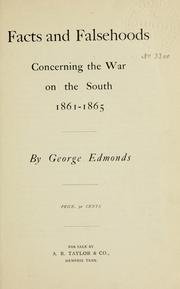
This snippet from Facts & Falsehoods should dispel any myths you may have learned about Lincoln in government school. Furthermore, it brings out into the bright sunshine why the GOP fascists and neocons in the Party idolize the same Lincoln that Obama identifies with! 

The enemies of liberty today we call "corporatists" and "neocons" are merely the extension of the Mercantilist and Monarchist mindset of the Hamilton era. The tyranny installed on the American people in 1860 still reigns today. Clears up any mystery you might have had about Hamilton being on our $10 Federal Reserve Note, eh? Beware!
1st Posted by Charleston Voice on 01.18.2012


CHAPTER XXI, pgs 135-138

Save the Union, Free Slaves the Pretext, Not the Purpose, of'.'. the War on the South. Real Cause, Hatred of Democracy. Mr. A. K. Fisk, a distinguished Republican, throws some light on the relationship of the two parties, Hamilton's and Jefferson's; in other words, the party favoring Monarchy and the party favoring Democracy, the rule of the people.

"Hamilton and Jefferson," says Fisk in the North American Review of April, 1879, Pa£e 410, "represent the two opposing ideas which prevailed at the time our Government was formed, and which, with some variations, have been the basis of our political divisions into parties ever since, and have been involved in all the contests and controversies in our constitutional career. Hamilton embodied the tendency to a centralization of power in the national Government. There is no doubt that he would have preferred a monarchy. Jefferson, on the other hand, represented the demand for a complete diffusion of sovereignty among the people, and its exercise locally and in the States, and the confining of national functions as closely as possible under the most restrictive interpretation of the Constitution."
Mr. Fisk admits that Hamilton, the monarchist, represented the party which opposed the sovereignty of the people. A writer in the St. Louis Globe-Democrat, a staunch advocate of Hamilton's strong government doctrines, in that paper, March 6, 1898, made this significant comment:

"The resemblance between Hamilton and Lincoln is so . close no one can resist it. Hamilton is dwarfed by no man. A just parallel of Hamilton and Lincoln will show them alike in many ways. They were alike almost to the point of identity. Hamilton's work made Lincoln's possible."
Hamilton's monarchic principles certainly made Lincoln's work possible. Lincoln put in practice what Hamilton had advocated. 

Hamilton made no concealment of his monarchic principles; he preferred a monarchy such as England has, but failing that he wanted a President for life and the Governors of States appointed by the President. Until seated in the White House, Lincoln talked Democracy and affected great esteem for Jefferson's Democratic principles.

As soon as he held in his grip the machinery of government, he schemed for absolute power, and as soon as he was commander in chief of nearly 3,000,000 armed men, no imperial despot in pagan time ever wielded more autocratic power than did Abraham Lincoln, and Republican writers of today are so imbued with imperialism they laud and glorify Lincoln for his usurpation of power.
Although well informed Republicans know that the war on the South was waged neither to save the Union nor to free slaves, it does not suit that party to be candid on this subject. Now and then, however, some Republican forgets the party's policy of secrecy and tells the truth. That boldly imperialistic Republican journal, the Globe-Democrat, of St. Louis, in its issue of April 9, 1900, had an article which uncovers facts, even to the foundation stones, on which rested the war of the 6o's. Consider the following:

"Lincoln, Grant and the Union armies gave a victory to Hamiltonism (Monarchy) when it subjugated the Confederates (Democrats) in the South. (This is strictly true; it was a victory over Democracy by Monarchy.) The cardinal doctrines of Democracy are the enlargement of the power of the States. All the prodigious energies of the war could not extinguish these. The lesson of the war was extreme and extraordinary, and yet in a sense ineffective."
Ineffective, because it did not crush out the very life of Democracy. 

Monarchists always appear to be ignorant of the fact that there is a streak of divinity in Democracy which can not be killed. Monarchy a thousand and ten thousand times has fancied it has forever put an end to Democracy, but sooner or later it rises up, fronts and fights for the rights of humanity with all its power.

"The Democrats," continues the Globe-Democrat, "have been since the war more strenuous than before in insisting on the preservation of the power of the States."

The cardinal doctrine of the Democratic party has not been, since the formation of the Union, the enlargement of State power, but has been the preservation of the power reserved to the States by the Constitution. The cardinal power of the Republican party, since the day Mr. Lincoln assumed the Presidency, has been the enlargement of executive power. No well-informed man can deny this.

"If there was no absurd sentiment," says the Globe-Democrat, "about the privileges of the States there would be no campaign on imperialism."

Had there been no absurd "sentiment" about human freedom in 1776 there would have been no campaign against the English King.

"Back of all opposition," continues the Globe-Democrat, "to imperialism, whatever form it takes, is the old doctrine that the rights reserved by the Constitution to the States are being invaded."

This is strictly true. What shadow of right had or has imperialists to encroach on the rights reserved by the Constitution, to the States? Such encroachment is an audacious usurpation of, power and a dishonest violation of the original contract between the States and the Federal Union.

"The old Federals," says the Globe-Democrat,, "fought it (Democracy) valiantly, but it was reserved for the Republican party to conquer it."

Had the Republican party fought in the open, as did -the old Federals, it never would have defeated Democracy. HaoMt fought in the open, exposing its monarchic principles, the people of the Northern States never would have aided it to crush and conquer Democracy. From its birth in 1854, the Republican.party has fought behind a mask. Its imperial features have never, been uncovered and exposed to the people's gaze. It has ever.posed before the people as the champion of the people's rights..

The following extracts, mostly taken from S. D. Carpenter's Logic of History, show New England's continued hate of the Union. In Massachusetts' State convention, 1851, it was—

"Resolved, That the one issue before the country is dissolution of the Union, in comparison with which all other issues are as dust in the balance; therefore, we have given ourselves to the work of annulling this covenant with death." In 1856 Lloyd Garrison in a speech loudly declared: "I have said, and I say again, that in proportion to the growth of disunion will be the growth of the Republican cause. This Union is a lie!"
James S. Pike, appointed Minister to the Netherlands, said:.

"This Union is not worth supporting in connection with the South."

Frederick Douglas, half negro, half white, a great man,in the Republican party, in a speech said:

"From this time forth I consecrate the labor of my life to the dissolution of the Union, and I care not whether the bolt that rends it shall come from heaven or from hell!" Loud and long applause.

These were the sentiments, so far as I can learn, of .every man in the Republican party....

{snippet from : Facts & Falsehoods concerning the War on the South, 1861-1865, George Edmonds, 1904]

Read: Chapter 16: The Roots of Hate: How the Republican Party Created a Hatred for the South

My print softcover copy I purchased @CrownRightsBooks.com

The Roots of Hate: How the Republican Party Created a Hatred for the South

Yes, Ron Paul is a Republican, true. But, the label of Party is not a monolithic edifice, but a structure of differing ideologies within. Ron Paul is of the "libertarian" view as were our Founders. Today's GOP leaders are of the Hamiltonian vintage of the earlier Whig Party. So, then when you conclude the Republican Party is comparatively "conservative" to the Democrats, you must look under the cloak of deception for the truth. As for me, I'll take a "Jeffersonian Democrat" any day, but being patient, I'll take 'em like Ron Paul while I wait!

CHAPTER 16 [snippet]

First Posted 6/2012 by Charleston Voice
 
Alexander Hamilton was the head and front of American Monarchists. He wanted to make this Government a pure Monarchy. Hamilton advocated a “strong centralized Government,” of imperial policy.

Gouverneur Morris, a contemporary and friend of Hamilton, said:

“Hamilton hated Republican Government, and never failed on every occasion to advocate the excellence of and avow his attachment to a Monarchic form of Government:

Tuesday, October 7, 2014

Secession–Not Just a Southern Thang and Not Just Secular–Part Two

For those whom never learned in their government school, the Confederacy never surrendered. You're only told of Lee's troops laying down their arms at Appomattox. But, the CSA is alive to this day!
by Al Benson Jr.

Just before, and during, the War of Northern Aggression, the sentiment in favor of secession came from other areas of the country and not just from below Mason-Dixon.

In Douglas County, Illinois a meeting was held which announced that: “We regard the Emancipation Proclamation…as the entering wedge which will ultimately divide the middle and northwestern states from our mischiefmaking, puritanical, fanatical New England brethren…” Culturally, this has happened, even though Lincoln’s “mystical Union” has been held together with bayonets.

In Brown County, Indiana, a gathering was convened that put forth this sentiment: “…Our interests and inclinations will demand of us a withdrawal from political association in a common government with the New England states, who have contributed so much to every innovation upon the Constitution to our present calamity of civil war, and whose tariff legislation must ever prove oppressive to our agricultural and commercial pursuits.” Mind you, such secession sentiments are coming forth from Indiana and Illinois.

Other sources have cited secession sentiment in even the Middle Atlantic states–New York, New Jersey, Pennsylvania, Delaware and Maryland. Author William C. Wright has written that: “The secession movement was prominent in the five Middle Atlantic states. Within these five states were three types of secessionists; first, those who wanted to join the Confederacy; second, those who wished to form a central confederacy, that is, to join with the other border states and divide the United States into three separate nations; third, those who preferred to let the South go in peace rather than to use force to save the Union.”

Wright noted that Pennsylvania was the most pro-Union of these states, while New Jersey had strong economic and social ties with the South. New York was divided between the up-state region which supported the Union and the Hudson Valley and New York City areas that had ties to the South. 

New York City Mayor Fernando Wood had even made the proposition that New York City be made into a “free city.” 

Wright has duly noted that: “Together, the advocates of secession weakened the Lincoln administration’s ability to react to the Confederacy. At the same time, they offered the South hope of Northern support if war broke out.” In view of this, one might be led to wonder if this situation was the real reason for Lincoln’s actions in regard to Fort Sumter. I might also question why almost none of this type of material is ever presented in our “history” books, if such they can seriously be called. But that would be little more than a rhetorical exercise because I already know why.

The majority of people today, North and South, largely due to the abolitionist propaganda presented in our “history” books (whoever said history books had to teach real history?) and the rampant apostasy in the country as a whole, have viewed secession and the War of Northern Aggression in a strictly secular light. Many who have studied history will readily admit to the political and economic causes of the War, though some continue to persist it was all about slavery. However, most will not touch the theological reasons for secession.

However, there were many in the South that viewed secession in the same light that they viewed the biblical separation spoken of in Second Corinthians 6:14-18. They looked at an increasingly apostate and “progressive” North, while, in the main, most Southerners clung to orthodox Christianity. Informed Southerners watched much of the Northern clergy, no doubt influenced by the taint of Unitarianism, seek to deify man and to exalt the goodness of his human nature and his “free will.” It was the same sort of thing they did with abolitionist/terrorist John Brown in 1859 where Northern Unitarians claimed that Brown’s gallows was equal to Christ’s cross.

The late Professor M. E. Bradford, writing in the Southern Partisan magazine for the fourth quarter of 1991, noted that: “…Professor Bell Wiley observes, the Southern churches had always warned their communicants against ‘extreme confidence in human endeavor.’ The ordinary Southerner of 1860 did not approach the world as did those who had voted for Mr. Lincoln. They were…’as dubious of human ability in social and political matters as in the matter of salvation.’ The belief of the sovereignty of God and dependence of man was the whole of their thinking.”

In regard to Southern clergymen, Professor Bradford wrote: “Because most Southern clergymen were, during the years of sectional conflict within their denominations, convinced that apostasy and infidelity had become the dominant religions of the North.” You know something? They were right! Bradford observed that: “As the War approached, these (Southern) clergymen more and more tended to view the sectional controversy as a dispute between those who acknowledged the authority of the Scripture and those who set their own moral sense above it–in other words, between Christians and infidels.”

Thus we have another, seldom acknowledged, yet perhaps the most important dimension to the secession question–the spiritual and theological dimension. The majority probably have no interest in dealing with this aspect of the question. 

The “history” they’ve been taught tells them not to, but the spiritual dimension was and is here and needs to be dealt with. As someone with a Christian worldview, I believe all truth is educational and all things, ultimately, reflect someone’s theology. Everything eventually comes down to this–choose who you will serve, the Trinitarian God of the Scriptures or the World System. It has to be one or the other. 

Many Southern secessionists held to this view. For them, although political issues were prominent as were economic ones, their ultimate view of secession was a theological view. They viewed the doctrine of biblical separation and secession as one. In our apostate day, such a conclusion merits our serious consideration.

Read PART ONE:  Secession–Not Just Southern and Not Just Secular


Bibliography
A Constitutional View of the Late War Between the States
by Alexander H. Stephens (volume one)
Krause Reprint Company, New York, 1970

Democracy in America
by Alexis de Tocqueville (volume one)
Vintage Books, New York, July, 1990

The Hidden Civil War
by Wood Gray
Viking Press, New York, 1942

The Secession Movement in the Middle Atlantic States
by William C. Wright
Associated University Presses, Inc. Cranberry, New Jersey, copyright 1973

A Theological and Political View of the Doctrine of Secession
by Al Benson Jr.
The Copperhead Chronicle, Sterlington, Louisiana, copyright 1995, reprinted 2009
(booklet 30 pages)

Tuesday, September 30, 2014

Confused History-Fascism and Secession


As Mr. Benson underscores below, it’s the Quantity of government that the people will tolerate which determines individual liberties. The amount of freedom is bound by the people in a Form of government. Let’s not put our cart before our mule.

In essence, the message sent out by the southern states secession was to establish the same form of government, but separate from the usurpers of their liberties.

From all American historical perspectives Americans were happy under their Constitution. Thus, it will be determined by the people the method used to return to it. 

Posted on September 30, 2014
by Al Benson Jr.

The other night I ran across some sort of forum on the Internet, and one of the contributors to it asked the question: What if? Abraham Lincoln goes Fascist instead of socialist. At this point, I can’t recall what the entire forum was all about and I only printed off the one page that had that comment on it. The person who asked the question seemed willing to acknowledge that Mr. Lincoln could fall into the socialist camp, which is more than many are willing to do. 

But they also considered the possibility that he might end up in the Fascist camp. This might seem an interesting argument to some folks, and I don’t doubt the sincerity of those debating this possibility, but I do have a problem with their conclusions, in that, from my understanding of the political spectrum Fascism is not a rightist, but rather a leftist position–therefore it belongs over there on the left next to socialism and communism.

Fascism, like communism and/or socialism, is a system of collectivism and government control, thus it belongs on the left side of the political spectrum, not on the right. If you are going to view the entire political spectrum from left to right, then you need to place all political systems with total government on the left, and on the right are systems with no government–anarchy–where everyone does that which is right in his own eyes, and that, in a sense, is almost as bad as the leftist position, due to the fact that man is a sinner and, if left to his own devices, he will trample the rights of others for his own personal benefit. And so there needs to be some government, but again, because man is a sinner, the amount of government needs to be limited and defined as to exactly what government can and should do (protection of life and property) and what it is not permitted to do.

So, in a sense, wondering if Lincoln would have ended up as a socialist or a Fascist is almost like saying “Would Lincoln have ended up in socialist party A or socialist party B?” Many forget that the term Nazi stood for “National Socialist.” The main difference between fascists and socialists or communists was that the Fascists were more concerned (at least theoretically) with practicing their total control in a nationalist venue, whereas the communist/socialist had bigger plans and he wanted (and still wants) to do it all on an international scale. Had Lincoln chosen Fascism he would still have been a socialist, just a little different kind than those friends of his that Donnie Kennedy and I wrote about in our book Lincoln’s Marxists.

The same night, I also came across an informative article by Tom DiLorenzo, originally published on LewRockwell.com back in July of 2013. For those who may not know, Tom DiLorenzo is an economics professor at Loyola College in Maryland and is the author of several books, among which are The Real Lincoln and Lincoln Unmasked. 

In this article Professor DiLorenzo made several comments pertaining to the Declaration of Independence. He stated: “The first several generations of Americans understood that the Declaration of Independence was the ultimate states’ rights document. The citizens of the states would delegate certain powers to a central government in their Constitution and these powers (mostly for national defense and foreign policy purposes) would hopefully be exercised for the benefit of the citizens of the ‘free and independent’ states, as they are called in the Declaration…If the day ever came that the national government became the sole arbiter of the limits of its own powers, then Americans would live under a tyranny as bad or worse than the one the colonists fought a revolution against.” 

Folks, I hate to have to say it, but that day has arrived, if only we will take our heads out of the sand and confront the sad fact. Ahhh, but it’s so much easier to just watch the Reality shows and tune all that nasty stuff out. And the Christians will agree and say “Well, we don’t need to worry about all that. The Lord will return anytime now (momentarily if not sooner) and rapture us all out of this mess so we don’t have to deal with it. We don’t have to get involved. After all, politics is a dirty business anyway.” The fact that it might be a little less dirty if Christians had stayed involved instead of tucking tail and running, is a concept that totally eludes them. But I’m getting carried away here with one of my main concerns–Christian couch potatoes.

Professor DiLorenzo continued: “This was the fundamental understanding of the Declaration of Independence–that it was a Declaration of Secession from the British Empire-…” We seem to have lost that concept today. People don’t even want to think about it. I’ve been taken to task for even saying it in some quarters.
Interestingly enough, Professor DiLorenzo quotes the Kenosha, Wisconsin Democrat
 

for January 11, 1861, where it said: “The founders of our government were constant secessionists. They not only claimed the right for themselves, but conceded it to others. They were not only secessionists in theory, but in practice.” Such an editorial would never make it into a newspaper today–it would be considered “politically incorrect” and the vast majority of newspapers in our day strictly adhere to political correctness (Cultural Marxism).

Also quoted by Professor DiLorenzo was an editorial from the Washington, D.C. States and Union newspaper for March 21, 1861, which said: “The people are the ruling judges, the States independent sovereigns. Where the people chose to change their political condition, as our own Declaration of Independence first promulgated, they have a right to do so. If the doctrine was good then, it is good now. Call that by whatever name you please, secession or revolution, it makes no sort of difference.”

And then DiLorenzo carefully noted: “This last sentence was in response to the Republican Party propaganda machine of the day that invented the theory that the Declaration allows for a ‘right of revoluton’ but not a right of ‘secession.’ The States and Union recognized immediately that this non-distinction was nothing more than a rhetorical flimflam designed to deceive the public about the meaning of their own Declaration of Independence. It is a piece of lying propaganda that is repeated to this day by apologists for the American welfare/’warfare’police state, especially the Lincoln-worshipping neocons at National Revue, the Claremont Institute, and other appendages of the Republican Party.”

That’s a pretty telling analysis of something that has been used since the days of “Father Abraham” right up to and including our day, when we are informed that we have a “right to revolution” but no right to secession. I’m sorry, but I have to consider that rationale to be a pile of high-grade cow chips.
Source revisedhistory